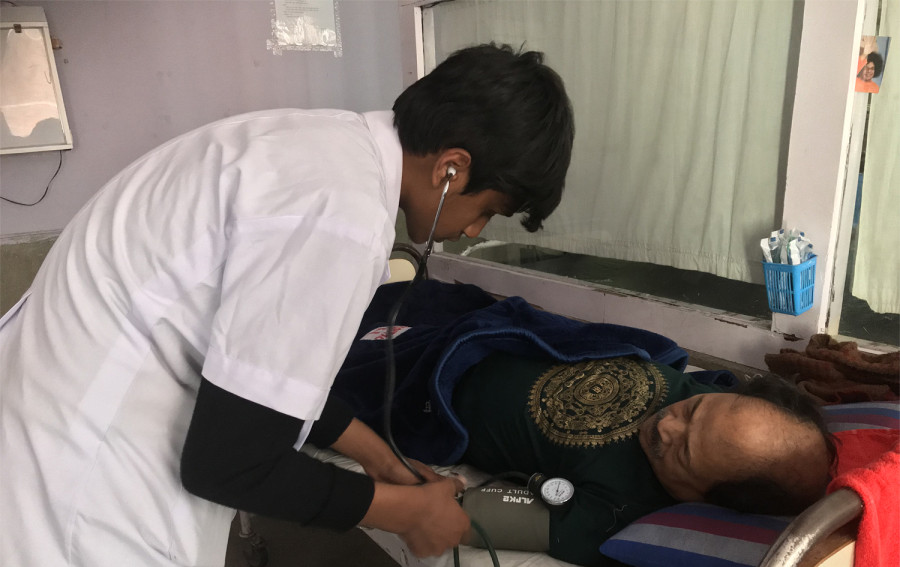
These are some of the best stories from The Kathmandu Post (March 16, 2020). Nurse Sagar Ranabhat tends to a patient at Bir Hospital in Kathmandu. Elisha Shrestha/TKP
Here are some of the top stories from The Kathmandu Post (March 16, 2020).
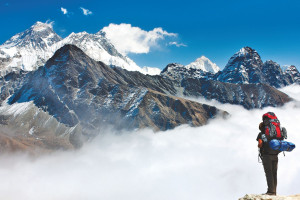
Confronted with near-collapse, tourism industry looks inwards
Faced with a near-collapse wrought by the Covid-19 outbreak, Nepal’s tourism industry is scrambling for survival.
In an attempt to salvage whatever is left of the country’s tourism in the wake of the government’s decision to stop issuing on-arrival tourist visas for all countries, many are hoping that domestic tourists, lured by deep discounts, could help keep the industry afloat.
Parliament functioning more like extension of government, rather than sovereign entity, experts say
In a parliamentary democracy, the role of the two houses of Parliament is paramount. As the legislative arm of the state, the House of Representatives, or the Lower House, deliberates on bills, holds discussions on issues of public interest, and formulates policy. But Nepal’s House of Representatives has increasingly been overshadowed by the executive, functioning more like an extension of the government rather than a principal actor in the separation of powers, say parliamentary experts.
This, however, is not a new development. Historically, the Parliament has always functioned as a tool of the ruling governing party, rather than a platform to discuss policy-related issues, constitute laws, formulate policy, and direct and guide the government, say experts. But with the formation of one of the strongest governments in Nepal’s history, the parliamentary system has become more hollowed than ever, they say.
Despite quotas, gender stereotypes are still preventing men from becoming nurses
Clad in a white lab coat, Sagar Ranabhat stands attentively at Bir Hospital’s nurses’ station where the chief nurse is holding a team huddle before the start of the daily shift. In a room full of female nurses and students, Ranabhat is the only male present in the room.
Once the meeting is over, Ranabhat rushes towards the ward to which he is assigned with his sphygmomanometer, a device used to measure blood pressure, and a stethoscope to start his patient rounds.
Saarc leadership pledges cooperation and collaboration to fight the effects of Covid-19
For the first time in over half a decade, SAARC members came together on Sunday to pledge cooperation and collaboration to fight the effects of the global outbreak of Covid-19.
With South Asia home to about one-fourth of the world population, coupled with the poor state of the region’s public health infrastructure, a large-scale outbreak of the disease could be devastating. In view of this, Indian Prime Minister Narendra Modi on Friday had called upon the leadership of all SAARC nations to chalk out a strong strategy to deal with Covid-19.
Ancient ponds and stone spouts are dying out in Gorkha
The iconic stone spout in Mahadevtar, Gorkha, might just be a work of art. The spout, featuring intricately detailed bricks and stones, was constructed in 1873 BS and looks architecturally sound for the day and age. But as it stands today, the monument is half-deformed, ill-maintained, and on the verge of collapse.
The spout was a source of water for the family of Bhimsen Thapa, the country’s first prime minister, and it was built by his mother, Satyarupa, said Rishi Bhatta, a local of Mahadevtar.




 9.6°C Kathmandu