Here are some of the top stories from The Kathmandu Post (March 15, 2020).
Nepal’s political parties rarely encourage public participation in lawmaking
On September 17, 2018, the federal parliament suspended its rule that required 72 hours for lawmakers to study, and file amendments to, the bills related to fundamental rights. The 16 laws related to basic rights enshrined in the Constitution of Nepal were endorsed without proper deliberations in both the House of Representatives and the National Assembly, to meet the constitutional deadline.
The constitution made it mandatory that those laws should be in place within three years of its promulgation on September 20, 2015. The government, which showed no urgency for months, then presented the bills just a couple of days ahead of the constitutional deadline, leaving no time for deliberations on the bills in the Houses.
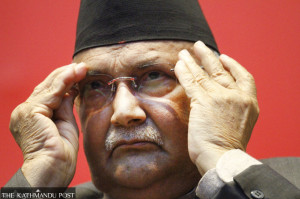
Oli has returned to Baluwatar and he is making it look like he is back in the office
Hours before his discharge from hospital after a second kidney transplant, Prime Minister KP Sharma Oli on Friday afternoon took to Twitter to respond to Indian Prime Minister Narendra Modi.
“I welcome the idea advanced by Prime Minister Modiji @narendramodi for chalking out a strong strategy by the leadership of the SAARC nations to fight Coronavirus. My government is ready to work closely with the SAARC Member States to protect our citizens from this deadly disease,” Oli tweeted from his official twitter handle @PM_Nepal.
After aviation and tourism, investment and trade fall victim to global Covid-19 outbreak
It all started in China in December last year. The coronavirus outbreak threatened the nation’s health as well as its economy. The Chinese government took drastic measures to control the spread. Now with the spread largely contained, China is trying to get back on its feet. Covid-19, the disease caused by the virus, however, has by now taken the shape of a pandemic. Nepal may not have reported any new cases, but its trade and investment have taken a huge beating, as the rest of the world struggles to cope with the virus.
“Since the coronavirus outbreak in China, we have seen nominal presence of foreign investors at our office,” said Jiwan Prakash Sitaula, director general at the Department of Industry. “Now with the global outbreak, we have not received even a single foreign investment application in the last two weeks.”
Nepal’s remittance-dependent economy braces for upheaval amid Covid-19 pandemic
The government’s decision to stop issuing permits to migrant workers will have significant consequences for the country, where economic activities are driven by remittances, experts say.
While some analysts support the government’s move to end confusion among migrant labourers, others are worried about its ramifications on the economy.
“There had been a slowdown in the issuance of labour permits for individuals as well for agencies even before the government decision to stop issuing permits,” said Umesh Basnet, chief of Foreign Employment Office.
Amid virus fears, breathalysers to be used only sparingly to check drink driving
In a bid to keep its officials and commuters safe from the possible transmission of a novel coronavirus, the Metropolitan Traffic Police Division has directed its officials to use a breathalyzer to check drunk driving only when it is “absolutely necessary”.
Authorities worldwide are scrambling to stop the spread of Covid-19, and many countries have asked their nationals to self-quarantine, have closed educational institutions and offices, often leading to empty roads and markets.




 9.7°C Kathmandu
.jpg&w=900&height=601)