Stories you might have missed from today's The Kathmandu Post.
Leadership’s interpretation of IPS and BRI leads to divisions in ruling party
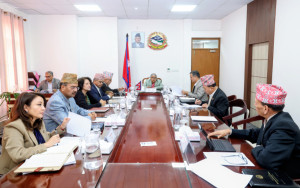
Competing interpretations over the US-led Indo-Pacific Strategy and the China-led Belt and Road Initiative have led to sharp divisions in the ruling Nepal Communist Party.
A political document presented by co-chairs KP Sharma Oli and Pushpa Kamal Dahal states that the US-initiated Indo-Pacific Strategy is aimed largely at countering China and expanding its dominance through a military strategy. The document does not mention the Millennium Challenge Corporation, but hails China’s Belt and Road Initiative as part of a “partnership strategy” to expand global connectivity.
Freedom of expression is under attack and transitional justice stalled in Nepal, rights group says
Nepal is increasingly resorting to regressive ways to restrict freedom, Amnesty International said on Thursday.
In its annual human rights report, the rights group has pointed out that the government made arbitrary arrests of journalists for criticising the government and individuals online. It has also criticised the attempts of incumbent KP Sharma Oli administration for introducing different laws that are targeted at curtailing the right to freedom of expression.
Open manholes have now been covered but their elevation poses another problem
A month ago, Subodh Dhakal was returning home from Durbarmarg on his motorcycle after a get-together with a friend. It was around 9:30 in the evening. When he reached Ghantaghar, the front wheel of his bike struck into a raised manhole. He fell, suffering a minor injury to his right knee.
“I feel lucky that there was no vehicle at that time,” said 37-year-old Dhakal, who lives in Kupondole. “Earlier, there used to be open manholes. These days, the manholes have been covered, but in many places they are raised. This is negligent on the part of the authorities.”
Nepal starts maintaining data on returning migrant workers
After more than two decades of collecting data on outbound Nepali workers for employment, the country has now started maintaining data on the returning migrant workers.
The gathering of data on Nepali citizens, who have been to foreign countries and returned home after completing their term, has finally become possible after installation of ‘Nepali Port’—a software at the Immigration Office of the Tribhuvan International Airport.




 9.89°C Kathmandu
.jpg&w=900&height=601)