ICYMI: Here are our top stories from Monday, January 6
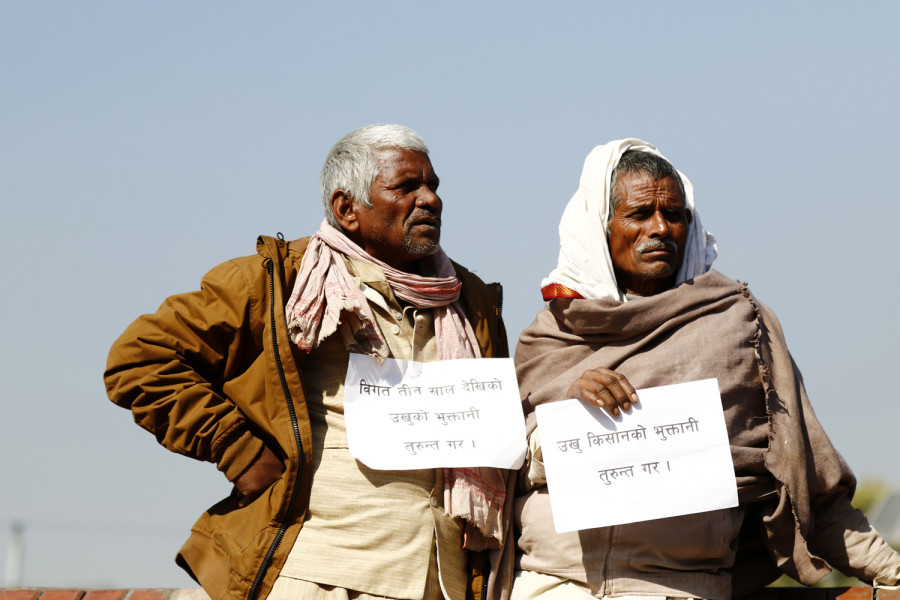
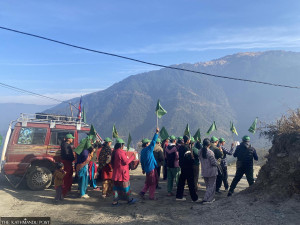
Here are some of the stories from The Kathmandu Post ( January 6, 2020) Farmers say they have received neither payments for the sugarcane sold to mills nor a single paisa from the government in subsidies. Post File Photo
Here are some of the stories from The Kathmandu Post ( January 6, 2020)
As passports start running out, complaint in House committee complicates matters
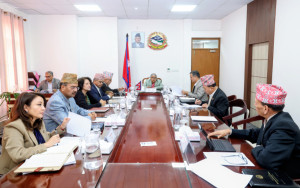
The decision to award a contract to set up a security printing press to either a German or French firm has been further delayed after the Parliamentary Public Accounts Committee began a probe into a complaint registered at the House.
The complaint registered last week by one Bijaya Mishra argues that Nepal does not need a security printing press and that the cost of setting up one—more than Rs 12 billion—is too high.
Plight of sugarcane farmers shows the priority government accords to them
After a nearly two-week protest in freezing Kathmandu, the government, on Friday, finally signed a five-point agreement with sugarcane farmers, promising to clear all dues by next month.
Around a hundred farmers from Siraha had marched to Kathmandu after years of unpaid dues by sugar mill owners. Though this failure to pay farmers has been continuing for years, this protest was unprecedented. The public, and a section of politicians, were moved by the plight of farmers, dressed poorly for the cold weather, protesting for their rightful dues.
One more thing the state has a problem with: truck poetry
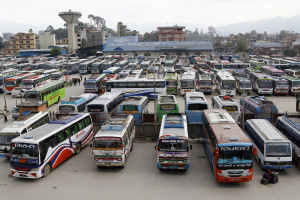
Those ubiquitous verses—often chuckle-inducing and occasionally straight-up cringeworthy—plastered across the rear of buses and trucks on Nepal’s roads might soon disappear.
The Department of Transport Management issued a notice last week ordering all public vehicles to remove these poignant verses about love, lust, loss, satire and occasionally social criticism, popularly known as truck sahitya. The department said that the decision was taken in the interest of road safety—to prevent drivers from getting distracted while trying to read amateur poems.
Non-communicable disease medicines worth Rs 135 million to be distributed free of charge
The Epidemiology and Disease Control Division has started the process of purchasing medicines worth Rs135 million for non-communicable diseases for the current fiscal year.
The division, which is also responsible for dealing with a growing prevalence of non-communicable diseases in the country, said the medicines would be distributed from the state-run health facilities in 51 selected districts.
Karnali sets up ‘special encouragement allowance’ to attract employees
In a bid to resolve the long-standing problem of employee shortage, the Karnali provincial government has constituted ‘special encouragement allowance’ to the employees working in the province.
The provincial Cabinet meeting held last week decided to provide the ‘special encouragement allowance’ to the government employees for effective and efficient administration. The allowance ranges from Rs4,000 to Rs10,000 based on geographical remoteness of the district where the employees have been posted.




 9.89°C Kathmandu