ICYMI: Here are our top stories from Sunday, December 22
Here are some of the top stories from The Kathmandu Post (December 22, 2019).A migrant worker has to pay a minimum of Rs3,900 to Rs9,000 for an insurance package depending on their age. Post File Photo
Here are some of the top stories from The Kathmandu Post (December 22, 2019).
Ruling party members ask leadership to seek clarity on MCC compact from the US
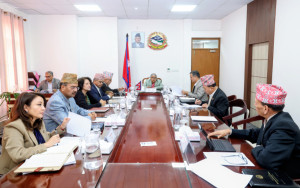
The Millennium Challenge Corporation’s Nepal Compact once again took centre stage at the Nepal Communist Party’s standing committee meeting on Saturday, as members put pressure on the leadership, and the government for that matter, to seek clarity from the United States.
Some ruling party leaders have been expressing reservations about the US programme, arguing that the grant is part of the United States’ larger strategy to counter China, Nepal’s northern neighbour, and Beijing’s Belt and Road Initiative.
Mallika Shakya: The middle class is not creative, original or passionate
It is a cold rainy winter morning when I meet Mallika Shakya at the Japanese U Cafe in Bakhundole. The South Asian Games has just ended and there is protest brewing in India over the national register of citizens and the citizenship amendment bill. This seems like a good time to talk about Nepal and its place in South Asia, and Shakya, who is an assistant professor at South Asian University in New Delhi, is the perfect interlocutor.
We begin by talking about the South Asian Association for Regional Cooperation, or SAARC, which just marked its 35th anniversary. Shakya has written about SAARC before and she hasn’t been exactly kind.
Trans-Himalayan power line project remains on the drawing board
A year after the formation of a Nepal-China joint technical team to fix the terms for the development of a 400 kV trans-Himalayan power line linking Rasuwagadhi and Kerung across the northern border, the project hasn't got off the drawing board.
The team was created during Prime Minister KP Sharma Oli’s China visit in 2018 as per an understanding between State Grid Corporation of China and the Nepal Electricity Authority to prepare a detailed project report and settle the commercial terms.
In 2001, every Saturday after the 8pm news, a sombre Madan Krishna Shrestha would appear on Nepal Television as host of the network’s new game show. Modelled after the US show Who Wants to be a Millionaire, Nagad Panch Lakh offered contestants a chance to win Rs 500,000. As one of Nepal’s first game shows, it did quite well, even though it was cancelled soon enough, after the show failed to pay winning contestants.
Since Nagad Panch Lakh, game shows have become increasingly more popular—and successful. After the success of shows like Nepal Idol and Himalaya Roadies, both of which are local iterations of successful international franchises, there is now a new show in the making—except this one attempts to crown a different kind of winner: a political leader.
Insurance firms overcharge migrant workers over premium duration
Every year, tens of thousands of Nepali workers who go for foreign jobs and are made to pay for a three-year insurance package despite them getting the work permit only for two years.This has raised the Department of Foreign Employment’s concerns. It describes the ongoing practice as the exploitation of migrant workers.
According to the premium charges fixed by the Insurance Board, country’s insurance regulatory authority under the Ministry of Finance, a migrant worker has to pay a minimum of Rs3,900 to Rs9,000 for an insurance package depending on their age. Besides, the migrant worker has to contribute Rs1,500 to the migrant workers’ welfare fund.




 9.89°C Kathmandu
.jpg&w=900&height=601)