Here are some of the top stories from The Kathmandu Post (May 31, 2019).
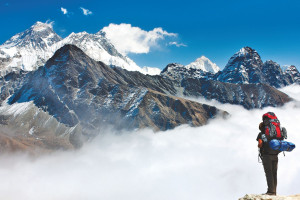
Authorities consider barring weak climbers from Everest after a spate of deaths
The government is considering two options to limit the number of “weak climbers” attempting to scale Everest following the deaths of nine mountaineers in the rarefied slopes of the world's highest peak this climbing season that ended on Tuesday. The options are conducting a medical checkup of the climbers at Everest base camp before allowing them to make the summit push, and making it mandatory for climbers to take an advanced climbing course before joining an Everest expedition.
Dahal brings up agreement with Oli again, leading to suspicion among party members
In a televised interview broadcast on Wednesday on Prime Television, Dahal brought up the five-point agreement signed between him and Oli a day before the unification of the Communist Party of Nepal (Maoist Centre) and the CPN-UML to form the Nepal Communist Party (NCP). The fourth point of the agreement states that the co-chairs will lead the government for equal periods of time.
With no easy access to health centres, women in remote districts of Province 5 are opting for home births
Despite the government’s initiative to encourage women to visit health care centres for pre and post-natal check-ups under the ‘Safe Motherhood Programme’, around 41 percent pregnant women in Province 5 still give birth at home, according to the National Demographic Health Survey-2016.
One of the reasons for the high rate of home births in the province is that women like Gita do not have access to free medical services due to the remoteness of their locations.
Titaura, or pau in Nepal Bhasa, is originally a Newar digestive made out of boiled Nepali hog plum—commonly known as lapsi—which is later mixed with preservatives, salt and sugar, spread on a flat surface and dried in the sun. The paper-thin dried lapsi mix is called mada, and is the foundational ingredient for pau. Once the mada is formed, it can be preserved and used when needed.
With just a few hundred speakers, the Dhuleli language is on the brink of dying out
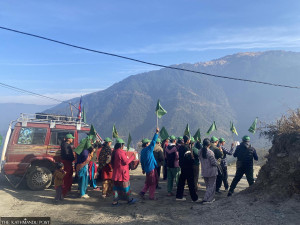
“Two decades ago, most of us didn’t understand Nepali. Dhuleli was our preferred language,” says Matbir Rokaya, whose native language is Dhuleli. “But since our children have started moving out of the district, they’ve taken to speaking other languages, and now most young people have forgotten to speak their own language.”




 9.7°C Kathmandu