



 22.93°C Kathmandu

Tue, Sep 22, 2026
Money
India’s sugar export ban fuels smuggling ahead of peak festival season
Armed Police Force seized 10 tonnes of smuggled sugar in a month, more than double the quantity confiscated a month earlier.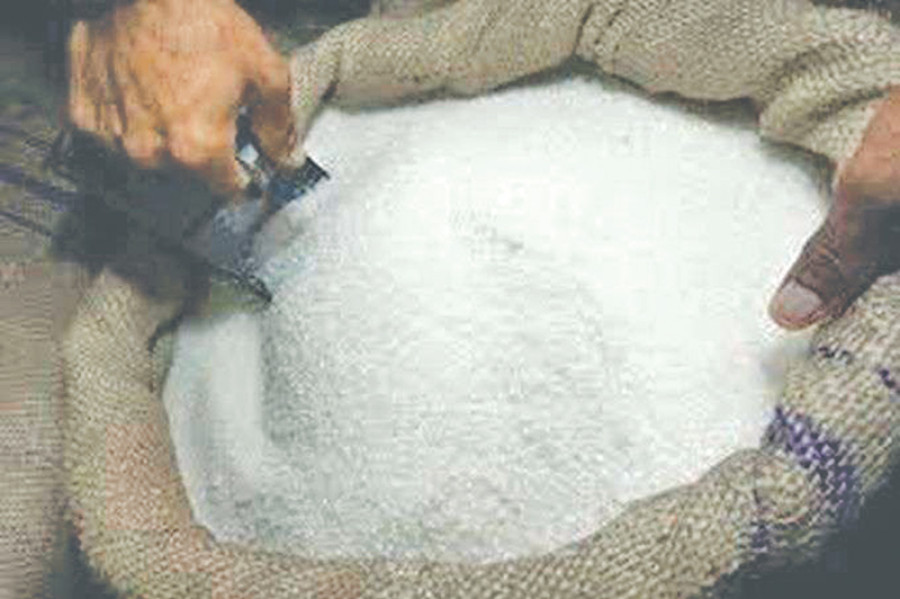
bookmark
Krishana Prasain
Published at : July 31, 2026
Updated at : July 31, 2026 19:41
Kathmandu
Sugar smuggling along Nepal’s southern border has surged after India imposed a fresh ban on the export of the sweetener more than two months ago, raising concerns over illegal trade in the run-up to the September-October festival season.
Sugar seizures by the Armed Police Force increased by more than twofold between mid-June to mid-July, the Nepali month of Asar, compared to the previous month. The police force assigned with border security confiscated 10 tonnes of smuggled sugar worth Rs780,255 during the period, up from 4 tonnes worth Rs284,870 in the previous month.
On Sunday alone, the APF confiscated 32 sacks of sugar smuggled from Jhapa district in eastern Nepal. Netra Bahadur Karki, spokesperson and deputy inspector general, Armed Police Force, said most of the confiscated sugar was intercepted in Tarai-Madhesh districts along the Indian border.
India banned sugar exports on May 13 until September 30, 2026, or until further notice. The world’s second-largest sugar producer imposed the ban to contain domestic prices amid concerns that El Niño conditions could lead to drought, reduce sugarcane output and lower next season’s sugar production.
Sugar prices in Nepal have increased by around Rs15 per kg since India imposed the ban. Sugar that sold for around Rs95 per kg now costs around Rs110 in most retail outlets.
Consumer rights groups say the government failed to act quickly after India announced the export ban.
“The issues of supply, pricing and market management of essential commodities have not been addressed by the government, just as they were ignored by previous administrations. It is surprising that the government has remained silent as if nothing is wrong,” said Prem Lal Maharjan, president of the National Consumer Forum.
“With the festive season approaching, the government still has no clear supply management policy. It should ensure sufficient stocks so that traders cannot exploit the situation through black marketing and price hikes,” Maharjan said.
Activists say the rise in sugar smuggling not only deprives the government of customs revenue but also raises concerns about the quality and safety of illegally imported sugar.
The Salt Trading Corporation said it currently has 1,677 tonnes of sugar in stock but has yet to receive any government directive to procure additional supplies.
The state-owned corporation is selling sugar at Rs100 per kg. More than a month ago, it was selling sugar at Rs98 per kg after purchasing supplies from the private sector.
According to the corporation, Nepal’s monthly sugar demand ranges between 20,000 and 25,000 tonnes and rises to around 30,000 tonnes during major festivals such as Dashain, Tihar and Chhath.
Annual demand is estimated at about 300,000 tonnes, while domestic production falls short by about 100,000 tonnes, making imports necessary to meet consumption.
Netra Subedi, joint secretary at the Ministry of Industry, said the Food Management and Trading Company (FMTC) is importing 1,000 tonnes of sugar, which has already arrived in Nepalgunj.
“Once the current stock is sold, FMTC will decide how much more sugar to import based on market demand,” Subedi said.
The Ministry of Industry has decided to import sugar through a government-to-government agreement with India.
“We still have a remaining quota of 10,000 tonnes under the allocation India approved in September last year, and we are importing sugar under that quota,” Subedi said.
Last year, Nepal had requested permission to import 60,000 tonnes of sugar to meet festive demand, but India approved only 25,000 tonnes through the National Cooperative Exports Limited.
Kumar Rajbhandari, deputy chief executive officer of the Salt Trading Corporation, said the state-owned food companies did not import sugar last year under the quota because import costs, including customs duties, exceeded prevailing market prices.
“After paying customs duties, imported sugar became more expensive than the market price, so we decided not to import it,” Rajbhandari said. The corporation has been requesting the government to provide subsidies on sugar imports so that they can sell below prevailing market prices.
Nepal Sugar Mills Association said that Nepal produced 180,000 tonnes of sugar from last year’s harvest. The production is expected to increase by 215,000 tonnes this year.
The association said that it had a stock of 80,000 tonnes of sugar a month ago.
Sugar imports increased by 90.16 percent in the last fiscal year compared with the previous fiscal year 2024-25.
According to the Department of Customs, Nepal imported 51,485 tonnes of sugar worth Rs3.48 billion during the last fiscal year.
India had previously suspended sugar exports to Nepal in September 2023 after poor rainfall reduced sugarcane yields. The restriction was later extended beyond October 31, coinciding with Nepal’s peak festive season and triggering a sharp spike in prices. Ahead of Dashain that year, sugar prices rose from around Rs88 per kg to as high as Rs160 per kg in the black market amid shortages.
Krishana Prasain
Krishana Prasain is a business reporter for The Kathmandu Post covering markets. Before joining The Kathmandu Post in 2018, she spent 3 years in New Business Age magazine covering business.




Most Read from Money

A flood of bad news leaves Nepal’s tourist hubs eerily quiet
How crypto found a ‘legal’ route into Nepal’s relief efforts
Nepalis cut back on food as ‘hyperinflation’ and shortages bite
Germany provides €8 million in assistance to Nepal after Bhotekoshi floods
Why was Nepal’s stock market shut on Monday
Editor's Picks

What triggered the Rasuwa flood? Scientists piece together a complex chain of events

The floods keep coming. Nepal keeps starting over

In a settlement destroyed by the Bhotekoshi flood, a disabled couple offer strangers the little they have

Nepal working on detailed assessment as Bhotekoshi flood reconstruction could cost up to $5 billion

Rabindra Dhant gave Nepal a reason to smile. Now his camp wants real action behind the praise
E-PAPER | September 22, 2026

×