Quality certification helps Nepali tile maker challenge imports
Lumbini Ceramics, manufacturer of the flagship tile brands Laminar and Cresta, says it has captured a quarter of Nepal's tile market in two years, with Nepal Standard certification boosting consumer confidence and supporting import substitution. Handout photo
Two years ago, Lumbini Ceramics Limited, the manufacturer of the flagship tile brands Laminar and Cresta, struggled to convince customers about the quality and durability of its products.
“People didn’t trust us in the first year of production,” said Ashutosh Khetan, managing director of the company. “We invited 800 to 900 people to visit the factory. Our objective was to show them the quality and how tiles are manufactured. We were transparent.”
The company began trial production in August 2024.
In January this year, Lumbini Ceramics received Nepal Standard product certification for its flagship brands Laminar and Cresta under the recently implemented NS 617:2082 standard.
According to the company, Laminar has been certified in the fully vitrified tiles category, while Cresta has received certification in the porcelain tiles category. The certification was issued by the Department of Standards and Metrology.
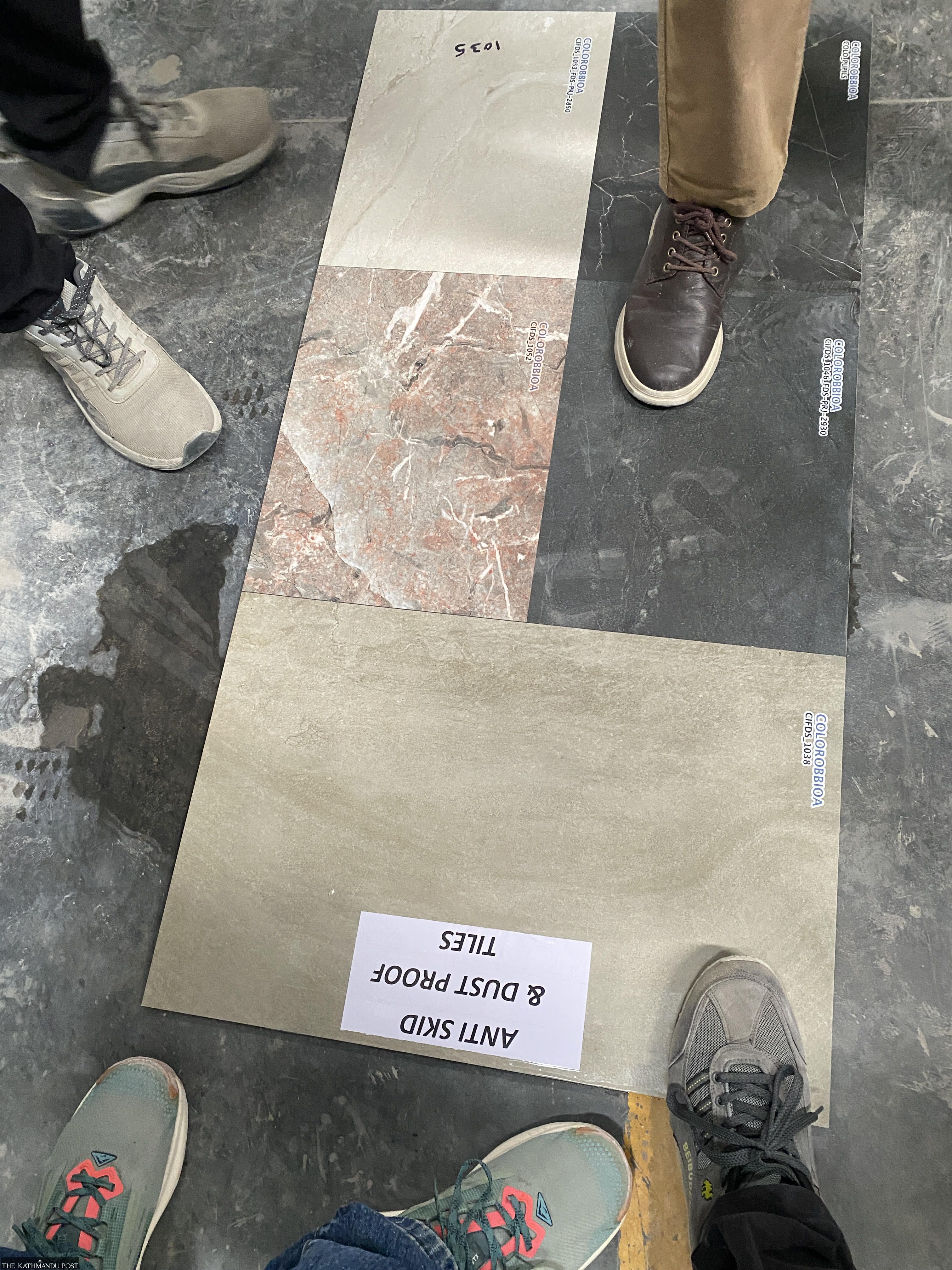
Fully vitrified tiles are regarded as the highest category of ceramic tiles because of their high material density and near-impervious structure. The company says Laminar's tiles have very low water absorption, making them resistant to stains, colour fading and abrasion, and suitable for floors, walls, balconies, parking areas and other high-traffic or moisture-prone spaces.
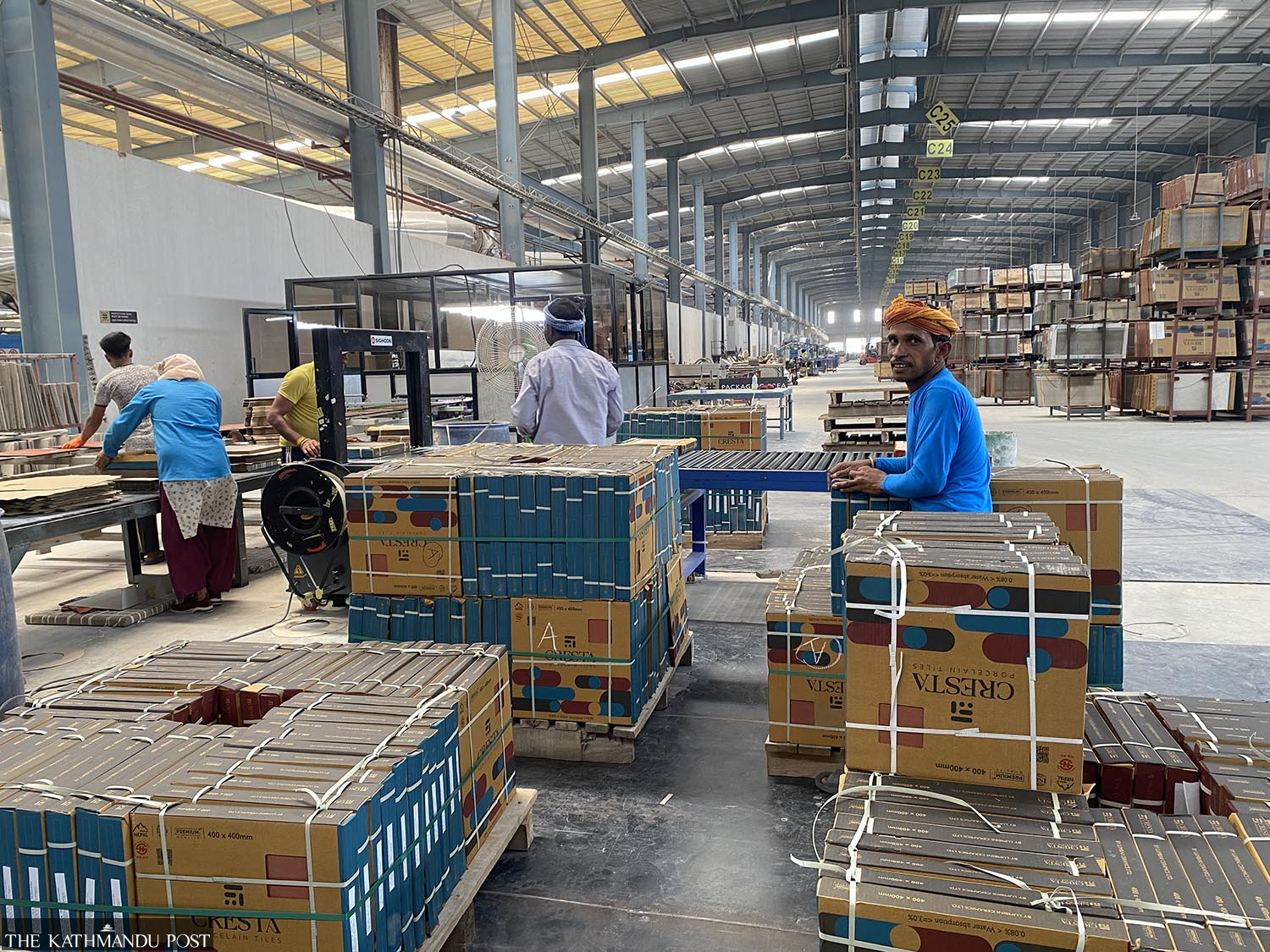
Cresta's porcelain tiles, meanwhile, are positioned as a more affordable option for residential and light commercial use, offering durable surfaces, modern designs and low water absorption that extends their lifespan.
Just two years after its establishment, the company claims it has secured a 25 percent share of Nepal's tile market.
“That was our objective—to build trust,” Khetan said. “The certification has also proven our ability to provide international-standard products at affordable prices through transparent classification and certification.”
He said the certification would further strengthen consumer confidence in domestically produced tiles, encourage greater use of Nepali products and support import substitution.
Post photo
The company has also started exporting to India's Uttar Pradesh.
“We initially exported around 5 percent of our total production,” Khetan said. “Despite overwhelming demand in India, we have not been able to export as much as buyers want because domestic demand is also high and continues to grow.”
Established with a total investment of Rs4.5 billion, the company produces 140,000 square feet of tiles a day and employs more than 350 people. Laminar (fully vitrified) tiles generally range from Rs115 to over Rs260 per square foot depending on the collection, finish, and size.
Its factory, spread across 12.5 bighas in Gulariya, was strategically located in western Nepal because of its proximity to both the Indian border and the company's mines in Dadeldhura.
Khetan said that until recently, about 99 percent of Nepal's tile demand was met through imports from India.
“There are now six tile factories in Nepal, and only around 20 percent of tiles are imported,” he said.
According to him, improved domestic production has also shortened delivery times significantly.
“Demand has grown because products are readily available,” he said. “For example, we can now supply tiles to Birtamode within two to three days, whereas imported products used to take more than two weeks.”
Post photo
The company sources around 60 percent of its raw materials from Nepal and imports the remaining 40 percent from India.
Although commercial operations began two years ago, the idea of setting up a tile manufacturing plant dates back to 2017.
“We wanted to make Nepali tiles,” Khetan said. “We decided to focus on quality, so we invested in producing pure vitrified tiles.”
The company says it has also introduced a classification system to help consumers make informed purchasing decisions by clearly indicating where each type of tile should be used, its quality category and its price range.
Tiles certified under the NS 617 standard are also considered important from a safety perspective.
According to the company, the group classification will be displayed alongside each tile, allowing customers, contractors and project supervisors to verify the tile type before installation. It believes this will significantly reduce the risk of misinformation or the use of unsuitable products.
Lumbini Ceramics manufactures its tiles using glazes imported from Spain and Italy and modern digital ink technology to achieve high-quality finishes and designs.




 20.12°C Kathmandu












.png&w=300&height=200)