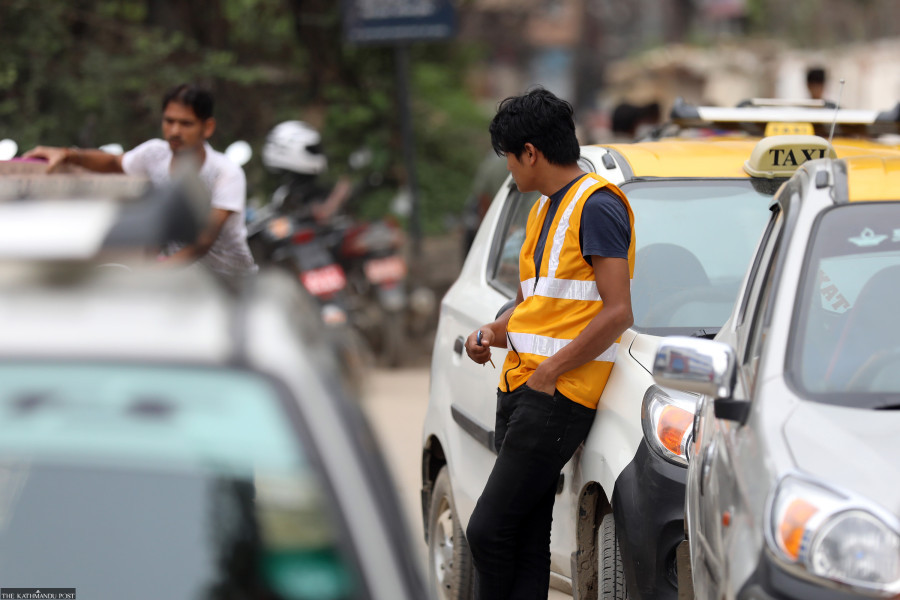
The federal government is preparing to introduce interim standards for ride-hailing services, a stopgap measure as comprehensive legislation continues to face delays.
The Department of Transport Management has drafted the Digital Mobility Service Operation Standard 2026, which it forwarded to the Ministry of Physical Infrastructure and Transport two weeks ago for further discussion. Officials say the standards could be enforced within the next two weeks if approved.
“As the Supreme Court ordered the regulation of ride-sharing businesses, we began drafting it,” said Ganeshman Rai, information officer at the department. “Once the ministry approves the draft standards, we will implement them by issuing a public notice.”
Despite rapid growth in ride-hailing services, the government has repeatedly delayed enacting laws to regulate the sector, even after multiple court directives.
In February 2020, the Patan High Court ordered the government to bring ride-hailing services under regulation. Six years on, there has been little progress. In January last year, the Supreme Court reiterated the urgency of introducing legislation to ensure legal oversight of the expanding industry.
“Nepal has had several international and domestic ride-sharing platforms operating for years, but existing transport laws do not address the sector,” Rai said. “The draft standard aims to regulate and streamline these services.”
The proposed framework expands beyond traditional ride-sharing definitions, incorporating emerging concepts such as ride-hiring and ride-pooling. It focuses on improving safety, security and technological integration within the transport sector.
Key provisions include measures for rider and driver safety, such as social security protections for drivers, mandatory CCTV systems in four-wheelers, and GPS tracking.
Meanwhile, efforts at the provincial level have also faced setbacks. The Bagmati provincial government has been working on ride-hailing guidelines for nearly three years, but political instability and frequent changes in leadership have delayed progress.
Officials say the provincial guidelines, once finalised, will apply only within Bagmati, highlighting the need for a nationwide framework.
“The federal standard will apply across the country and help manage transport demand, particularly in Kathmandu where usage is high,” Rai said.
Gandaki Province became the first to introduce ride-sharing regulations on January 29 last year, but the rules were withdrawn in June following protests from public transport operators.
According to officials at the Bagmati Ministry of Labour, Employment and Transport, the province plans to align ride-hailing regulations with broader amendments to the Motor Vehicles and Transport Management Act, 1992.
The amendments are expected to promote electric vehicles, with ride-hailing provisions tied to policies encouraging a shift from petrol and diesel vehicles to EVs through tax incentives and other measures.
Officials added that legislative progress may take time, as the provincial assembly only recently resumed regular sessions following youth-led protests in September last year.
Ride-hailing has grown rapidly in Nepal, particularly in Kathmandu, where companies estimate that more than 200,000 riders are engaged in the sector—highlighting its rising importance in the gig economy.
However, policy implementation is lagging. The government’s policies and programmes for the fiscal year 2022-23 had pledged to introduce a ride-sharing law, but the Office of the Auditor General says the commitment remains unfulfilled.
Both international and domestic platforms are currently operating in Nepal. Major international players include Pathao, inDrive and Yango, while local services such as ZumZum, Sajilo and La Basham are also active.
Ride-hailing services first entered Nepal in 2017 with the launch of Tootle, a homegrown app.
The market expanded in 2018 with Pathao’s entry, followed by inDrive in 2022, even as the sector continued to operate in a legal grey area.
Krishana Prasain is a business reporter for The Kathmandu Post covering markets. Before joining The Kathmandu Post in 2018, she spent 3 years in New Business Age magazine covering business.




 24.95°C Kathmandu