



 14.58°C Kathmandu

Mon, Oct 19, 2026
Money
Nepal fuel among costliest in South Asia
Fourth hike in a month pushes petrol to Rs219 a litre. Experts warn of further increases, rising transport fares and broader economic strain.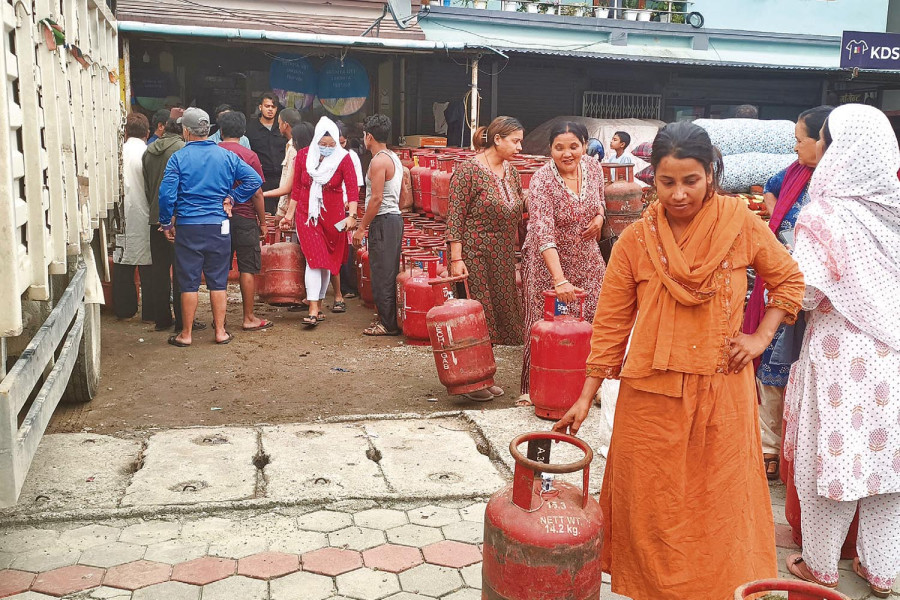
bookmark
Krishana Prasain
Published at : April 12, 2026
Updated at : April 12, 2026 06:46
Kathmandu
How long will fuel prices keep rising? It remains uncertain. How high will the cost of living climb? No one seems to have a clear answer.
Consumers across Nepal are increasingly feeling the strain as fuel prices rise week after week, pushing up the cost of almost everything—from transportation and groceries to dining and daily household expenses.
Nepal on Friday raised fuel prices for the fourth time in a month, making petroleum products the most expensive among regional peers. Under the revised rates, petrol now costs Rs219 a litre ($1.48) in Kathmandu, while diesel is priced at Rs207 ($1.40) a litre.
Despite the repeated hikes, the state-owned Nepal Oil Corporation says it continues to incur heavy losses—around $52.78 million every fortnight—signalling that further price increases may be inevitable.
A regional comparison shows Nepal now has among the highest fuel prices in South Asia. Pakistan has the second-highest petrol price at $1.36 a litre, while its premium diesel remains the costliest at $1.86 a litre. In New Delhi, petrol costs $1.02 per litre and diesel $0.95. Sri Lanka sells petrol at $1.30 and diesel at $1.21 per litre. In Bhutan, both petrol and diesel cost $1.06 per litre, while in the Maldives petrol is priced at $1.04 and diesel at $1.14. Bangladesh has the lowest rates, with petrol at $0.87 and diesel at $0.76 per litre.
Nepal Oil Corporation said that even after record price hikes and a 50 percent cut in customs duty and infrastructure tax, it is still losing over Rs7.81 billion every fortnight. The corporation also owes nearly Rs18 billion to Indian Oil Corporation, Nepal’s sole fuel supplier. Its latest statement suggests prices could rise by another 20 to 30 percent in the coming days.
Manoj Kumar Thakur, deputy director of the corporation, said authorities have even proposed fuel-saving measures such as implementing an odd-even rule for vehicles. The government has already introduced a two-day weekend—Saturday and Sunday—in government offices, banks and educational institutions to reduce fuel consumption.
“We had suggested a four-day work week,” Thakur said.
The Asian Development Bank on Friday warned that the ongoing conflict in West Asia has pushed up global oil prices, increasing the cost of fuel, transport, food and services. It noted that Nepal’s heavy reliance on imported petroleum continues to expose the economy to external shocks despite progress in hydropower and electric vehicle adoption.
Inflation is projected to reach 3.7 percent in the fiscal year 2025-26 and rise further to around 4.5 percent in the following year.
Although the government halved customs duty and infrastructure tax on fuel to help the oil corporation stay afloat and pay its dues, consumers have not seen any relief.
Consumer rights activists say the government has failed to prioritise public concerns.
“The higher fuel price has already started to impact consumers. The corporation seems focused only on calculating its losses,” said Prem Lal Maharjan, president of the National Consumer Forum. “Who will hear consumer grievances?”
He criticised the corporation for increasing prices weekly despite having fuel stock sufficient for a week, calling the practice unjustified and against consumer interest. “The government appears to be supporting this,” he said.
The ripple effects of rising fuel prices are already being felt across multiple sectors. Economists warn that industries heavily dependent on diesel could struggle to operate as costs exceed Rs200 per litre.
Following the latest hike, the Department of Transport Management has allowed transport operators to increase passenger fares on inter-provincial routes by 16.71 percent. Cargo charges have also risen—by 15.75 percent on Tarai routes and 21.68 percent on hill routes.
Bagmati Province, which includes the Kathmandu valley, is yet to revise its transport fares.
Meanwhile, the cost of essential goods is climbing. The price of rice has already increased by Rs100 to Rs200 per 25-kg sack, while vegetables remain expensive. Economists warn that prices of dairy products and other food items are likely to rise soon. Non-food items, including household electronics, may also see price hikes.
Consumer rights activists argue that even a modest 5 percent rise in fuel prices can trigger up to a 20 percent increase in the cost of consumable goods, amplifying the burden on households.
Economist Chandra Mani Adhikari said that if the government wants to control inflation, it must further reduce taxes on fuel imports.
Although the government cut fuel taxes by half, it raised prices again within days, reflecting policy inconsistency, he said.
“The price of petrol and diesel in Nepal is now the highest among regional peers. High fuel costs slow economic activity and disrupt development projects,” Adhikari said.
He stressed the need for strategic interventions to both ease consumer burden and sustain economic momentum.
Consumer rights advocates have also urged the government to address inefficiencies in the supply chain, particularly the role of middlemen in food and vegetable markets. The National Consumer Forum has submitted a memorandum to the prime minister calling for the mobilisation of rapid response teams to stabilise prices.
Krishana Prasain
Krishana Prasain is a business reporter for The Kathmandu Post covering markets. Before joining The Kathmandu Post in 2018, she spent 3 years in New Business Age magazine covering business.

Most Read from Money
Nepal travel agents threaten to stop selling Thailand trips over visa rules

Why does an hour long flight to Dhangadhi cost more than a flight to New Delhi?
Malaysia rejects Nepal’s demand to open recruitment to all manpower agencies

No school, but a graduation cap for women dairy farmers
Nepal arrests four medical service providers as Malaysia recruitment row deepens
Editor's Picks




E-PAPER | October 19, 2026

×