



 15.34°C Kathmandu
Wed, Oct 21, 2026
Money
Rising fuel costs drive sharp fare hikes, threatening growth and household budgets
Diesel spikes over 30 percent in a month, driving up passenger and cargo tariffs and threatening growth, consumption and household budgets.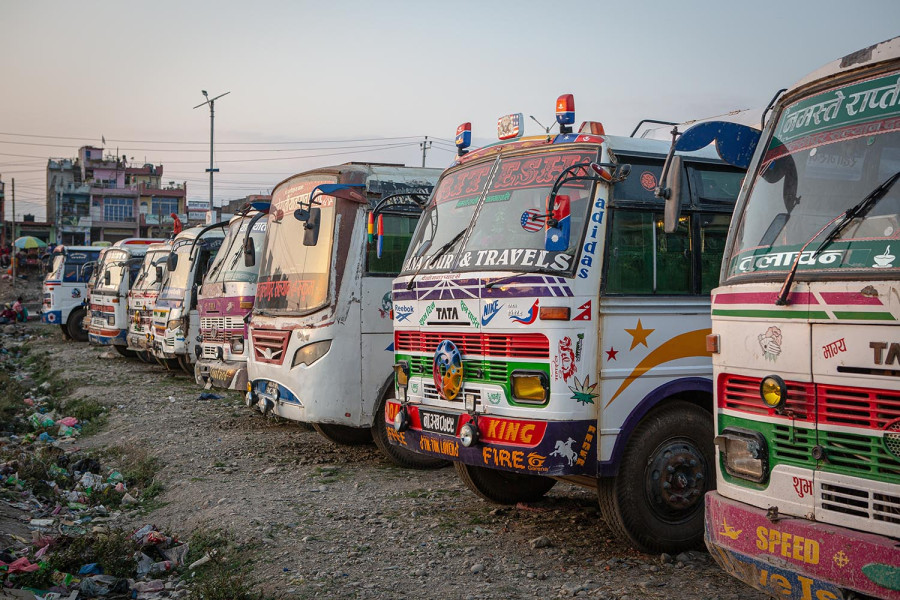
bookmark
Sangam Prasain
Published at : April 9, 2026
Updated at : April 9, 2026 08:06
Kathmandu
Travelling via air got costlier last week. Now, the surface route has become historically most expensive.
With a steep hike in fuel prices, fares of public transport and cargo on inter-provincial routes have also risen sharply to all-time highs. All public transport, cargo and air fares are regulated in Nepal.
Higher fuel costs are feeding directly into inflation. Transport becomes more expensive, raising the cost of everything from food to construction materials. In Nepal, where difficult terrain already inflates logistical costs, even modest fuel price increases can have an outsized impact.
The state-owned Nepal Oil Corporation has hiked the price of petrol and diesel three times in less than a month, following tensions in West Asia.
With the latest revision, petrol is priced at Rs202 a litre in the Kathmandu valley, while diesel costs Rs182 per litre.
Diesel was priced at Rs139 a litre in February, meaning it has jumped by 31 percent within a month.
The ongoing war in West Asia has pushed international oil prices higher. As a result, governments globally, including Nepal, have been forced to adjust domestic rates.
Skyrocketing fuel prices due to the Iran war are fanning transportation costs, which were already rising due to the appreciation of the US dollar against the Nepali rupee.
In response to the hike in petroleum products, the Department of Transport Management on Wednesday allowed transport entrepreneurs to increase passenger fares by 16.71 percent, with immediate effect.
For cargo carriers operating on Tarai and hill routes, fares have been raised by 15.75 percent and 21.68 percent respectively. These surcharges come on top of months-long increases in truck equipment rates driven by the strengthening US dollar.
Landlocked countries like Nepal are disproportionately affected, often facing double the inflationary impact compared to advanced economies due to their high reliance on imported goods, analysts say.
On Wednesday, the World Bank said Nepal’s growth is projected to slow to 2.3 percent in the current fiscal year 2025-26, down from 4.6 percent in 2024-25, reflecting the impact of the ongoing conflict in West Asia and the lingering effects of the September 2025 Gen Z unrest.
The last fare adjustment came on January 6, 2025, when diesel was priced at Rs150.83 per litre.
On April 30, 2022, the Department of Transport Management decided to implement an automated pricing system for transport fares. Under this system, the government—which regulates fares—can revise them whenever petroleum prices fluctuate by more than 5 percent.
With the latest revision, the normal fare on the Kathmandu–Attariya–Bajura route, the country’s longest and spanning 944.6 kilometres, will now cost Rs3,656, up from Rs3,132. The deluxe bus fare has been fixed at Rs4,387, while a super deluxe ticket will cost Rs5,264. As per provisions, public buses can charge an additional 20 percent for deluxe and super deluxe services.
According to the department, fares for buses and minibuses on the longest Tarai routes—over 250 km on gravel or paved roads—have increased to Rs3.42 per person per kilometre from Rs2.93.
Likewise, for distances between 25 km and 250 km, the per person per kilometre fare has risen to Rs3.5 from Rs3.
In terms of cargo, the per tonne per kilometre rate in the Tarai has increased by 15.75 percent to Rs8.93. In the hills, cargo fares have risen by 21.68 percent to Rs17.97 per tonne per kilometre.
The Bagmati Province government is yet to revise fares for public vehicles and cargo carriers operating within the province, including the Kathmandu valley.
The department said the adjustment aligns with the automatic fare system, under which fuel prices remain the key component among 13 indicators used to determine tariffs.
Economist Chandra Mani Adhikari said the increase is significant. “The rise in transport and freight costs means everyone will suffer.” Production, trading and project costs will increase, eventually pushing up both retail and wholesale prices. “When prices rise, demand becomes stagnant and sales drop.”
Analysts say Nepal’s manufacturing sector, already operating below capacity, could be among the hardest hit. “With cargo costs and goods like chemical fertiliser becoming more expensive, it will dampen the economy as a whole,” Adhikari said.
Although transportation costs account for a relatively small portion of final consumer prices, the surge in shipping expenses risks adding to inflationary pressures.
April inflation data is likely to show the biggest monthly increase in consumer prices, according to economists.
Estimates suggest that a 21 percent increase in cargo fares could push inflation up by around 2 percent. If such rates persist for more than three months, the broader economy could come under severe strain.
“As freight charges have increased by three times, market prices could rise by up to 50 percent. If tensions escalate further, it will be a disaster,” said Rajendra Sangraula, president of the Nepal Freight Forwarders Association.
Rising geopolitical risks—particularly involving the United States and Iran—have pushed up insurance premiums, adding further cost burdens for traders. These additional costs are ultimately passed on to consumers.
Ocean and air freight costs have already surged.
Transit times have increased by up to 15 days, with higher container charges compounding pressure on importers.
“This has caused the price of all goods, both consumable and non-consumable, to rise sharply, making daily household expenses more expensive,” Sangraula said.
Low- and middle-income households are expected to bear the brunt, as rising prices erode purchasing power and deepen economic hardship.
Adhikari suggested that the government should remain cautious, particularly the new administration, as multiple challenges could arise from rising inflation, especially for low-income groups.
With petroleum prices surging in recent weeks due to escalating tensions in West Asia, the government on Tuesday decided to slash taxes—customs duty and infrastructure tax—on fuel by 50 percent in a bid to keep the state-owned oil utility financially afloat.
“Though the government has initiated a tax cut, it still has no plans to provide relief to consumers, who will be hit hard by rising costs,” Adhikari said.
Sangam Prasain
Sangam Prasain is Business Editor at The Kathmandu Post, covering tourism, agriculture, mountaineering, aviation, infrastructure and other economic affairs. He joined The Kathmandu Post in October 2009.

Most Read from Money
Nepal travel agents threaten to stop selling Thailand trips over visa rules

Why does an hour long flight to Dhangadhi cost more than a flight to New Delhi?
Malaysia rejects Nepal’s demand to open recruitment to all manpower agencies

No school, but a graduation cap for women dairy farmers
Nepal arrests four medical service providers as Malaysia recruitment row deepens
Editor's Picks




E-PAPER | October 21, 2026

×