Burn wards on paper, little progress on the ground
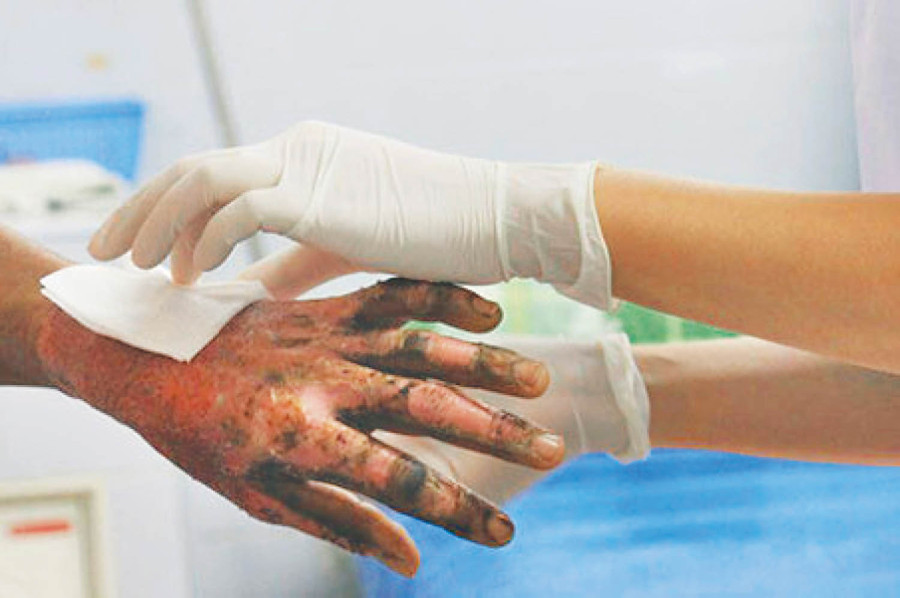
The government's 100-point reform agenda also promises subsidised treatment, but hospitals lack the funds, equipment, and trained staff to provide specialised care. Hospitals say they have already begun seeing an increase in burn cases and expect the number to rise further in the coming days, as burn injuries typically become more common during winter. Shutterstock
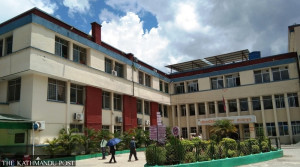
Birgunj-based Narayani Hospital designated two beds in its surgical ward for burn patients following a directive from the Ministry of Health and Food Safety to establish a dedicated burn unit about six months ago.
However, the beds have not been separated from the general beds, and the hospital lacks basic facilities such as proper infrastructure, infection-control arrangements, equipment, and facilities for wound care and emergency treatment.
“We don’t have a separate ward, rooms, air conditioning for temperature control, or facilities for isolation and wound cleaning,” said Dr Chittaranjan Shah, director at the Hospital. “We have decided to allocate one bed in the intensive care unit for burn patients. The problem is that the risk of infection and cross-infection increases for burn victims and other general patients when we keep them in the same unit.”
Narayani Hospital is one of seven hospitals in the country where the incumbent government has promised to set up dedicated burn units. The government's 100-point governance reform agenda includes a plan to establish burn wards in all provincial hospitals and provide treatment at subsidised rates.
Eight months into the government’s tenure, however, little has changed.
Doctors at most provincial hospitals, including Narayani Hospital, said no additional budget, equipment, or skilled staff have been provided to set up dedicated burn treatment facilities.
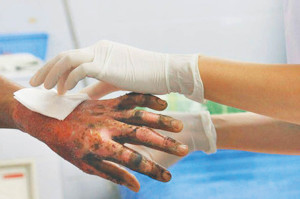
They said a dedicated burn unit involves much more than a few beds. Patients need to be kept separate from general patients to minimise infection risks. Those with severe burns should be treated in single-occupancy rooms with temperature control, proper ventilation and air filtration, as well as facilities for wound cleaning and dressing.
“A few organisations had approached us, offering to help set up a high-dependency unit, while some have supported poor burn patients with medicines and food. But none has helped us establish an advanced treatment facility,” said Shah. “Our hospital cannot arrange all those things on our own. We don’t have funds.”
The lack of specialised facilities is becoming more pressing with the onset of winter, when fire incidents and burn injuries typically increase. On Wednesday alone, 21 fire incidents were reported in 16 districts, where three people were injured, according to the National Disaster Risk Reduction and Management Authority. Hospitals treating burn patients said they had already begun seeing an increase in burn cases and expected the number to rise further in the coming days, as burn injuries typically become more common during winter.
Kirtipur Hospital, the country's only dedicated burns hospital, said all 38 beds are occupied by burn patients and that the hospital is preparing to convert 25 general beds for burn patients due to the rising number of cases.
“All the beds in our hospital are occupied by burn patients,” said Dr Kiran Nakarmi, director of the hospital. “Fire incidents are increasing, and we don’t have enough beds to accommodate additional patients. We are preparing to add 25 beds soon to treat burn patients.”
The shortage of specialised treatment facilities has serious consequences for patients. Experts say burn care requires a multidisciplinary team comprising specialists from different medical fields. Establishing such services requires substantial investment in physical infrastructure and skilled human resources, which experts say remains a major challenge for the government.
The lack of specialised burn treatment services in most hospitals has resulted in many patients losing their lives. Some are forced to live with lifelong disabilities and require long-term rehabilitation and treatment.
“We don’t know what kind of facilities will be set up and when. Nor does the government seem concerned about what burn victims and their families are going through,” said Ujjwal Bikram Thapa, a social worker who has been providing financial assistance to burn victims for years.
Nepal is among the countries with a high incidence of burn injuries. According to the World Health Organisation, burns account for around five percent of disabilities in the country.
The Ministry of Health and Population estimates that around 55,000 people suffer burn injuries in Nepal every year. A study shows that more than 40,000 people sustain minor to severe burns annually, with around 1,500 to 2,000 of them dying from their injuries.
Training has yet to translate into better care
Provincial hospitals have so far designated a few general beds for burn patients. Eight health workers, including two surgeons, from Narayani Hospital and Provincial Hospital Surkhet have received training. The government has also provided six days of basic burn-care training to 64 health workers through Sushma Koirala Memorial Hospital.
Dr Peeyush Dahal, chief of the burn unit at Bir Hospital, said he had trained more than 1,000 health workers through the National Training Centre. Kirtipur Hospital has also trained more than 300 health workers in such care over the past few years.
However, doctors question whether such training has translated into better treatment.
“Some health workers attend training repeatedly, but such training does not translate into effective burn care. They come to Kathmandu for training and collect their allowances. That’s all. Nothing changes on the ground.”
At Narayani Hospital the shortage of staff remains a major obstacle. The hospital used to allocate six to seven beds to burn victims and has been providing treatment for years, but with the government directive, they have allocated only two beds.
“We don’t have additional human resources for burn care, and our existing staff are already overstretched,” an official at the hospital said. “Providing them with additional training would mean asking them to take on even more responsibilities. How is that possible?”
Officials also acknowledge that frequent political interference in government health institutions and staff transfers every few months undermine service continuity. There is no guarantee that health workers who receive training will continue working at the same hospitals.
Dr Dahal, who is senior plastic surgeon and former dean of the National Academy of Medical Sciences and submitted written recommendations to the government on establishing burn treatment units and improving burn care, doubts that the planned wards in provincial hospitals will be able to provide effective treatment. He said specialised burn care requires multidisciplinary facilities with experts from different medical fields, which most provincial hospitals lack.
Even most people who come for burn treatment are poor. They are often victims of fires lit to keep warm during winter, burns from falling into fires, gas explosions or workplace accidents.
“Most patients cannot afford treatment expenses themselves, and the state has not made adequate investment in burn care at government health facilities,” said Dahal
Getting reimbursement is not easy
Officials at Kirtipur Hospital said that getting reimbursement from the government for the treatment of burn victims is an extremely cumbersome process.
Three years ago, 28 people suffered burn injuries in an accident at a jewellery shop in Urlabari, Jhapa. Many of them were treated at Kirtipur Hospital. The hospital says it has yet to receive Rs6.6 million in treatment costs.
Similarly, the hospital has not received Rs4.123 million from the Nepal Electricity Authority for treating victims of an electrical accident. Also, it is yet to receive Rs5.94 million for treating a man who sustained severe burns after attempting self-immolation several months ago, and Rs4.8 million for treating a woman who attempted self-immolation at a maternity home. The hospital says the total outstanding reimbursement exceeds Rs21.57 million.
Arjun Poudel is a health reporter for The Kathmandu Post. Before joining the Post, he worked for Sagarmatha Television, Naya Patrika, Republica and The Himalayan Times.




 10.12°C Kathmandu