Nepal’s lawmaking process has long been criticised as non-consultative. Oftentimes, stakeholders come to know about provisions in bills only after they are tabled in Parliament. Even when consultations are held, they are often treated as a mere formality. As a result, bills frequently become controversial only after reaching the legislature. Recent examples include the Media Council Bill, the School Education Bill and the Federal Civil Service Bill.
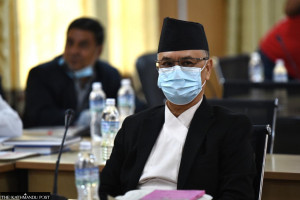
It is not just stakeholders who are kept out of the consultative process. Successive governments have also ignored a state institution whose primary responsibility is to help make laws more coherent and effective—the Law Commission. The commission can draft laws, study and review existing legislation, promote consistency in lawmaking and recommend amendments. Its annual report for 2025-26 says it has prepared and submitted 43 draft bills to the government since the 2015 Constitution was promulgated. Around 95 percent of those drafts have yet to become law.
Established in 1953, the commission has a long legacy and expertise in drafting bills and conducting research to determine which laws are needed and which existing ones need amendment in response to changing circumstances. To sideline an institution created specifically to provide expertise in lawmaking is a waste of public resources. It also weakens the very institutional capacity Nepal needs to make better laws.
In principle, lawmaking begins when the executive identifies the need for legislation. That, however, does not mean lawmaking is the executive’s prerogative. The lawmaking process involves three broad phases: pre-legislative, legislative and post-legislative. These phases encompass policy identification and bill drafting, registration and endorsement by Parliament, and implementation of legislation.
Studies suggest that over the years, a select group of people, often bureaucrats, handpicked by the government, largely prepare draft laws. Respective ministries finalise the drafts and send them to the Cabinet. Different Cabinet committees study and finalise them before they are endorsed by the Cabinet and registered in Parliament. Much of the process, particularly before a bill reaches the legislature, takes place without meaningful involvement from stakeholders, independent experts or professional institutions.
The paradox in Nepal’s lawmaking process is that the executive is often unwilling to hold meaningful consultations during the pre-legislative phase. Once a bill reaches Parliament, meanwhile, lawmakers face the constraints of party directives, making it difficult for them to substantially depart from their respective parties’ positions. This leaves little space for meaningful public participation at either end of the process.
The more inclusive the consultation, the more considered the law is likely to be, and the less controversial it is likely to become. Ministries should determine policy, but legislation should be drafted with the involvement of a professional institution with legal expertise. Failing to consult such institutions can result in inconsistencies, duplication and gaps in legislation.
The commission’s role should therefore be institutionalised so that it becomes a meaningful part of the lawmaking process. It should work in close coordination with the government to identify what kinds of legislation are needed, review existing laws and help ensure that new laws are consistent with the broader legal framework.
The new government should rectify the shortcomings of previous governments and make maximum use of the commission’s expertise. As Law Minister Sobita Gautam has said, the commission should be established as a permanent, professional and capable institution for legislative drafting within the state. The statement should now translate into action. The government should put in place a lawmaking process in which the commission is treated as an essential institution, rather than one that is consulted only when convenient.




 22.97°C Kathmandu