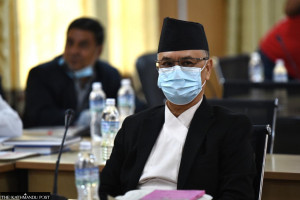
The relationship between the Nepal Bar Association and the leadership of the judiciary has not been cordial since Prime Minister Balendra Shah-led Constitutional Council recommended Manoj Sharma, the fourth-ranked justice at the Supreme Court, as chief justice on May 7. The move, the umbrella body of lawyers across the country said, was intended to place the judiciary under the shadow of the executive.
Now, the Bar has raised concerns over Sharma’s decision to bring six writ petitions related to the Property Investigation Commission before the Constitutional Bench he leads. In practice, it is the respective bench that conducts preliminary hearings and decides which kind of bench should hear a case further. However, the chief justice intervened and brought the petitions before the bench he heads. The Bar has also been vocal about the way the chief justice has been choosing justices for the five-member Constitutional Bench.
In most cases, he has been avoiding senior justices Sapana Pradhan Malla, Kumar Regmi and Hari Phuyal. The issues the Bar is raising reflect a lack of trust in the judiciary rather than legal questions. Yes, picking Sharma to lead the judiciary was a break from longstanding practice, though it was within legal boundaries. The same applies to choosing justices for the Constitutional Bench. The chief justice can choose anyone from his roster as a member of the bench, though representation based on seniority is considered plausible.
Legality, however, is not the only consideration in the functioning of an institution as important as the judiciary. Actions that are legally permissible can still raise questions about convention, intention and public perception. This is why both the Bar and the Bench must be conscious of how their actions affect confidence in the judiciary.
The Bar is an integral part of the judiciary. The issues it raises have far-reaching consequences. It is therefore imperative that it takes its positions after proper study and evaluation of the consequences, and ensures that they are grounded in law. In the same way, the leadership of the judiciary, the chief justice in particular, must be mindful of the message its actions send. It is also necessary for him to engage with the legal community to bridge the trust deficit between the Bar and the Bench.
The judiciary is a strong organ of the state. Any move that targets it will not just weaken the institution but also erode public trust in the temple of justice. The track the judiciary lost during the tenure of Cholendra Shumsher Rana as chief justice was only beginning to return to the right course when it became a target during the Gen Z protests, leading to an unthinkable loss. This not only damaged the morale of people within the judiciary but also further delayed victims’ quests for justice.
As the entire country heads towards recovery from what happened last year, the trust deficit between the Bar and the Bench has served no one. Enough harm was done during Rana’s tenure, during the Gen Z protests and amid rumours of executive pressure on senior justices to resign. The judiciary cannot afford further deterioration of its image.
The Bar and the Bench must therefore resolve their grievances through dialogue and institutional engagement. There are thousands of cases pending in the Supreme Court alone, some of them years old. Delivering justice on time is essential to demonstrate that the state machinery is moving towards reform after last year’s protests. That will be possible only when all stakeholders in the justice system work together. The sooner the Bar and the Bench resolve their differences, the better for the judiciary and the cause of justice.




 21°C Kathmandu