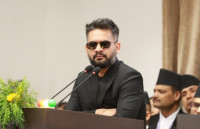
Much is being made of the fact that of the 32 House of Representatives seats up for grabs from Madhesh province, the Madhesh-based parties this time got none. This is a remarkable reversal for these parties that together claimed over 80 seats in the first Constituent Assembly elections in 2008. Then, in the first parliamentary election in 2017 following the promulgation of the new constitution, they together won 33 of the 275 seats. This share climbed down a bit in the 2022 election—and now, the Madheshi parties have been wiped off the country’s electoral map. It is telling that while the Rastriya Swatantra Party (RSP), with Balendra Shah as its prime ministerial candidate, won 30 of the 32 seats in Madhesh, the remaining two went to the Nepali Congress and the Nepali Communist Party. The appeal of identity politics has clearly gone down, particularly in its traditional heartland of Madhesh. This time, given the proposition of electing the first native Madheshi as prime minister and the RSP’s mantra of ‘action over ideology’, most of the Madheshi electorate lapped up the offer.
In fact, the whole country endorsed the new pitch of the RSP, which has won nearly two-thirds of the seats in the March 5 polls. People seem fed up with political parties asking for their votes in the name of various ideologies and ethnic affiliations but doing little for them in return. What good is ideology or ethnic affiliation when all it is used for is to ask for votes, and as soon as you get elected, you jump on the same gravy train of corruption and nepotism? People were angry with the old parties and their rigid leaders—and they vented their ire on election day. Yet it would also be premature to declare the death of identity-based politics in Madhesh. People of Madhesh backed the RSP not because the issue of marginalisation and discrimination is a thing of the past. Representation of Madheshis in state organs and private businesses alike remains much below their proportionate share of the population. Cases of blatant discrimination might have gone down, yet they persist. The reason they backed the RSP, for a change, is that despite decades of rule, the Madheshi parties have not been able to make much difference to their daily lives. Of the seven provinces, Madhesh continues to rank as the worst in the Human Development Index.
There is thus room for the comeback of regional parties in Madhesh, at least so long as the structural inequalities that hold the province back are not addressed. But in order to do so, they must ditch old ideas and leaders while transferring leadership to a new generation. Madhesh has traditionally been the strongest proponent of federalism, yet for the agenda to continue to be credible, it desperately needs new faces to make a fresh case for more devolution of power and resources away from Kathmandu. The RSP, as a big-tent national party, will have multiple, often competing priorities. Regional parties with grassroots appeal will be able to articulate the needs and aspirations of local electorates much better. Otherwise, it is hard to see how the Madheshi regional forces will make a comeback under the old set of leaders who have repeatedly been tried and been found wanting.




 20.85°C Kathmandu