



 24.95°C Kathmandu
.png&w=200&height=120)
Tue, Jun 30, 2026
Columns
Gen Z view: Risk of centralised power
RSP’s dominance reduces the chaos of coalition politics, but risks replacing it with unchecked power.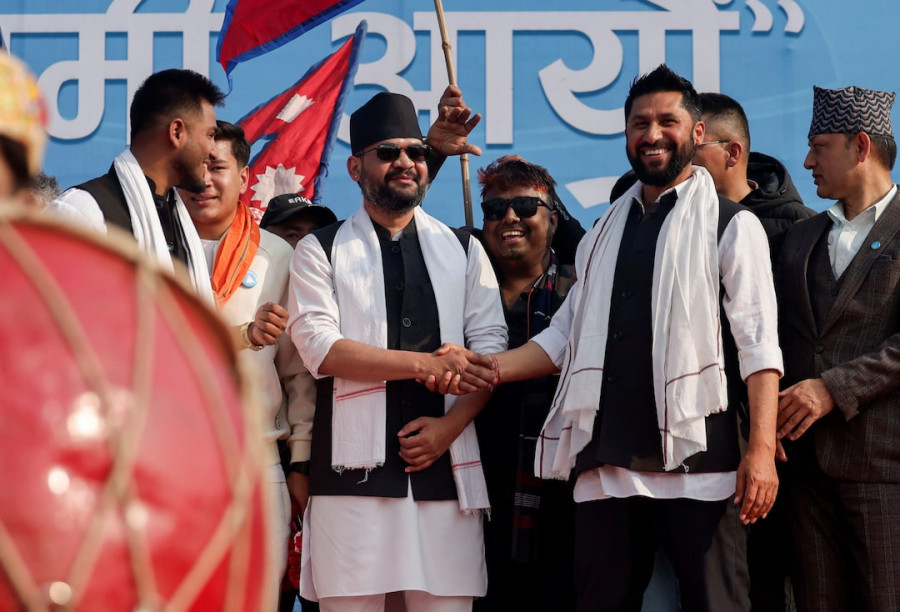
bookmark
Sarweshwari Rana
Published at : April 20, 2026
Updated at : April 21, 2026 15:01
For years, Nepal’s greatest political weakness was instability. Today, its greatest risk may be the exact opposite. The Rastriya Swatantra Party holds approximately 66 percent of the parliament with 182 seats held out of the total 275 seats. This dominance is just short of a ‘constitutional supermajority’. A strong majority, which is above 60 percent of the seats in the Parliament, is set to control the legislation by nature. This eminence can essentially override institutional resistance and amend constitutional provisions.
With less than 100 seats fragmented across the once headstrong parties, i.e., the Nepali Congress, the CPN-UML and other smaller regional parties, it is clear that no single party can effectively challenge the government. Therefore, coalition resistance has seemingly become a difficult scene in Nepal.
In the context of Nepal, the historical comparison is quite prominent in everyone’s vision: Nepal has rarely had strong single-party dominance post 2008. Most governments have always established themselves as coalition-based, unstable, and, not to mention, short-lived. The instability mentioned has ironically prevented any sort of authoritarian drift till date. Now, stability introduces a different risk—concentration of power.
With a strong majority, Prime Minister Balendra Shah has the authority to pass laws quickly, appoint loyalists to key positions—as observed—and more importantly, control the cabinet without internal dissent. While the courts appear independent in theory, the current leading party naturally influences judicial appointments and constitutional bodies. As Nepal faces a ‘fresh look’ for its future, it is important to keep in mind that this change in system—politically sensitive rulings aligning with executive interests—poses a risk indicator in the long run.
Some other long-term risks include subtle implementation gaps, as rapid decisions often lead to weak groundwork, leading bureaucracy to struggle in order to keep up with the system. Campaigns should stop promoting an individual as the image of the party and focus on their ideology instead. Additionally, a social-media-driven governance is a strong indicator of personalisation of power.
Political science research shows that leader-centric systems are more likely to bypass institutional processes and weaken internal party democracy. Albeit, it is safe to believe that internal dissent within the RSP may be minimal due to their strong public mandate and centralised leadership structure. Regardless, the constitutional risk stands strong; with just a few alliances, the RSP could amend constitutional provisions. This poses a threat in the long run as Nepal’s 2015 constitution is still relatively nascent and politically sensitive. Rapid amendments and power moves will inevitably trigger protests and destabilise the federal balance.
RSP’s dominance reduces the chaos of coalition politics, but risks replacing it with something quieter and potentially more dangerous: unchecked power.
Sarweshwari Rana
Rana is an A-level graduate from GEMS School, Kathmandu, with a keen interest in writing and current affairs.




Most Read from Columns




Editor's Picks
Inside the mission of Everest’s first mountain rangers
Weak arbitration defence costs government billions

Nepalis making treacherous trip to Europe through the Balkan route

Women are often at the centre of Nepali films. Why are men still telling most of their stories?

What old newspapers reveal about Kathmandu’s World Cup fever in the 80s and 90s
E-PAPER | June 30, 2026

×