



 26.93°C Kathmandu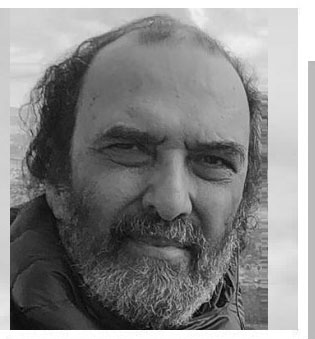
Tue, Jun 23, 2026
Columns
Rahul’s Cinderella challenge
Rahul Gandhi is not unaware of the risks of calling out Modi on issues of high corruption, electoral fraud and divisive politics.
bookmark
Jawed Naqvi
Published at : December 9, 2025
Updated at : December 10, 2025 07:07
So, Rahul Gandhi was not invited to the state banquet for Russian President Vladimir Putin. We are told Prime Minister Narendra Modi had ensured that the leader of opposition in parliament’s Lower House — the shadow prime minister in the British system — wasn’t allowed to make even a courtesy call on the visiting dignitary. Rahul took his exclusion demurely, calling it a reflection of the government’s insecurity. He didn’t seem too bothered. When he travels abroad, he said, he finds it difficult to meet senior leaders because they had been advised to not interact with him.
Modi’s peevishness with the Gandhi family is well recorded, but there is evidently more to it than the challenge of competing with Jawaharlal Nehru’s legacy and the palpable inferiority complex the combat engenders.
His spite for Rahul can be linked to 2005 when Modi was denied visas by the US and European countries. The Congress government headed by Manmohan Singh had taken over the previous year from a BJP-led coalition of prime minister A.B. Vajpayee. Modi’s tourist visa to the US was revoked during Congress rule. The American embassy cited his alleged role in the 2002 communal violence in Gujarat when he was chief minister of the state.
Did PM Singh indeed have a role in instigating foreign embassies to stall Modi’s travels abroad? If so, it was a foolish and counterproductive idea. If there was indeed a case against Modi, and Zakia Jaffri swears there were several, then the Indian state should not have taken refuge behind foreign governments. If the Congress didn’t have the courage to impound his passport or send him to jail — assuming it had clinching evidence of Modi’s role in the 2002 carnage — it showed cowardice bordering on complicity.
Modi hasn’t a care for diplomatic finesse. When two women journalists were assigned to interview Putin at the Kremlin before his Delhi visit, they came across as Modi’s envoys. Which Indian prime minister in Putin’s view had contributed the most to cement India’s ties with Russia? The host wasted no time in ticking off the journalists for asking an “indecent” question.
The visit was said to be essentially about optics for both sides. However, the aspect made public was gross. Struggling to cope with Delhi’s acrid air, Putin walked bravely on a red carpet that seemed to have been rented from the lowest (or highest) bidder. As for the comparison of himself with Nehru Modi never stops making, one needs to regard a slice of history.
For contrast, consider Indira Gandhi’s class. Minutes before the Non-Aligned Movement’s summit was to begin at Delhi’s Vigyan Bhawan in March 1983, Mrs Gandhi walked over to the packed press enclosure. It was a complex international event delicately involving 100 countries. Ziaul Haq and Fidel Castro came calling for opposing ideological corners.
Mrs Gandhi didn’t breeze into the press enclosure to take advantage of the presence of global media. She headed straight to the cafeteria, instead, to ensure her fabled housekeeping rules. “Soggy sandwiches,” she declaimed, ordering frantic officials to remove the trays and get a fresh lot quickly. She then walked back briskly to the summit to take the gavel from Castro.
Regardless of the spite rivals like Z.A. Bhutto, Richard Nixon or George Fernandes reserved for her, Indira Gandhi was an authentic world leader accustomed to the grace and competence required of an Indian PM. She could regale Queen Elizabeth with colonial history in Goa or reward Ronald Reagan for his warm reception at the White House with an adroit but cheerful thank you address. She didn’t position Indian photographers to impress the world when Leonid Brezhnev broke protocol to receive her at the head of an entire Soviet politburo when she landed in Moscow, defying bilious Western reproach. In 1972, Mrs Gandhi chose to overlook the slurs Bhutto had hurled at her in an interview with Oriana Fallaci and concluded that signing the Shimla Accord was more important than getting even.
Indira could speak better French than her father but lacked the intellectual heft of Nehru. But practically all of Modi’s predecessors were better educated than him. And Nehru, his bugbear, wrote brilliant books on Indian and global history, that too during his days in colonial prisons. As prime minister, Nehru negotiated a perilously polarised world and displayed great sagacity at a dire moment in history. Nikita Khrushchev and John F. Kennedy were close to destroying the planet before they struck up an enviable friendship. And they both courted Nehru equally. Khrushchev sought his friendship when they visited each other in 1955. Kennedy made a display of his respect for Nehru by climbing the plane’s ladder to welcome the visitor to the US. It was for his widely acknowledged political integrity that Moscow, Washington and Beijing agreed to India’s intervention in the Korean War to negotiate a tricky moment in ending the bloody conflict. Putin knows this even if Indian journalists don’t.
Next, Rajiv Gandhi who was happily married to Italian-born Sonia Maino and enjoying being the father of their two children. He shunned limelight and was pleased with his lack of ambition or pugnacity of his younger brother. If anything, he was content to be a skilled commercial pilot. After Sanjay Gandhi died in a plane crash and his mother was assassinated in a hail of bullets, Sonia urged her husband not to walk into the dangerous power vacuum. She was right. He was assassinated after a tormented tenure despite an unparalleled 414 seats in the 543-member House.
Rahul Gandhi is not unaware of the risks of calling out Modi on issues of high corruption, electoral fraud and divisive politics. When a peeved Modi excluded him from a state banquet, he signalled Rahul’s larger challenge. Unlike Cinderella’s struggle with those who envied her presence at the royal ball, Rahul knows well that there are no fairy godmothers in cutthroat politics to bail him out.
Jawed Naqvi
The writer is Dawn's correspondent in Delhi.
.png&w=200&height=120)
Most Read from Columns

.png&w=300&height=200)
.png&w=300&height=200)
Editor's Picks
Inside the mission of Everest’s first mountain rangers
Weak arbitration defence costs government billions
Nepalis making treacherous trip to Europe through the Balkan route
Women are often at the centre of Nepali films. Why are men still telling most of their stories?
What old newspapers reveal about Kathmandu’s World Cup fever in the 80s and 90s
E-PAPER | June 23, 2026

×