



 14.72°C Kathmandu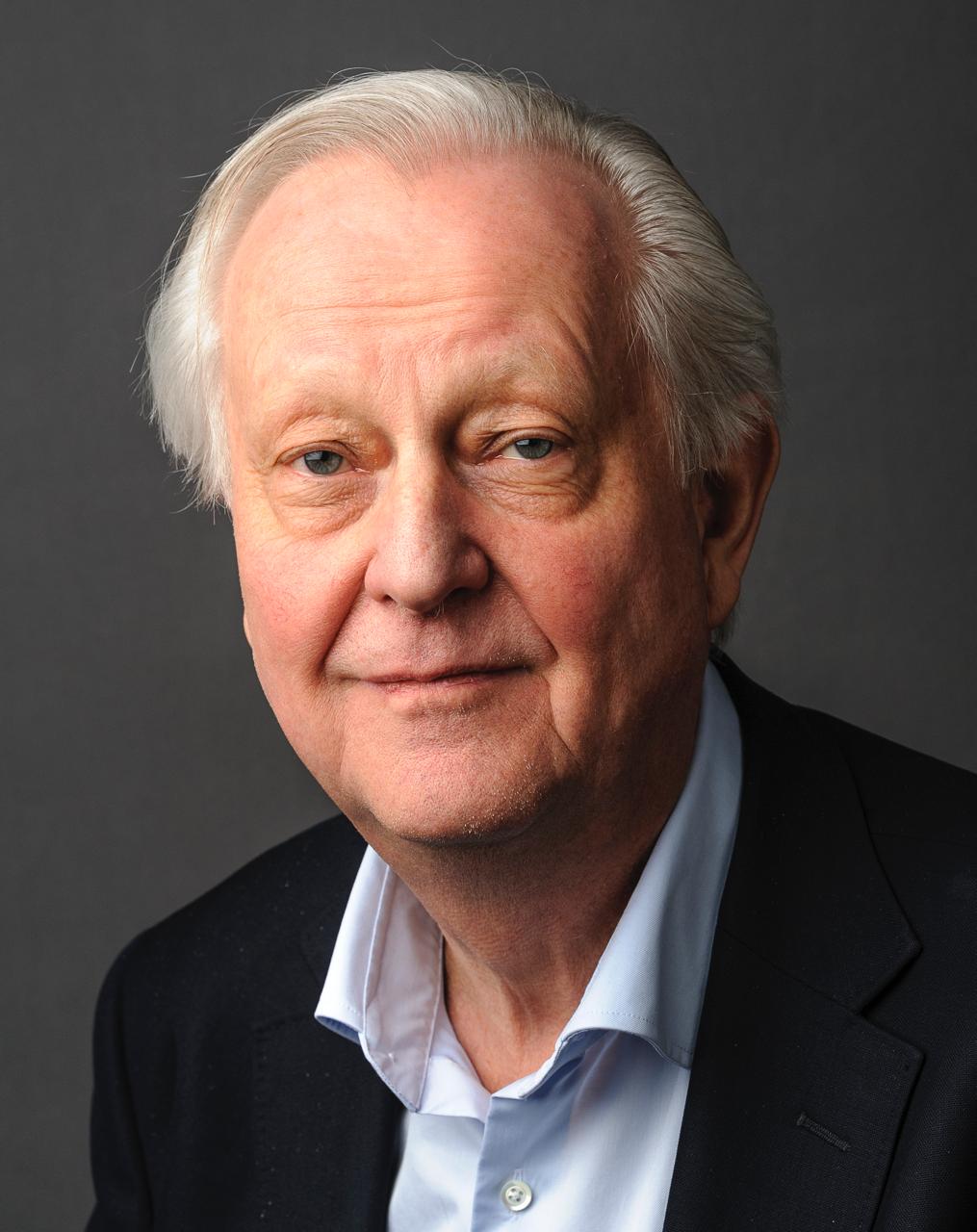


Sun, Oct 25, 2026
Columns
Towards a more successful federation
A more operative federation requires powerful actors in the provinces to counteract the centre.
bookmark
Kåre Vollan & Andreas Follesdal
Published at : December 7, 2025
Updated at : December 7, 2025 07:12
The Gen Z want to end corruption and economic inequality in Nepal, and therefore consider possible reforms of the Constitution and partly of regular legislation. Some want to enforce the federal aspects of Nepal, including decentralised control over the budget and the civil service. Others voice the opposite view, to abolish the provincial structure. The way provinces are constructed may contribute to economic development. But for the federal system to be an even better part of the solution, we suggest allocating more authority to the provinces, strengthening the National Natural Resources and Fiscal Commission and revising the role of political parties.
Why are resources and authority still centralised? Is the federal structure of Nepal part of the problem, or part of the solution? Federalism expert Khim Lal Devkota recently provided an illuminating history of federalism in Nepal and raised challenges about its future in an article titled “The Future of Federalism in Nepal” (November 25, 2025, The Kathmandu Post). His account shows how many of the drafters of Nepal’s Constitution shared the current aims of Gen Z protesters: To combat political domination by Kathmandu and foster greater political and social equality across the diverse country. Part of the Constitution drafters’ solution was to create a federal Nepal. How can we assess this solution when the Constitution has been in effect for 10 years? And what, if anything, can be done to further those objectives?
It is too early to tell. It takes time to implement federal structures as a matter of law. And, as Devkota underscores, civic education about such a complicated multilevel order is necessary and takes time. But the people and peoples of Nepal should do more than wait. Several steps should be considered.
Nepal’s choice of federalism is unusual: It is often a means to hold a multi-ethnic country together. For Nepal, one factor was to reduce discrimination and promote economic equality by moving power away from Kathmandu. Those goals require that the provinces take over many of the resources and political control from Kathmandu—and that they do not themselves become new sites of domination or corruption.
A common way to divide up a state into provinces is to follow ethnic lines so at least each of the largest ethnic groups gets its province. That does create risks of domination over ‘internal’ minorities in each region. Except for the Madhesh province, with one dominant ethnic group, Nepal’s constitution drafters were guided by the principle that each province should be economically viable. The way the provinces were designed may indeed promote economic growth across Nepal, though a decade may not be enough for such effects.
But there may be other reasons for the continued gross economic inequality and poverty 10 years after the Constitution came into effect. While such large constitutional changes as a federal order take time, that is not the full answer. Protests are understandable.
The provinces have received less power and resources than seem necessary. Reasons include that the Constitution leaves room for later specification of their powers; the slow response from the central powers in Kathmandu; and insufficient mobilisation in the provinces.
The municipal level is given authorities directly by constitutional regulations. In contrast, the powers of the provincial level are few, less clearly specified, and often shared with the central authorities—or between all three levels. To have weak provinces was probably not the intention of all the Constitution drafters, but it may have been a choice because provinces first needed to be established, and it would take time to staff them.
Two of many examples: The Gen Z protesters call for federal grants to provinces for teacher training. Likewise, they wisely underscore the importance for provinces to have the power to appoint civil servants. Note that the Nepal constitution grants central authorities much power to be exercised together with the provinces. Such co-decision easily maintains centralisation, insofar as central authorities are reluctant to share their power with the provinces. Their hesitance is understandable when the provincial-level authorities are at best in their infancy. And the risk is higher if no strong provincial forces pull powers away from the centre. But critics may correctly point out that such hesitation can entrench the existing centralisation of power and resources, away from the provinces. After all, a decade has passed. So, the Nepal Constitution and legislature should be more explicit in allocating more authority to the provinces. The relative ease to amend the constitution may make this less of a challenge—but at the risk that centralisation and discrimination by the centre may always happen without sufficient checks.
What about reducing economic inequality? Some federations are quite successful in promoting economic equality across their provinces. Germany and Canada have explicit constitutional constraints with effective institutional mechanisms to secure against poverty or even to require equalisation. The German Constitution requires politicians to maintain ‘uniformity of living conditions beyond the territory of any one land.’ The good news for Nepal is that its Constitution Article 60 has similar requirements for equitable distribution of revenue, to be recommended by the National Natural Resources and Fiscal Commission. Again, it may be too early to tell how this mechanism will actually work—or whether, as in some other federations, transfers simply go to the more powerful persons in each province. One recommendation is therefore that the National Natural Resources and Fiscal Commission must be strong and independent to withstand potential attempts to block effective redistribution. And its procedures must be simple enough to avoid suspicions of abuse.
Regarding discrimination, we may see a dilemma here. A more operative federation requires powerful actors in the provinces to counteract the centre. And as some of the GenZ protesters note, local accountability is better when power is decentralised. But with power comes the risk of its abuse: Unfortunately, such abuse can occur everywhere. Already in 1873, John Stuart Mill warned that critics of central authority must not forget the risks of local, selfish mismanagement by local oligarchs.
What is needed to reduce the risk that local power becomes corrupt? A strong political culture which focuses not on persons but on policies; political parties that focus on how to best promote the interests of Nepali citizens, with democratic election of politicians running for election; strong courts to monitor that authorities at all levels stay within their powers and are not corrupt and which protect human rights, especially of minorities.
Kåre Vollan
Vollan has done extensive academic and practical work on representation and group rights, including in Nepal, where he advised parliamentarians and the Election Commission on representation and electoral issues.
Andreas Follesdal
Follesdal is a professor of political philosophy at the Faculty of Law, University of Oslo. His research interests include federalism and human rights. He has also written about Nepal and conducted fieldwork there.





Most Read from Columns



Editor's Picks





E-PAPER | October 25, 2026

×