



 14.81°C Kathmandu

Sat, Oct 24, 2026
Columns
From discord to accord
Young people are redefining what good governance looks like through critical civic engagement.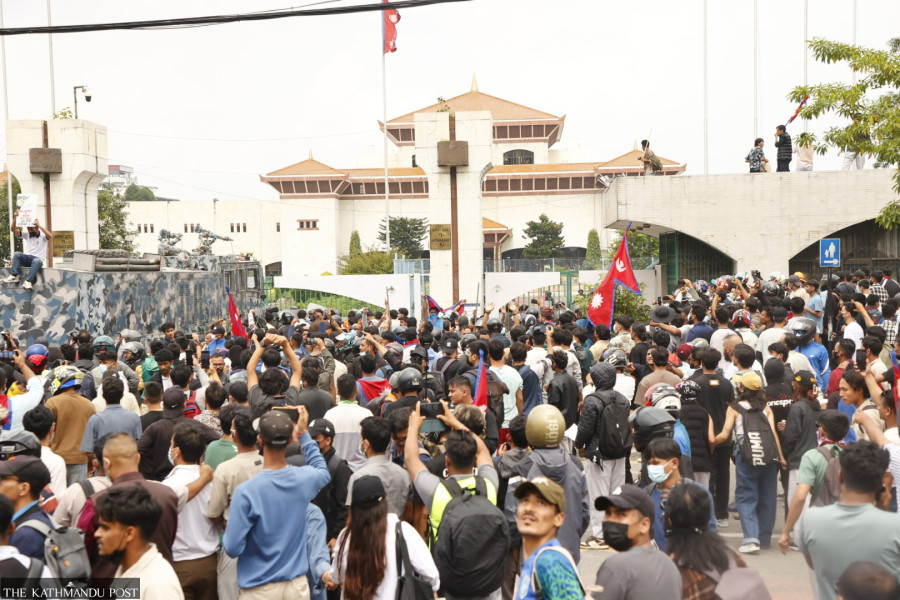
bookmark
Ajay Das
Published at : December 1, 2025
Updated at : December 2, 2025 07:11
The youth-led protest of September 8 and 9 marked a defining turning point in Nepal’s recent history. Their defiance signalled a deeper shift in the country’s political mood—the rise of a generation that stands firmly and unapologetically on the side of democracy, refusing to accept even the slightest drift towards authoritarian rule.
This moment has now entered the nation’s historical record. In the past, history was often written by the victors, those who held power and shaped narratives to suit their interests and biases. Today, that monopoly no longer exists. The digital generation has ensured that there is no ‘delete’ key in the collective memory of this event. Through livestreams, screenshots, memes and citizen documentation, Nepal’s digital warriors have preserved a more authentic, unfiltered account, one that future generations can access, question and learn from.
On that tense September evening, as the country grappled with shock and uncertainty, Nepal Army Chief Ashok Sigdel addressed the nation and summoned a select group of Gen Z leaders to the army headquarters for talks. With the army suddenly in charge of the overall security situation, public anxiety surged. Doubts spread about the military’s intentions. Questions loomed large: Would the army seize full control? Or would a new civilian government emerge? Meanwhile, some protesters called for the dissolution of both the constitution and parliament, while others speculated about a possible return of the monarchy with the army’s backing.
Amid this uncertainty and rising tensions, a group of Gen-Z activists challenged the Army Chief Sigdel head-on with remarkable courage and clarity. They pressed him with blunt, pointed questions: “Is this an army coup? Why are these talks being held at the army headquarters? Where is the President? Shouldn’t this meeting be taking place at the President’s residence?” Sigdel responded firmly but candidly: “If we were planning a coup, we wouldn’t have called you here for talks.” His reply addressed their immediate concerns. That exchange became a defining moment, an extraordinary encounter where youthful courage met institutional authority, creating a historic opportunity for dialogue and laying the groundwork for civilian-led governance.
The bold step by Gen Z activists set the stage for the formation of a civilian-led interim government. In a fantastic departure from traditional politics, Sushila Karki was chosen as prime minister through a virtual assembly of hundreds of young activists on Discord, the online platform that had served as the central organising hub of the Gen Z protests. The episode highlighted not only the innovative ways in which young people are shaping political processes but also the growing influence of digital activism in ensuring transparency, accountability and participatory decision-making in Nepal’s evolving democracy.
That exchange between the Gen Z activists and the Army Chief Sigdel helped safeguard Nepal’s hard-earned constitution, a document forged through years of struggle and the sacrifices of thousands during the armed insurgency, as well as the Madheshi and other identity-based movements. The encounter underscored how the fearless questioning of authority by a new generation can defend democratic values and protect the rights and freedoms that previous generations fought so hard to secure.
The Gen Z activists deserve our deepest respect for the extraordinary courage they showed in questioning the Nepal Army at a moment when the military seemed to hold the state firmly in its grasp. Their movement was more than a protest. It was a rebellion against kleptocracy, mis-governance, gerontocracy, clientelism and the capture and monopolisation of public resources by a privileged few. The demand for better governance, rooted in accountability, responsiveness, transparency and inclusivity, is not only the aspiration of young people, but of all sensible Nepalis. The fearless boldness of the youth urges every Nepali to step forward, stay vigilant and defend our democratic values with the same clarity and conviction while standing with those who speak truth to power.
Gen Z must be accorded public trust, rather than suspicion or unfounded conspiracy theories, so they can continue to challenge authority, not merely to receive vague or evasive responses, but to ensure that those in the helms of power are held to account. Their growing role as a civic watchdog is indispensable, serving as a check on entrenched interests that hollowed the country for decades and ensuring that governance reflects the will and needs of the people. Supporting and amplifying their voice is essential for navigating Nepal through its current transitional political landscape, helping to build a more transparent, responsive, and democratic future where the next generation actively shapes the country’s destiny.
During my recent visit to Sudurpaschim Province, I observed encouraging signs of improvement in service delivery at public offices. Government officials are beginning to acknowledge the need to change how they operate. Yet, much of this shift appears driven more by fear of scrutiny than by a genuine commitment to reform. The activism of Gen Z groups has been instrumental in creating this pressure, persistently demanding transparency and accountability from those in power.
Nevertheless, serious doubts linger over whether these improvements will be sustained in the long run. Early gains in service delivery and transparency following the Gen Z movement remain fragile, with a real risk of reverting to business as usual if vigilance subsides. To ensure that reforms are sustained and citizens’ expectations are met, Gen Z groups must be empowered to continue asking tough questions, challenging entrenched malpractices and holding authorities accountable. Their sustained engagement is essential for translating the energy of youthful activism into long-term reforms in governance across Nepal.
The rise of Nepal’s Gen Z movement is a powerful reminder that young people are redefining what good governance looks like, through critical civic engagement, demands for transparency and willingness to bravely speak up in public life. Their actions have effectively accorded Nepal’s youth an unprecedented degree of political agency, allowing them to influence the country’s democratic direction at a key moment.
Gen Z is not a threat. They are a wake-up call. They are urging the state to listen, adapt and act. This generation is not ready to be ignored or silenced. They demand to be heard and understood. If the state chooses to embrace their energy, innovation and insight, a new bond of trust and shared purpose can emerge—one that strengthens democratic institutions and ensures that those in power remain accountable to the people they serve.
Ajay Das
Das is a political observer.





Most Read from Columns



Editor's Picks





E-PAPER | October 24, 2026

×