



 18.12°C Kathmandu

Sat, May 9, 2026
Entertainment
Nintendo Switch:The Hybrid Future of Gaming
When talking about video-game pioneers Nintendo, a lot of their consoles come to mind: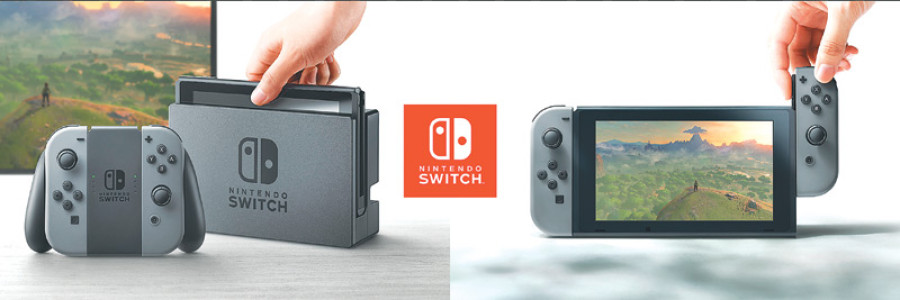
bookmark
Prajesh SJB Rana
Published at : January 24, 2017
Updated at : January 24, 2017 17:12
When talking about video-game pioneers Nintendo, a lot of their consoles come to mind: we have the Super Nintendo Entertainment System (SNES) whose games are still lauded by gaming veterans and we also think about the massively successful portable handheld Gameboy and it’s offering of innocent pixelated Pokémon games. Nintendo’s innovation has not been limited to hardware either and the company has managed to produce iconic franchises such as The Legend of Zelda, Mario and Pokémon. The 2006 console by Nintendo, Wii, was also massively successful with unit sales spanning well over a 100 million units. Without a doubt, Nintendo was and still is one of the most important companies when it comes to innovation in gaming. But while Nintendo has had their share of failed products like the Wii U, the company hasn’t stopped innovating and even in 2017, the company shows no signs of slowing down.
The Nintendo Switch is a reflection of how innovative and important the company still is to the gaming landscape today. In an era where were more comfortable with the idea of owning many devices, the Switch aims offer different kinds of gaming experiences with one device. The Switch can easily slide inside a dock and work with your TV or you can easily carry the device with you when you travel. You can even share the two controllers that come bundled with the device and play with your friends.
Albeit the consoles does not have the hardware prowess of larger consoles like the PlayStation or the Xbox, the console focuses on providing a friendlier gaming environment for its uses. As seen with the company’s focus of motion control with the Wii, it has turned increasingly difficult for Nintendo to butt heads with console giants like Sony or Microsoft. But executives at Nintendo are well aware of the nature of the gaming market today and thus have successfully managed to compete solely through innovation. Thus, the Switch does not come with aggressive hardware but rather offers moderate gaming performance that exaggerates the gaming experience.
At its core the Switch is powered by a custom Nvidia Tegra SOC, most commonly found in Nvidia’s Shield Tablets, which according to Nintendo is based on the same architecture as the leading GeForce gaming graphics cards of today. The device is also equipped with a 4310 mAh battery and a cartridge slot, a microSD slot that can support up to 2TB of storage and a 3.5mm headphone jack. The base console comes with a vibrant, crisp 6.2 inch 720p display with a ten-point multi-touch capacitive touchscreen. The switch comes with two controllers, dubbed Joy-Con, that slide into the side of the device. Each of these controllers have an analogue stick and four buttons—there are more buttons hidden inside the groove that users can take advantage of while using the controllers individually.
But the base console is not all that you get with the Switch. The device comes with a dock that you can slide your device into for 1080p gameplay on your television. The console will act like a home console system when paired with the dock and the Joy-Con grip, a larger gamepad frame where the two Joy-Con pieces slide in for a full gamepad feel. The device also has a built-in kick-stand for when you want to prop up the device for local multiplayer play with your friends. Combining all of the different states that the console can function in, the device achieves what Nintendo wants to do with the device, which is to offer a seamless entertainment experience no matter what kind of situation you’re in. You can easily play a few hours of Zelda on your way to work and continue where you left off once at home.
But regardless of all the benefits of the Switch, it has certain drawbacks as well. The Joy-Con, although an excellent controller with motion-control and haptic feedback, can feel a little cramped because of its small form factor. The analogue sticks are too close and the buttons are tiny for a comfortable gaming experience. The device, when docked and connected to a TV, slows down and jitters when forced to render in 1080p. The 6.2 inch screen size is also a little bit too big for users who’ve grown accustomed to gaming on their smartphones. The biggest problem of the device, however, is the battery life. While Nintendo boasts six hours of playback on battery, real-life tests have yielded results less impressive. The console can stay alive for two to three hours on the battery, which is not as impressive as their claims. This problem can be mitigated with the use of power bank however.
But even with all of these shortcoming, gaming experience on the Switch is bound to be stellar because of the great games promised for the device. The Legend of Zelda: Breath of the Wild looks absolutely stunning on the device and additional games like Splatoon 2, Mario Kart 8 Deluxe and Super Mario Odyssey are equally impressive. The console is likely to see more games on the platform since Nintendo has announced that there are almost 80 games currently in development from over 50 game developers. Apart from game made exclusively for the Switch, Nintendo has also confirmed support for larger games like NBA 2K18 and The Elder Scrolls V: Skyrim.
Considering all of these points, it’s clear that Nintendo is pushing for the success of the Switch and with all that we’ve seen so far, the console does look like an impressive device. While the device cannot hold its own against more aggressive consoles, Nintendo aim with the Switch does not seem to be to achieve photo-realistic graphics but rather to offer a seamless and well-rounded gaming experience for its uses. With the Switch and the innovation it brings to the table, Nintendo seems to be on the right track. Nintendo has been a veteran in gaming technologies in the late 80 and with the Switch, the company is as innovate and important as it’s ever been.
Prajesh SJB Rana
Rana is a Kathmandu-based tech writer who has been covering all things tech for the past decade.





Editor's Picks

Nepal keeps protesting over Lipulekh. India and China keep ignoring it

Overexploited for years, the Chure hills are weakening, and water stress is rising across the Tarai

As machines listen, human conversations fade

Why Sanskrit is not dead after all

Lumbini master plan remains unfinished after 48 years
E-PAPER | May 09, 2026

×