



 19.11°C Kathmandu
Tue, Oct 20, 2026
Entertainment
The sacred feminine: representations of the female form in art
Last month, at the beginning of December, there was a rather exquisite show at the new (ish) Taragaon Museum, which is inside the boundaries of the Hyatt Regency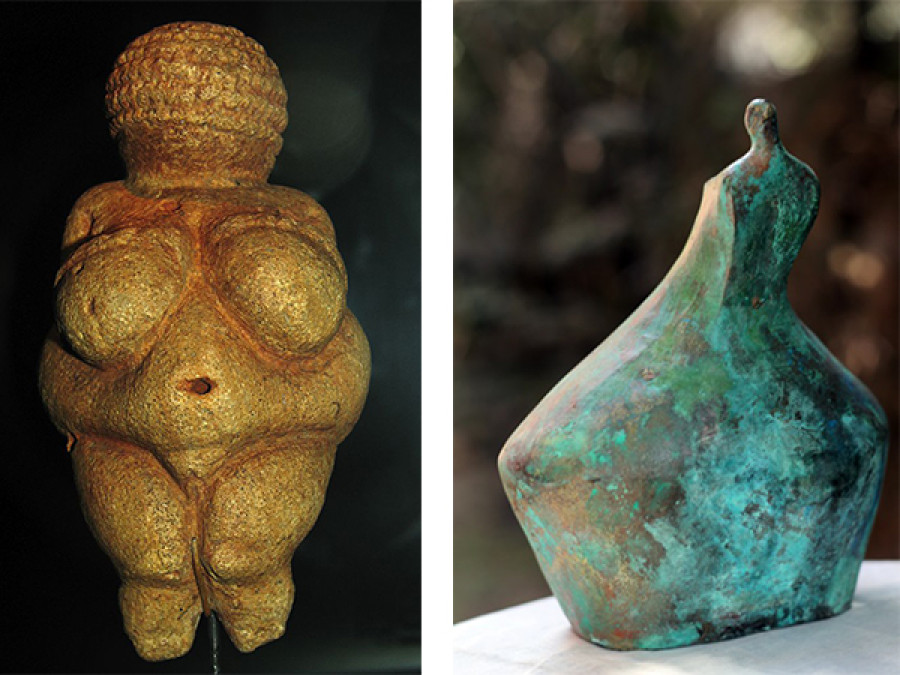
bookmarkLast month, in the beginning of December, there was a rather exquisite show at the new (ish) Taragaon Museum, which is inside the boundaries of the Hyatt Regency, near Boudha. The show was a series of bronzes based on the female form and titled The Sacred Feminine.
Sophia Pande
Published at : January 4, 2015
Updated at : January 5, 2015 00:00
Executed by Dr Laya Mainali, a senior artist and Professor of Sculpture at Tribhuvan University, the show, which consisted of over 30 pieces, was the fruit of more than two years of work, toiling with the labour-intensive technique that is bronze casting, and then glazing. Each piece is distinctive in its finishing, some having beautiful verdigris patinas, while other are glossy with more metallic sheens; all invite touch.
While I was rapt by the exhibition, I was slightly disappointed by Dr Mainali’s inability (possibly hesitation) to speak about his inspirations that prompted him to title the show by the now slightly ubiquitous phrase “The Sacred Feminine”. It is possible that being from a slightly older generation, the professor was hesitant to speak about the suggestive and sometimes quite blatant representations of the yoni in almost all of the sculptures; however, I had hoped that he would have been willing to expand on a term that while now widely used, still remains fairly vague to me.
So what exactly is "The Sacred Feminine" supposed to mean? As an art historian in college, I remember coming across the phrase much more in anthropology than in the study of the history of art, possibly because in early 2000, “The Sacred Feminine” was considered to be (and arguably still is) an 'orientalist' view of various aspects of Hinduism and Buddhism that deify 'Shakti' or the divine feminine energy that comes from Parvati or Shakti as the female consort of Shiva.
Additionally, the term also implies a celebration of the pre-historic fertility cults that are embodied in iconic pieces such as the The Venus of Willendorf, an11.1 cm high limestone statue dating back to between 28,000 and 25,000 BCE. While the exact purpose of this world famous statue is still in speculation, the exaggerated breasts, hips and rounded stomach suggest that the figure was used or worshipped as a fertility goddess, celebrating the power of the female to give birth.
Dr Mainali’s pieces, while not all wide-hipped and large-breasted, are also a celebration of the female form, though his reticence prevents me from speculating on the exact kind of homage he wishes to pay.
A very short introduction to his exhibition (written by himself) states that Dr Mainali was indeed moved by female energies, though he does not specify what kind of energy, and also by “monumental” female figures, undoubtedly referring to pieces such as the afore-mentioned Venus.
While artists have long been moved by the human body, to try and emulate it, either in sculpture or in painting, it is interesting to note that this fascination and acknowledgement of the beauty and inherent mystery of the feminine form persists even now—when the woman’s ability to give birth is no longer considered a mysterious and alchemical miracle.
The term “The Sacred Feminine” was birthed out of esoteric Hindu texts that claim the universe is essentially moved by feminine energy. Whether you agree or not, are inclined towards these beliefs or philosophies, or are purely a skeptic that screams “orientalism” at any hint of celebrating the mysteries of the female form or rituals associated with it, it would interesting to take a step back and note that extraordinary art has been created out of appreciation for the male and female nude figures, and while artists should and must be able to justify their output, both to themselves and the viewers of their work, there is an undeniable body of work, the world over, that exists as an ode to female beauty.
No matter where we are from, the 'Orient' or the 'Occident', perhaps it is time to stop accusing anyone and everyone who is inspired by that which they deem sacred. To accuse people of romanticising a culture that they are not from is the same as accusing people of being outsiders, and therefore unfit to celebrate or revel in another culture. Surely art can move us to be better than that.





Editor's Picks





E-PAPER | October 20, 2026

×