‘Tenzing’ puts the Sherpa at the centre of the Everest story
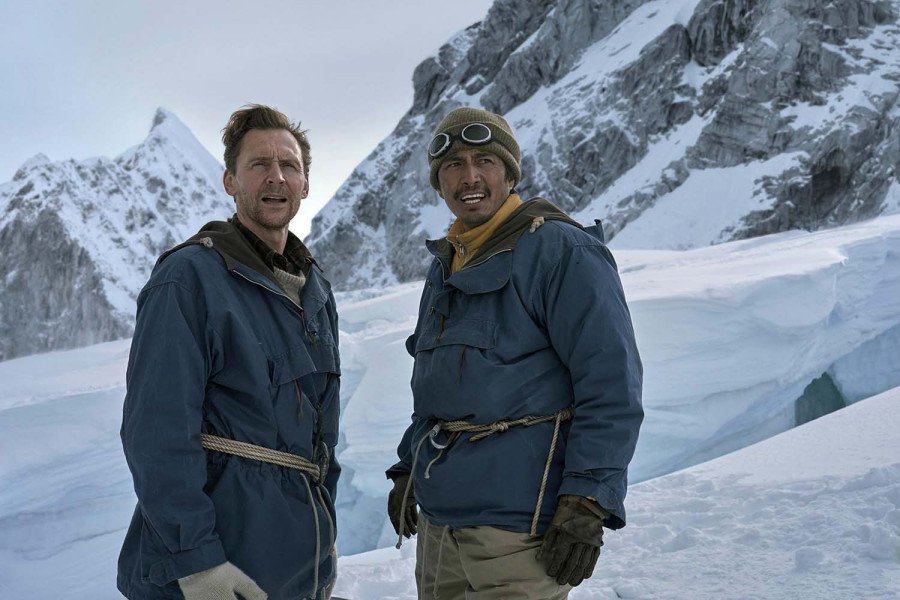
Jennifer Peedom’s thrilling feature puts Tenzing Norgay’s own Everest dream at the centre of a story long dominated by Edmund Hillary—a dream that began long before the historic 1953 expedition.Tom Hiddleston (who plays Edmund Hillary) and Genden Phuntsok (Tenzing Norgay) in a scene from 'Tenzing'. The film premiered in early September at the Telluride Film Festival in Colorado. Courtesy of 'Tenzing'
There has been a long-standing belief in the West, and in mountaineering circles, that New Zealander Edmund Hillary conquered Mount Everest. He was accompanied and assisted by his Tibetan Sherpa (although he was technically not an ethnic Sherpa)—Tenzing Norgay. This belief has now been corrected by Australian filmmaker Jennifer Peedom in her first narrative feature ‘Tenzing’.
The film emphasises that Norgay did not just succeed in the mission in 1953 by helping Hillary realise his dream. Norgay had more experience compared to anyone else in that British mission to Everest. For the first time in history, ‘Tenzing’ states that Norgay had his own dreams and struggles as well. Western climbers were not the only heroes in this narrative. Most historians never acknowledged that until now.
Peedom’s film does not minimise Hillary’s contribution to the mission. The partnership of Norgay and Hillary becomes much more interesting when one understands what the two men from diverse backgrounds brought to that mission.
‘Tenzing’ premiered in early September at the Telluride Film Festival in Colorado and later played at the Toronto International Film Festival. After a brief theatrical release in the US in early October, Apple will globally stream the biographical drama starting October 16.
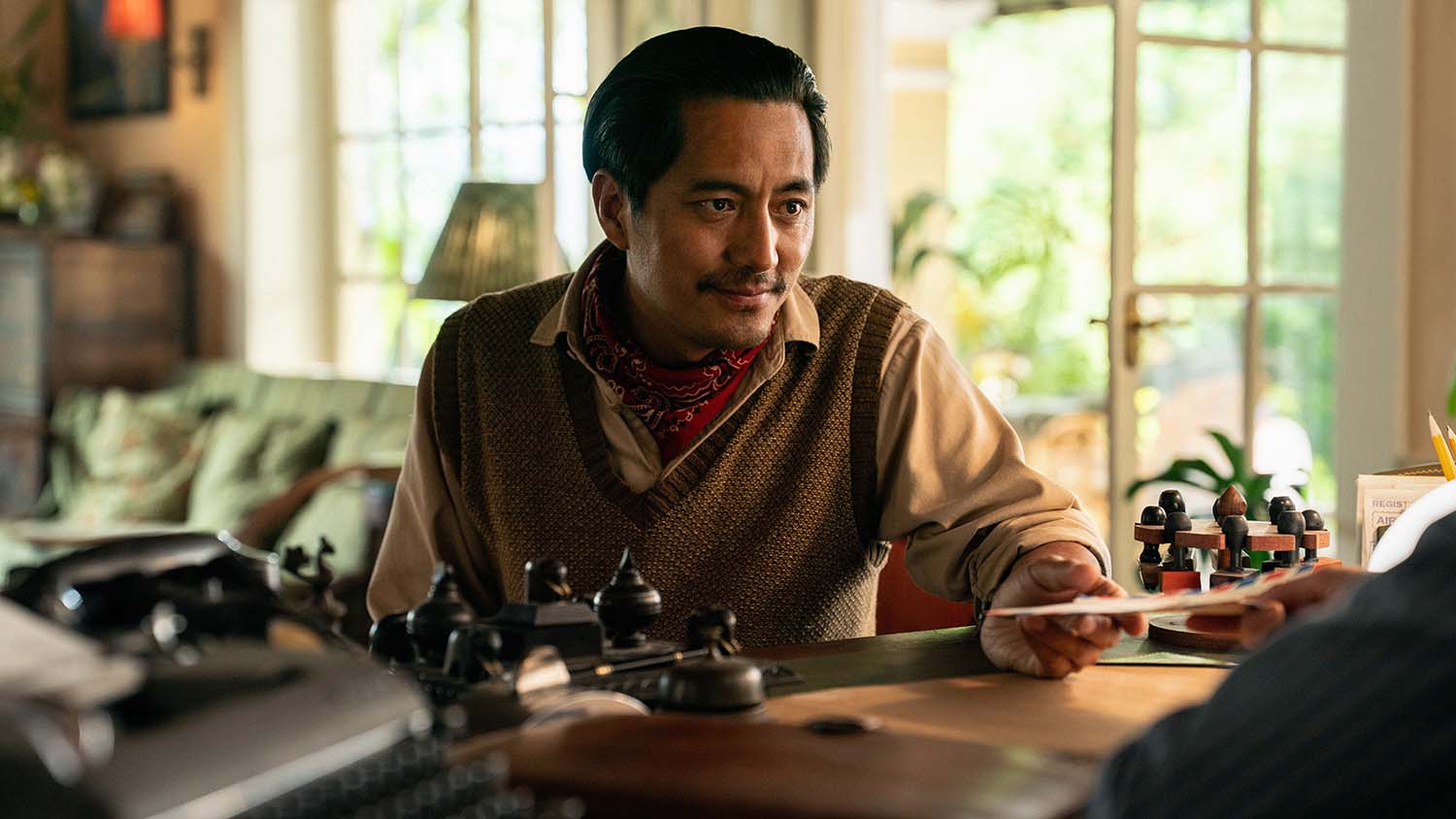
Genden Phuntsok as Tenzing Norgay in 'Tenzing'.
‘Tenzing’ is an earnest, thrilling and rousing adventure, based on the screenplay by the Australian Oscar-nominated scriptwriter Luke Davies (‘Lion’). The star of the film is Norgay, played in his middle-ages by a terrific Genden Phuntsok (from Pema Tseden’s ‘Snow Leopard’). Tenzin Dalha plays the young Norgay, and Samdrup Dorje Lama acts as the character when he was a child.
Davies’ script and Peedom’s direction ensure that the film’s central focus remains Norgay—especially the adult man portrayed by Phuntsok. The role of Hillary is played by the British star Tom Hiddleston of ‘The Night Manager’ fame who has also portrayed Loki in the Marvel Cinematic Universe franchise. Phuntsok also gets the top billing in the film.
We watch Norgay’s life through flashbacks—as a child (Lama) in the Tibetan Plateau with a fascination for Chomolungma (the Tibetan name for Everest). Norgay was perhaps 10 years old when he saw British climber George Mallory on his way to Everest. Mallory would make three attempts—his last time was in 1924 when he lost his life on the way to the top of the summit, along with a fellow climber, Sandy Irvine. But young Norgay knew nothing about the challenges of conquering Chomolungma. Instead, he innocently asked Mallory if he could accompany him. Reaching the top of Everest then became his life’s ambition.
In his youth, Norgay (Dalha) was a farmer, but he never forgot his goal in life. As a young farmer, Norgay met the love of his life—Dawa (played by Thinley Lhamo of the ‘Shambhala’ fame). The two moved to Kathmandu, but the tragedy of Dawa’s death compelled Norgay to make stronger efforts to join the Everest expeditions—including working as a porter for the Swedish missions on the way to the summit.
For Norgay, Everest was not just a mountain — the world’s highest peak that had to be conquered. For him, reaching the top of Chomolungma was more of a spiritual mission.
When a British team arrived in town, headed by Colonel John Hunt (Willem Dafoe), Norgay again pitched in to be part of the team. But this time, he insisted that he wanted to go on the mission as a climber, not just a guide assisting the mountaineers. In explaining his passion to Hunt, Norgay said, “I climb to know her [Chomolungma] better.”
The pairing of Norgay and Hillary also worked for another reason. Both men were outsiders in the British mission. Hillary was the only New Zealander in the British team. That fact alone helped them bond better. They would eventually become lifelong friends.
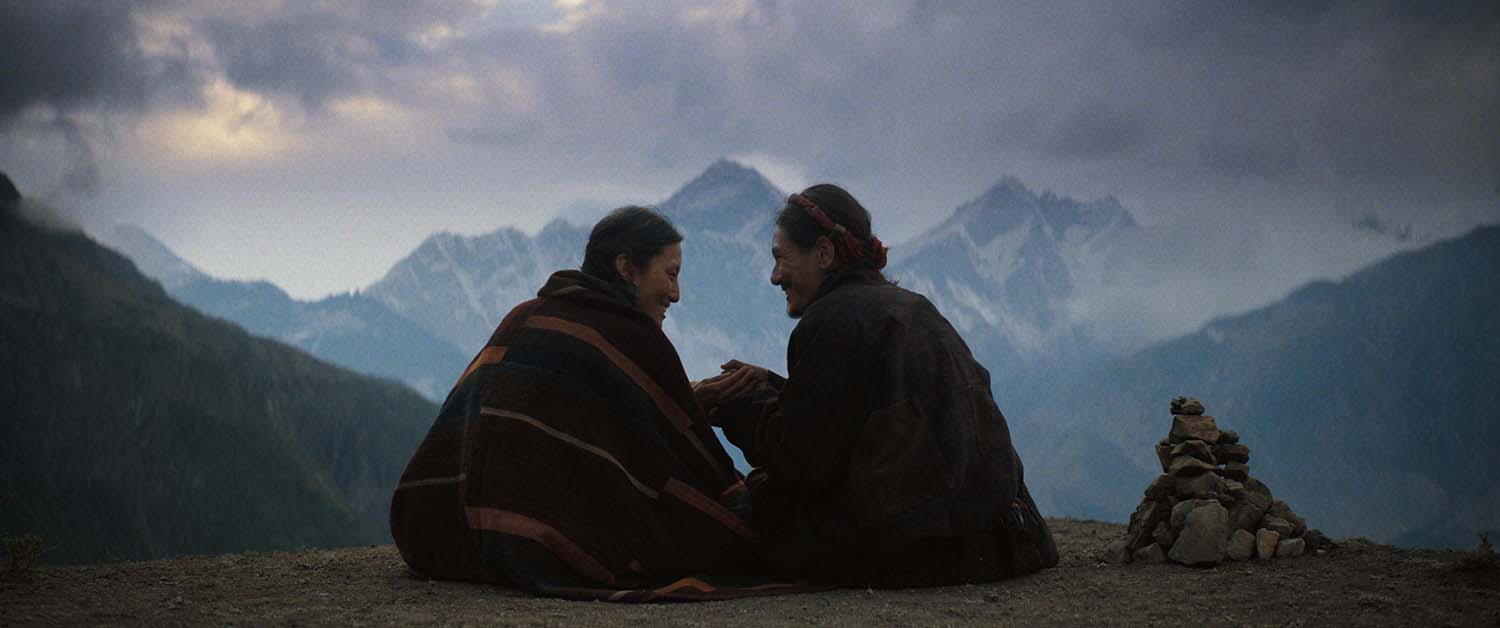
Thinley Lhamo and Genden Phuntsok in a scene from 'Tenzing'.
Norgay’s inclusion in the British team still came with challenges. Given that the Sherpas did not have the same living conditions as the white mountaineers, Norgay often took on the task of conveying and arguing for their needs and demands to the British managers.
‘Tenzing’ was shot in the mountains of Nepal and New Zealand by cinematographer Stefan Duscio (the TV series ‘Shantaram’ and ‘The Dry’). Duscio’s camerawork adds to the sense of adventure. The result is a film that looks spectacular.
Shooting in the mountains was important because the actors had to feel the altitude and the cold temperatures, not just imagine the environment. The landscape—the snow, the crunching sounds of boots taking steps, images of the climbers walking in a row across the treacherous mountains, the crevasses—then becomes an important character in the narrative. It’s not just a breathtaking backdrop.
Peedom is the right person to direct ‘Tenzing’. She spent two decades in the Himalayas, especially in the Everest region, making a number of documentaries—Solo (2008), Sherpa (2015), Mountain (2017) and River (2021). Her passion for the region and its stories is evident from the time she has spent working on these documentaries. This was all preparation for her finally directing the feature film on Tenzing Norgay.
The film’s production worked in close collaboration with Norgay’s family. His son Norbu Tenzing is one of the executive producers on the film. Along the way, the team also consulted other Sherpas and cultural advisers to bring authenticity to the script.
Eventually, ‘Tenzing’ works because it takes us into the mind and soul of its central character. Phuntsok portrays Norgay with warmth, through his eyes and smile. It’s a career-making performance for an actor who should find more global projects once ‘Tenzing’ is seen around the world.




 17.57°C Kathmandu