Mental wellbeing: There’s more to ‘feeling better’ after a walk in nature than you might think
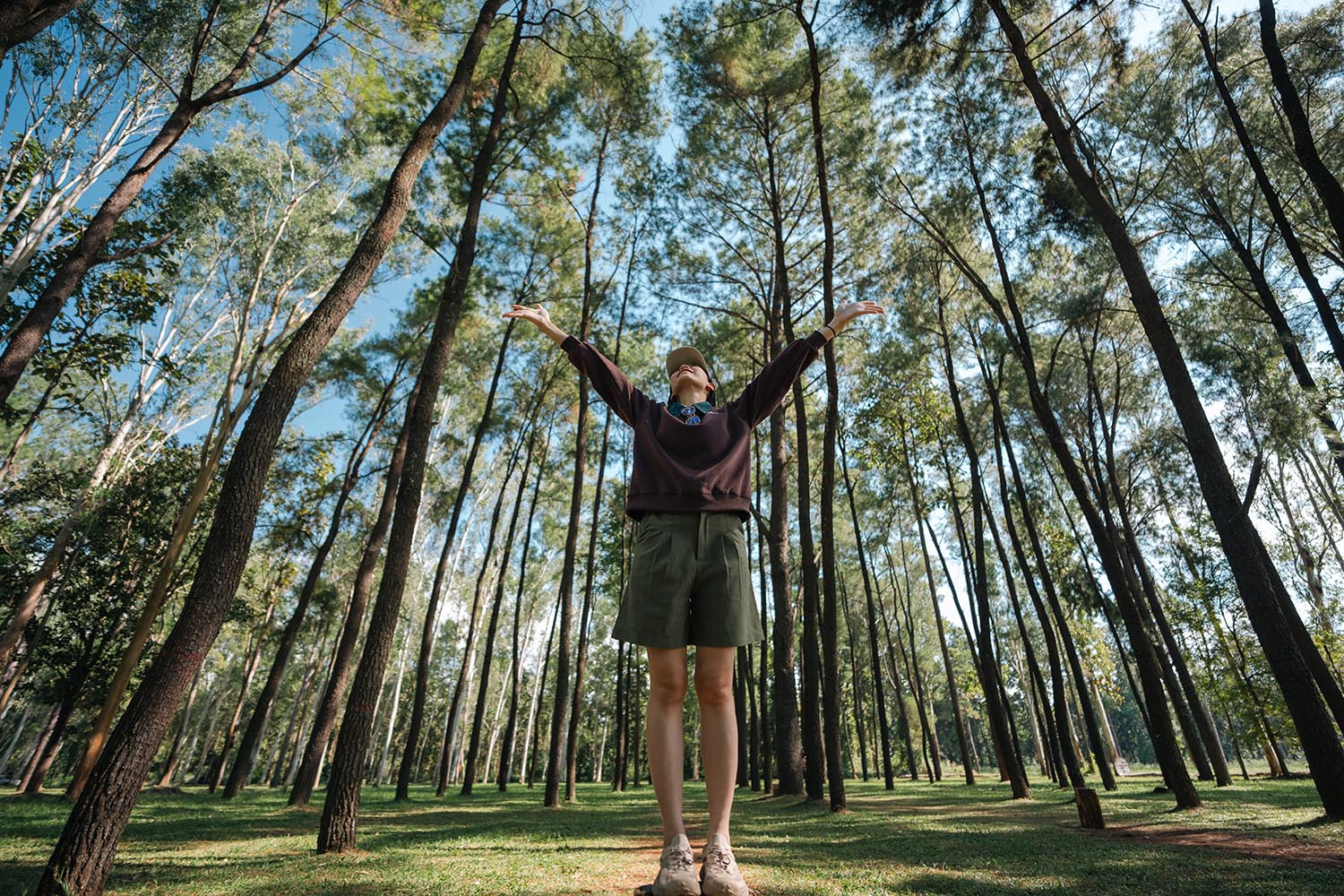
From chemicals released by trees to the way greenery gives our minds a rest, nature may be doing more to our minds and bodies than simply helping us unwind. The World Health Organization (WHO) also recognises that access to green and blue spaces can support mental and physical health. Shutterstock
There is something deeply calming about being in nature. I am sure you have felt this in one form or another.
Try to remember one of those days when your mind feels unbearably crowded. You have many thoughts running through your head; many things to figure out, without a sense of calmness. Then, somehow, you decide to step outside. You walk to a nearby park, sit beneath a tree, listen to the sounds of nature, and simply spend a few quiet moments with yourself.
What happens?
Somehow, you start to feel a little better.
Nothing outside of you has drastically changed. The problems may still be there. But your relationship with those thoughts feels different.
Perhaps this is one of the oldest forms of comfort we have overlooked: nature. For generations, people have turned to natural environments for rest, reflection, connection, and renewal. Yet, as our lives have become busy and disconnected from the natural world, we have forgotten just how much these moments can offer us.
This feeling is not simply in our imagination. An increasing body of scientific research suggests that spending time in natural environments can support both our mental and physical well-being.
The relationship between nature and health has been studied across psychology, medicine, public health, and environmental science. The World Health Organization (WHO) also recognises that access to green and blue spaces can support mental and physical health by providing opportunities for relaxation, physical activity, social interaction, and stress reduction.
But what is it about nature that makes us feel better?
Nature interacts with us in ways that go beyond what we immediately see. It influences our senses, emotions, stress responses, and even how we process our thoughts. Nepal is richly blessed with forests, mountains, rivers, and diverse landscapes. Yet, we often overlook the important role it can play in supporting our health and wellbeing.
Many countries, however, have long acknowledged the importance of nature in promoting wellbeing. Japan, for example, introduced the concept of Shinrin-yoku, or “forest bathing,” in 1982. The practice encourages people to slow down, breathe deeply, and mindfully engage with nature.
Scientific evidence supporting this practice has continued to grow. A meta-analysis of 36 studies involving 3,554 participants found that spending time in natural environments reduced symptoms of depression and anxiety. These findings suggest that being closer to nature may play an important role in supporting mental wellbeing.
Another interesting thing about nature is what we cannot see. Trees such as conifers release natural chemicals called phytoncides. These chemicals help protect the trees from insects, microorganisms, and other threats. But when we spend time in forest environments, we breathe in these chemicals too.
Many countries have long acknowledged the importance of nature in promoting well-being. Japan, for example, introduced the concept of Shinrin-yoku, or “forest bathing,” in 1982. Shutterstock
Research suggests that phytoncides may help lower stress hormones such as cortisol, adrenaline, and noradrenaline and may contribute to stress management. This could be one of the reasons why we often feel calmer, more relaxed, and lighter after spending time among trees.
But another important gift nature gives us is a break from the constant noise of everyday life. We spend so much of our day looking at screens, responding to messages, meeting deadlines, and thinking about what comes next. Our minds rarely get the chance to rest.
Nature offers a different kind of environment. The sound of leaves moving in the wind, birds singing, or the warmth of sunlight allows our minds to slow down and rest.
As a mental health practitioner, we often hear people share how difficult it is to stop the vicious loop of their thoughts. Their minds are constantly dwelling in the past or worrying about the future, making it difficult to come back to the present moment. One simple way to do this is by activating our five senses.
This is where nature can become a beautiful space for practicing mindfulness and grounding. Whenever you find yourself stuck in a cycle of thoughts, try stepping into a green space and focusing on what your senses are experiencing. A walk in your garden for example, provides several sensory experiences:
Sight → greenery, flowers, and natural scenery
Smell → the earthy smell of the trees and smells of flowers
Sound → birds, wind, leaves, and flowing water
Touch → the texture of leaves, grass, soil, or tree bark
Feel → the temperature, breeze, sunlight, and air around you
You can try this simple activity. For a few moments, instead of letting your thoughts control you, simply notice what you can see, hear, smell, touch, and feel.
This is also linked to what psychologists call Attention Restoration Theory. The idea is that our ability to concentrate can become tired, just like our bodies do. Natural environments may help restore this attention by giving our minds a chance to relax without demanding too much from us.
And the benefits of nature are not limited to our minds. Being in nature often encourages us to move. A walk in the park, a hike through the hills, gardening, or spending time outdoors can become a form of physical activity. Even small amounts of movement can support our physical health while giving us a chance to step away from a sedentary routine.
Of course, nature is not a replacement for therapy or professional mental health support. But perhaps we can see it as another tool for taking care of ourselves. Just as we make time for sleep, movement, connection, and rest, we can also make space for nature.
So perhaps the next time your mind feels crowded, you don't always have to find an immediate solution. Maybe step outside first. Sit under a tree. Take a slow walk. Listen to the birds. Feel the sunlight on your skin. Put your phone away for a few minutes and simply be there.
Your problems may still be waiting for you when you return. But perhaps you will return to them with a little more space in your mind. Maybe nature has always been there, quietly reminding us that healing does not always have to be complicated. Sometimes, it can begin with simply stepping outside.




 15.32°C Kathmandu

.jpg&w=900&height=601)