



 26.12°C Kathmandu

Sun, May 31, 2026
Culture & Lifestyle
‘Give to Gain’: The hidden labour of women
This year’s International Women’s Day theme, ‘Give to Gain’, highlights how supporting women at home, in workplaces, and in communities—amplifies their contributions, creating ripple effects that strengthen families and society.
bookmark![]()
Sabita Pariyar, 42, runs her own tailoring business. After finishing household chores, she opens her boutique at around 8 am. Post Photo: Mokshyada Thapa ![]()
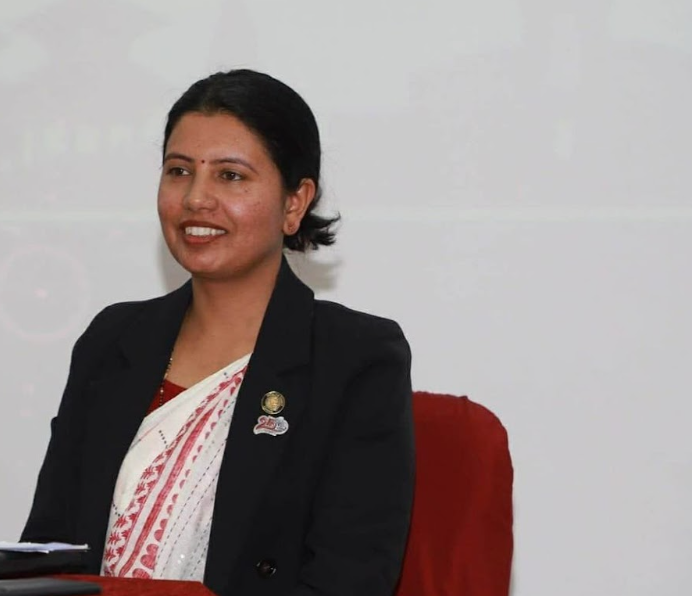
Laxmi Sapkota, an associate professor, says that women wear many hats and, like the goddess Durga, have numerous hands carrying out various duties. Photo: Provided to the Post
Mokshyada Thapa
Published at : March 8, 2026
Updated at : March 8, 2026 08:24
Kathmandu
The theme for this year’s International Women’s Day is ‘Give to Gain’. In this context, giving refers to supporting women and fostering opportunities for them.
For many working women, this theme reflects how they function both within their households and in the larger community. While their professional work may be recognised or appreciated, the invisible labour they perform at home often goes unnoticed. Waking up at five in the morning for puja, cooking meals for the family every day, welcoming guests with care, and making time to attend to children’s worries are just some of the tasks women routinely carry out.
Despite shouldering these responsibilities, many working women continue to navigate the demands of their professional lives, balancing both spheres with remarkable resilience.
According to the Nepal Economic Forum, 86 percent of women in Nepal are responsible for unpaid care work. Among them, many also participate in paid employment while continuing to carry out these household responsibilities. Their giving often far exceeds what they receive in return.
Yet women remain the backbone that sustains families, communities and professions, often without receiving the recognition they deserve. This year’s theme calls for the world to invest in women and meaningfully support their contributions.
Sabita Pariyar, 42, runs her own business, Dobhan Ladies Tailors, in Suryabinayak-02, Bhaktapur. Her routine begins at six every morning as she prepares breakfast for her family. After finishing household chores with her husband, she opens her boutique around eight.
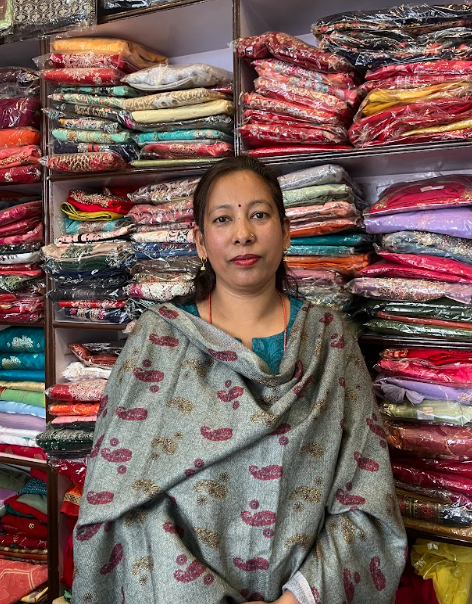
At the shop, she takes customers’ orders, notes down their measurements, arranges the store and stitches kurtas and other traditional wear. By eleven, her mother-in-law brings her a warm lunch.
She says, “My mother-in-law’s support has been a great help in running my business. While I am at the store, she takes care of the cooking, which allows me to focus completely on tailoring.”
Pariyar then works for another eight hours. In her view, the tailoring profession is physically demanding, requiring long hours of continuous effort.
What helps her balance work and domestic life, she says, is her family’s support. Her husband, who works in the same field, also assists her with the business. Pariyar believes that having a supportive partner and an understanding family has enabled her to pursue her passion for running a boutique that also provides employment to young women.
“Women should try to be as financially independent as possible. Using your education, skills and interests to achieve that should be your first priority in life,” says Pariyar when asked what advice she would give to other women.
Likewise, Laxmi Sapkota, an associate professor of business law and vice-principal at Kathmandu School of Law, shares her own experience.
She says, “My daily life is packed with responsibilities. I often have to move quickly from one role to another. My professional life requires constant attention and dedication, and when I return home, I switch roles to become a caring mother who listens to her children and attends to their needs.”
Sapkota believes that women like her wear many hats, carrying numerous responsibilities from morning to night. In that sense, she says, women are often like deity Durga, with many hands performing multiple duties.
Speaking about how people treat women in positions of authority, she recalls instances where a woman who speaks confidently is praised for speaking well. However, she notes that such remarks can sometimes carry a tone of backhanded appreciation.
“As a lawyer, I have experienced this myself. When I speak in a soft tone, I am asked to be more assertive. But when I do speak assertively, I am sometimes seen as arrogant. Even in my workplace, people often ask for a wakil sahab, as their perception still leans toward men being lawyers,” says Sapkota, highlighting a dilemma many women in the legal profession face.
Such incidents underline the need for workplaces to become more encouraging and inclusive spaces, rather than reinforcing existing societal stereotypes.
One message she shares with working women and those around them is: “Support working-class women, and it ultimately empowers our society through a ripple effect.”
For Seema Khadka, a tempo driver, the day begins at eight in the morning. She spends hours navigating Kathmandu’s busy, polluted streets, dealing with traffic, passengers, and long waits between rides. The behaviour of passengers often shapes the kind of day she has. Some treat her kindly, while others can be rude.
However, she says such behaviour is difficult to control in the transportation sector. “Earlier, there was a different outlook towards female drivers like me. Many people were sceptical about how well we could drive,” says Khadka.
Now, with the growing presence of women in transportation services, she believes that perception is slowly beginning to change.
Khadka believes that earning a livelihood is about more than just financial independence. She explains, “The money I earn feels completely different. When you depend on others for money, you get it, but it often comes with taunts and the sense that the person has the right to treat you however they wish.”
The stories of women like her highlight the meaning behind this year’s theme, ‘Give to Gain’. The ripple effect Sapkota mentions shows how small actions can have far-reaching consequences. Supporting a working woman—through fair treatment at work or simple encouragement at home—may seem minor, but such actions strengthen families, reinforce community values, and empower an entire generation. In this sense, giving leads to a gain that benefits everyone.
Mokshyada Thapa
Mokshyada Thapa is a Culture & lifestyle intern at the post. She is an A-level graduate from St. Xavier’s College.




Most Read from Culture & Lifestyle

A different kind of party is spreading in Kathmandu—quiet, sober and at dawn

Nepali film ‘Elephants in the Fog’ wins Jury Prize at Cannes

Together, but apart: Nepal’s growing phubbing culture
Himalayan Literature Festival to bring Pulitzer winners and poets to Kathmandu
What happens to a Nepali independent cinema after release?
Editor's Picks
Together, but apart: Nepal’s growing phubbing culture
Who is Nepal’s egg donation ban actually protecting?

Nepal-India relations in uncertain territory as new government charts assertive course
The sequel trend in Nepali cinema: Story continuity or commercial greed?
Crop-raiding monkeys are leaving hill farmers nothing to live on
E-PAPER | May 31, 2026

×