From the rise of scooter-riding girls to the commodification of food and sex, the anthology offers a thought -provoking examination of Kathmandu’s evolving urban landscape
Do you know that dance bars and restaurants flourished in Kathmandu during the country’s most turbulent political periods?
The late Panchayat years, the 1990 People’s Movement, and, especially, the Maoist insurgency were periods when the formal economy was unstable, and the future felt uncertain. Yet Kathmandu’s urban leisure industry expanded. When everything else was shrinking, nightlife in Kathmandu grew. It was fuelled by people seeking escape, anonymity, and a momentary break from the chaos outside.
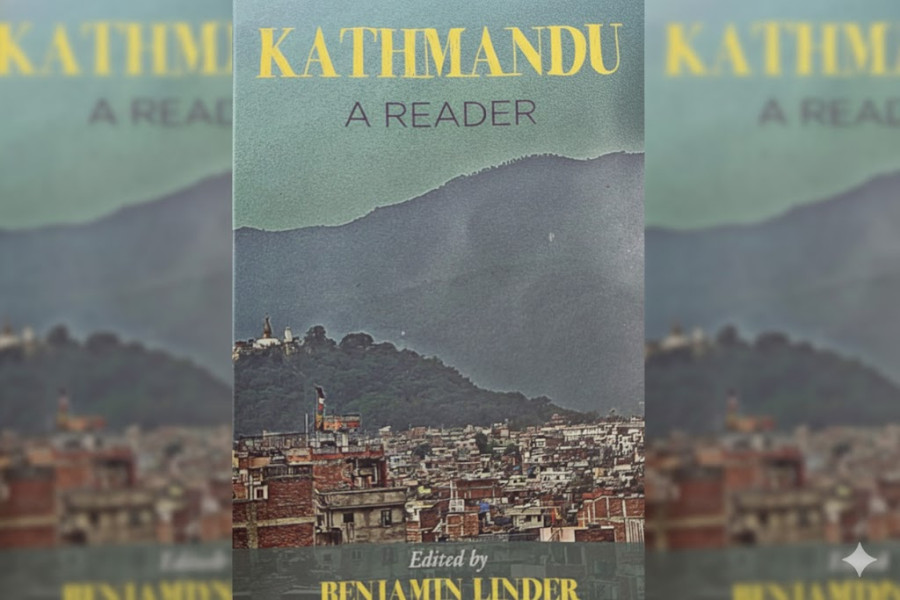
‘Kathmandu: A Reader’, published by Martin Chautari and edited by Benjamin Linder, traces these unlikely shifts in the city’s character. This anthology of anthropological essays captures Kathmandu in its many contradictions and transformations. It examines the city’s physical form, political histories, shifting social values, and the everyday practices that have shaped life in the Valley across the 21st century.
Mark Liechty’s chapter ‘Carnal Economies: The Commodification of Food and Sex in Kathmandu’ opens an unexpected window into the city’s past. One detail that caught my attention was how prostitution surged in the 1980s in Kathmandu, becoming one of the central subjects of investigative journalism at the time.
Four decades ago, reporters were walking into cabin restaurants, massage parlours and red-light pockets of the Valley, documenting how young girls, often from poor, marginalised communities, were being pulled into the industry.
It is instead striking to imagine a newsroom where prostitution, not political power or financial crime, dominated the investigative agenda. This shift says a lot about how Kathmandu’s anxieties and priorities have changed.
Likewise, it was fascinating to learn that even though Nepal’s nineteenth-century Muluki Ain strictly regulated sexual interactions along caste lines, today the dynamics have shifted—middle-class men, often upper caste, frequent sex workers from lower-caste communities. Old taboos about sexual propriety persist, but they operate differently: caste boundaries remain deeply tied to food and commensality, while sexual exchanges are increasingly mediated by money and market logic.
Liechty also addresses the perception of Nepali women in India. A significant number of Nepali women work in Indian brothels; hence, Nepal is associated with prostitution in the minds of many Indians. Readers can assume how this has contributed to a stereotype in popular culture.
References in Bollywood, such as in ‘Paatal Lok’, mentioned ‘Nepali whore,’ stereotyping Nepali women. It reflects how Nepal has become associated with commercial sex in the Indian imagination.
The ‘Scooty Girls’ chapter is equally interesting. It looks at how the arrival of the scooter reshaped gender dynamics in Kathmandu. It is surprising to realise how recently young women began appearing on the streets as independent riders. The book shows how scooters, unlike heavier and more masculine motorcycles, opened up the city for women in ways that now feel ordinary. Girls riding to college, work, or cafes is actually a relatively new shift in Kathmandu’s social landscape.
This chapter traces how mobility slowly became a form of autonomy. A simple machine changed how women navigated the city, how they were seen in public, and how they saw themselves.
Moreover, the essay on Thamel traces how tourism, commercialisation, and branding have reshaped cultural identity. I was surprised to learn that places like Jhamsikhel were once called ‘Little Thamel’, or ‘Jhamel’. The book explains how these nicknames emerged not organically but through a gradual layering of cafes, expat-friendly bars, boutique stores, and globalised aesthetics that began to mirror Thamel’s tourist-centric atmosphere.
The chapter makes you notice things you might otherwise overlook. The signage in English, the menus designed for foreign tastes, and the sudden saturation of yoga studios and minimalist restaurants are all part of the identity-making process. The book doesn’t judge these changes outright, but it highlights the cultural trade-offs underneath: when a place becomes a brand, what happens to the communities that shaped it?
‘Mapping the ideological construction of traditional places’ unpacks how ‘tradition’ itself gets manufactured, especially in places like Bhaktapur that are often marketed as Nepal’s cultural time capsules.
The author illustrates this through something as ordinary as a morning altercation in 1995: a local woman worshipping at a Ganesh shrine demands money from a tourist who photographed her, while the tourist insists he has already paid the Bhaktapur entry fee.
The incident is small, but the chapter uses it to show how tourism reorders relationships. People become part of the commodity. Locals become performers of ‘authenticity’. Tourists become ‘walking dollars.’ What we imagine as commercial desires, global gazes, and power imbalances in fact shape pure tradition.
Moreover, the discussion on ‘inauthentic sukumbasi’ in the chapter ‘Sukumbasi and the Politics of Aesthetics and Urgency’ is especially sharp. Middle-class suspicions that ‘real’ squatters must look poor, not wear clean clothes, not ride motorbikes, not appear aspirational. It reveals how poverty becomes aestheticised.
Borrowing Mary Douglas’s classic metaphor of ‘matter out of place,’ the author shows how the appearance of the poor becomes a measuring stick of legitimacy. If a sukumbasi does not visually conform to the stereotype of deprivation, their identity is dismissed as fraudulent.
This politics of appearance aligns closely with Ananya Roy’s argument about the ‘aestheticization of poverty’, where slums become images to be erased rather than communities to be understood. The chapter uses these theoretical lenses not as decorative references but as active tools to interpret Kathmandu’s shifting urban moralities.
In the end, ‘Kathmandu: A Reader’ succeeds in offering a multi-layered portrait of a city that is constantly reinventing itself. Although the collection is rich and analytically sharp, a future edition could benefit from including more essays by Nepali scholars and writers, whose lived proximity to Kathmandu’s social shifts would further deepen the book’s perspectives.
Even so, this anthology remains an excellent starting point for anyone trying to understand the Valley. Whether you approach it from anthropology, urban studies, or simple curiosity about the rhythms of Kathmandu, the volume broadens your horizon. It leaves you thinking long after you put it down.
_______
Kathmandu: A Reader
Editor: Benjamin Linder Publisher: Martin Chautari Year: 2025
Sanskriti Pokharel, a former reporter and sub-editor at the Post, is a final-year student of Journalism, Mass Communication, and English Literature at St. Xavier's College, with experience in media, research, and communication.




 15.68°C Kathmandu