Amid modern-day struggles, more youths are seeking mental health support
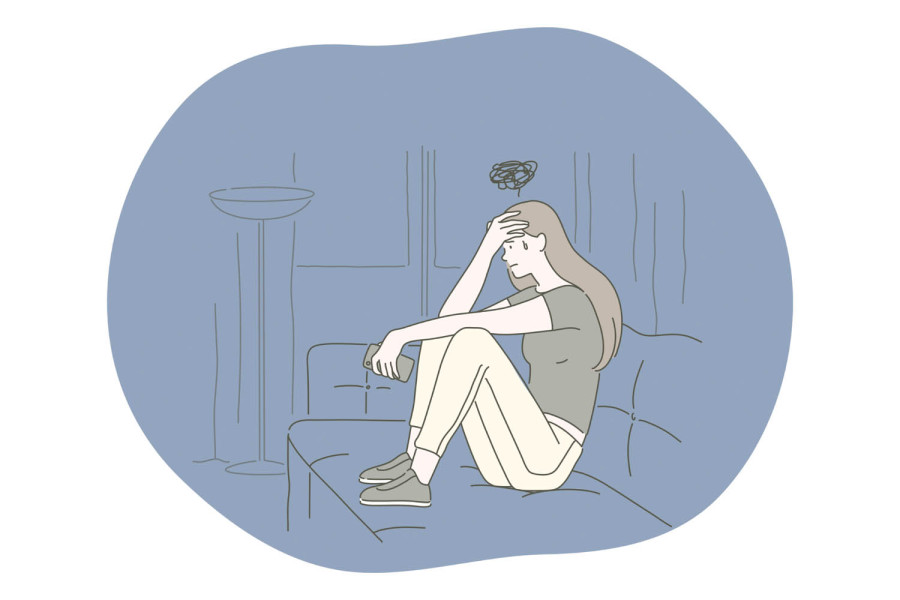
With more people seeking help, Nepal is witnessing a rise in mental health initiatives, ranging from counselling centres to online platforms. Shutterstock
In recent years, the rise of mental health spaces in Nepal has created a much-needed platform for people to openly share their struggles, seek help, and find community support. These initiatives have been important in reducing stigma and encouraging individuals to prioritise their mental well-being, from counselling centres and awareness campaigns to safe online platforms.
Mudita Singhania, co-founder of MindSpace, reflects on the factors contributing to the rise of mental health and well-being spaces in Nepal. “Globally, mental health has moved into the spotlight, and Nepal is naturally part of that wave. But it’s not just global trends—we’ve seen very local shifts too. Young people are more open to talking about emotions, social media has made awareness more mainstream, and the pandemic reminded us how fragile our well-being can be. Life has also become faster. Technology, work pressure, multiple roles to juggle—people are looking for places to pause, reflect, and take care of themselves,” she notes.
Singhania noticed a significant gap in Nepal’s mental health ecosystem: while conventional services focused mainly on treatment, few structured, client-centred programmes emphasised prevention and personal development. “We wanted to bridge therapy and coaching, helping people heal but also thrive,” she explains, highlighting the need for approaches sensitive to individuals who feel deeply or notice more traits often misunderstood in traditional care.
Alongside therapy, MindSpace runs workshops and workplace wellness programmes and collaborates with schools and colleges to create environments where well-being is an integral part of daily life. These initiatives are designed to address mental health challenges and cultivate emotional literacy, fostering greater compassion and balance in people’s lives. So far, the organisation has supported more than 15 clients through 75 one-to-one sessions, established four well-being partnerships, and hosted over ten group sessions.
Singhania also highlights the risks posed by the lack of regulation in Nepal’s mental health sector. In the absence of clear standards, inconsistent or unsafe practices can arise. While governmental policies and licensing are still evolving, organisations such as MindSpace are responsible for leading by example—maintaining transparency with clients, employing trained professionals, and developing accountable, ethical processes.
Singhania reflects on the challenges of running a mental health space in Nepal. Early on, she encountered scepticism, with many questioning whether the country was ready for such initiatives. One of her mentors compared mental health services to a dessert—nice to have, but not essential. While awareness is gradually increasing, stigma remains a significant hurdle. Financial sustainability poses another challenge, as mental health is still not widely recognised as an investment. On top of that, there is a shortage of trained professionals, making the development of a skilled and compassionate workforce a long-term endeavour.
Sabina Giri, founder of The Healer Nepal, explains that although the organisation was officially registered in 2025, its initiatives had started much earlier. “Even before our legal establishment, we were offering free counselling sessions online and in person,” she recalls. Since then, the organisation has expanded its impact. Over 227 school and college students have participated in programmes on psychological well-being and resilience, while more than 21 individuals have received structured counselling and psychotherapy. In addition, free orientation sessions have reached over 100 participants, helping them build awareness and practice self-care.
Giri also highlights the importance of equipping educators, with over 30 schoolteachers trained to support their students’ mental health. The organisation’s reach does not stop at physical sessions—its social media campaigns have become a crucial platform to raise awareness nationwide, connecting with young people and communities who might otherwise be left out. “Digital platforms allow us to reach those who may not have access to traditional mental health services,” she adds, underscoring the organisation’s commitment to inclusive support.
Rakesh Ghimire (name changed), a young professional from Kathmandu, shares his experience seeking support from a newly established mental health space. What immediately struck him was the setting and approach. Unlike the rushed, impersonal environment often found in hospitals, this space felt safer and more personal, allowing him to engage without pressure. “It made a big difference,” he recalls, noting how the thoughtful, unhurried atmosphere helped him feel more at ease.
Through his sessions, Rakesh became more aware of his thought patterns and the reasons behind certain conclusions he often reached unconsciously. “It showed me a lot about how I think and why I came to certain conclusions,” he explains. The experience helped him reflect on his behaviour and emotions in ways he hadn’t considered before.
He contrasts this with traditional hospital visits, where mental health professionals often seem pressed for time and quick to prescribe medication rather than listen. “I don’t want another prescription; I want to get to the root of my issue and understand myself better,” he says.
The non-hospital setting itself played a crucial role in making Rakesh feel comfortable. The experience felt personal, informed by genuine training and care rather than just clinical textbook knowledge.
When asked about the broader impact of such organisations in Nepal, Rakesh sees both promise and pitfalls. “There are definitely some places trying to make it better. But there’s also the issue of ‘fast-food psychology,’ where celebrity psychologists justify anything you do. Their main goal is to make you feel better, not to make you better,” he observes. Despite this, he appreciates spaces that focus on real understanding, highlighting their importance for young people and anyone struggling with mental health
Rama Sharma (name changed), a recent graduate in social sciences, reflects on her journey with mental health support in Nepal, highlighting the vital role of organisations and safe spaces. She describes her experience as “truly wonderful,” noting that in a society where mental health remains stigmatised and often hidden, having spaces that openly provide support helps normalise seeking help. For her, simply having a safe environment where she could “just be” was one of the most supportive and healing aspects of the process.
After accessing support, she noticed significant changes in her self-awareness. Therapy helped her better understand emotions and recognise that while feelings are always valid, behaviours remain a personal responsibility. She describes this realisation as transformative, shaping the way she approaches her thoughts and actions.
Compared to a hospital or doctor’s visit, she found mental health spaces far more personal and reflective. It was not just about addressing symptoms but about being heard and understood, and given a space to process experiences. “That’s what makes the experience different,” she notes.
Several aspects of the environment contributed to her comfort in seeking help. The welcoming, non-judgmental atmosphere allowed them to speak freely, reducing fear of misunderstanding or criticism. Such support made the process far easier and more meaningful.
Looking at the broader impact of these organisations in Nepal, the graduate believes they are making a positive difference. By providing accessible support and encouraging open conversations around mental health, these spaces help shift perspectives, particularly among young people. They emphasise that seeking help should not be seen as a sign of weakness, but rather as a courageous step towards strength.




 22.44°C Kathmandu