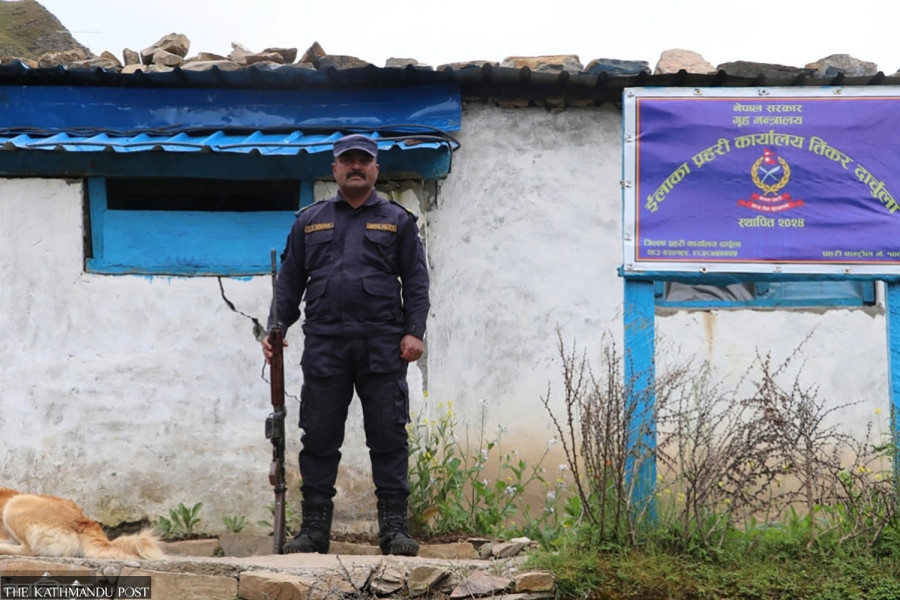
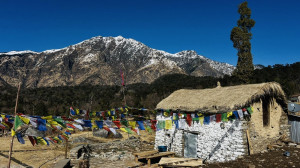
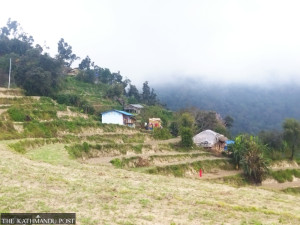
Personnel have been moved to the Sitapul police post in Chhangru due to extreme cold in Tinkar. A policeman stands guard at the Area Police Office at Chhiyalek in Byas Rural Municipality, Darchula in this undated photo. Post file photo
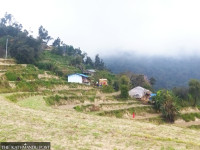
The Tinkar area along the Nepal-China border in the northern part of Darchula district has effectively been left unguarded after security personnel deployed for border security and surveillance descended to Chhangru to escape the biting cold.
As the residents of Tinkar village began moving down to lower altitudes ahead of winter, security personnel also left the area in the first week of mid-November. An Area Police Office had been established at Chhiyalek near Tinkar and a Border Outpost (BOP) of the Armed Police Force (APF) was set up there two years ago. However, the security posts—which are located about two-and-a-half to three kilometres above Tinkar village—have now been vacated, with personnel relocating to Chhangru in ward 1 of Byas Rural Municipality citing lack of infrastructures and logistics to beat extreme cold.
Deputy Superintendent of Police Gaurav Mahat, chief of the District Police Office in Darchula, said that due to the extreme cold in Tinkar, police personnel have been shifted to the Sitapul police post in Chhangru, and they will return only around April-May. He explained that the intense cold causes water sources in Tinkar to freeze, creating a severe drinking water shortage. “There is no proper infrastructure to withstand the cold, nor is firewood readily available. For these reasons, it is not possible for security personnel to stay in Tinkar during the winter season,” he said.
With both the Nepal Police and the Armed Police Force personnel moving down, the Tinkar Bhanjyang crossing, including the area around border pillar No 1 with China, is now unguarded. The security forces have been staying in Chhangru and Sitapul. Due to the lack of physical infrastructure where security personnel can remain throughout the year, the Tinkar area remains without a regular security presence from November to May every year. In previous years as well, there has been no presence of Nepali security forces in the area after November.
“At present, the temperature in Chhangru is already below freezing point. In Tinkar, it is even colder,” said Phanindra Bahadur Shahi, Deputy Superintendent of Police of APF Company No 50 in Chhangru. “At night, the temperature can drop to minus 15 degrees Celsius. We neither have proper shelter nor the necessary equipment to live in such conditions.” He said that the personnel currently stationed in Chhangru will return to the Tinkar BOP in around May. He, however, said that they are conducting patrols in the Tinkar area from Chhangru in the meantime.
To ensure the security of the tri-junction border area, both the Armed Police Force and Nepal Police have been deployed in the Byas region. According to Shahi, regular patrols are carried out from Chhangru to areas such as Kalapani, Dopakhe and Rakang. Reaching the upper Tinkar region is difficult, but patrols are conducted on a day-return basis. He added that due to problems related to food and shelter in extreme cold, security forces are compelled to patrol the entire Byas region on a same-day return basis during winter.
“Given the strategic importance of the tri-junction area, the state must construct appropriate, weather-resilient infrastructure and provide climate-appropriate clothing and facilities so that security personnel can be stationed there throughout the year,” said Dan Singh Tinkari, a local resident of Tinkar. Locals have also emphasised that the government must ensure proper physical infrastructure and year-round deployment to control illegal activities in the border region and prevent interference from foreign countries.
In the Tinkar area, snow accumulates to a depth of five to seven feet from November of April, making access and habitation extremely difficult without proper preparation.
Chinese authorities had closed the border passes in January 2020 to prevent the spread of the coronavirus, which hugely affected Nepalis living in the remote mountain villages close to Tibet. The border closure affected a large number of Nepali traders, seasonal workers and residents of several mountain districts, including Darchula.
Villagers living near the China border are dependent on Tibet for essential commodities, as much of the rugged terrain is yet to be connected by Nepal’s national road network. Tibet is also the major market to sell their products ranging from medicinal herbs to farm animals.
The trans-Himalayan trade points along the Nepal-China border were finally reopened after four years in 2024. The reopening of the Tinkar transit point for trade after Covid-19 has renewed interest in this border crossing. But with border personnel absent for half the year, the effectiveness of trade regulation and border security remains questionable.




 22.73°C Kathmandu