Nepal returns to global ICT Index but digital use still lags infrastructure growth
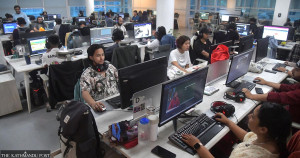
The report highlights a wide gap between the availability of digital infrastructure in the country and how effectively people use it. AI-generated image
Nepal has reappeared in the International Telecommunication Union’s (ITU) global ICT Development Index after a three-year absence, but the latest assessment shows that while the country has significantly expanded its digital infrastructure, it continues to struggle to translate improved connectivity into meaningful and productive internet use.
Nepal scored 68.1 points in the ICT Development Index 2026, returning to the global ranking after failing to qualify since 2023 because it could not submit complete official data on time. This year, the country met the ITU’s minimum requirement by providing at least five of the ten official indicators used to compile the index.
The report highlights a wide gap between the availability of digital infrastructure and how effectively people use it. Nepal scored 83.7 in the index’s Meaningful Connectivity pillar, which measures network infrastructure, device ownership, affordability, digital skills and online security. However, it scored only 52.5 in the ‘Universal Connectivity’ pillar, which assesses internet adoption and how people actually use digital services.
The 31.2-point gap suggests that internet networks are expanding much faster than their productive use, reflecting what the ITU describes as a ‘usage gap’.
The report notes that this gap generally narrows as countries become wealthier. High-income economies record an average difference of only four points between the two pillars, while several developing countries continue to face much wider disparities.
Nepal Telecommunications Authority (NTA), the regulatory body of telecommunication, acknowledged that expanding infrastructure alone is not enough to accelerate digital transformation.
“Our infrastructure expansion has been encouraging, but we still have considerable work to do to improve digital usage,” said NTA spokesperson Min Prasad Aryal. “We plan to prepare targeted strategies and action plans based on different indicators so that Nepal can improve its position in future editions of the index.”
Aryal said the focus should now shift towards ensuring productive and high-quality use of digital infrastructure rather than simply extending network coverage.
Nepal’s overall score also remains below both the global average of 79 points and the Asia-Pacific regional average of 80, underscoring the challenges the country faces despite steady progress in telecommunications infrastructure.
Within South Asia, Nepal ranks in the middle. Bhutan leads the region with a score of 86.4, followed by Sri Lanka at 78.2. Bangladesh scored 68.9, while Pakistan received 67.7. India was not included in this year’s index.
Aryal said Nepal could learn from neighbouring countries that have combined infrastructure investment with stronger legal frameworks, digital literacy and effective implementation.
According to the report, 48.4 percent of Nepal’s population uses the internet, while 73.1 percent own a mobile phone. Internet access has reached 52.5 percent of households. Around 90 percent of the population is covered by 3G mobile networks and 81.6 percent by 4G/LTE services.
The report also shows there are 55.4 mobile broadband subscriptions for every 100 people. Average monthly mobile broadband consumption stands at 17.6 gigabytes per subscription, while fixed broadband users consume an average of 43.7 gigabytes each month.
The cost of high-usage mobile data and voice services equals 2.9 percent of Nepal’s gross national income per capita, while entry-level fixed broadband services account for 1.1 percent. The ITU said some indicators, including internet users, household connectivity and mobile ownership, were estimated using data from sources such as the World Bank and historical trends because complete national statistics were unavailable.
Aryal said the authority is now preparing for the rollout of 5G and stronger digital skills programmes while improving the country’s data collection system to strengthen Nepal’s standing in future global digital assessments.




 14.58°C Kathmandu