In the village of Bahundangi in eastern Jhapa, fear of wild elephants remains a daily reality. As night falls, herds crossing the Mechi river often enter the settlement, causing damage before retreating.
Amid this persistent threat, women affected by elephant incursions have turned to an unusual solution: an ‘elephant-friendly community homestay’ that is helping them move beyond the trauma while generating income.
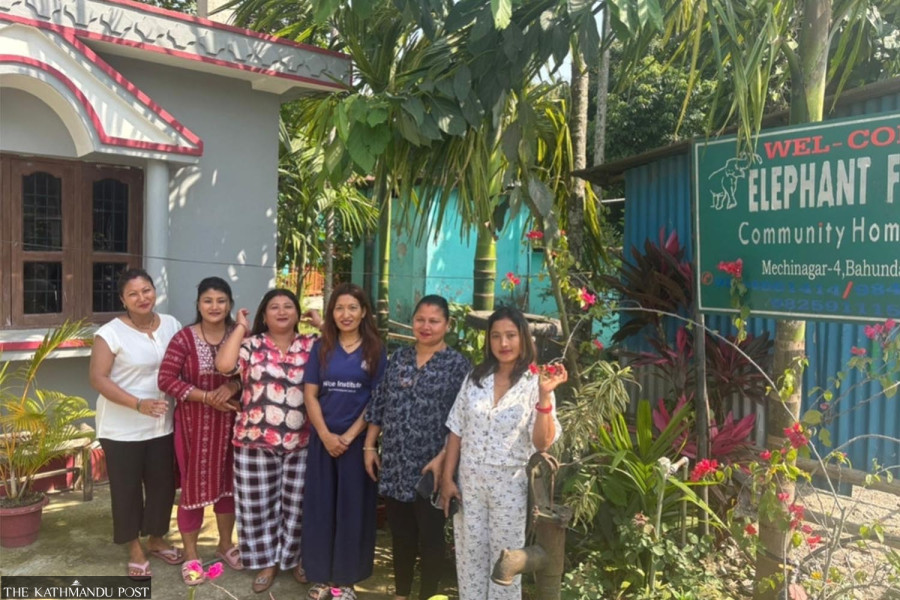
Started four years ago, the homestay has become a symbol of collective effort among local women. Women, including Gita Pradhan, Uma Raut, Uma Pradhan, Paru Pradhan, Rupa Pradhan, Pabitra Pradhan, Shanti Pradhan, Anu Karki and Radha Nepal, are actively involved in the initiative.
The operating model is collaborative. When guest numbers are high, they cook together and serve meals collectively. When fewer visitors arrive, hosting responsibilities are divided among individual households.
“We are always ready to serve visitors,” said Uma Pradhan.
The group says it can comfortably host 60–70 guests and manage up to 300 people when needed. Visitors are accommodated in local homes and served traditional food.
“We serve what we eat ourselves,” said Pabitra Pradhan. “We also provide the same kind of accommodation we use.”
The homestay’s income is managed transparently, with earnings shared equally after expenses are deducted. Support from families has also made operations easier, they said.
The women have also received training from various organisations, learning hospitality skills along with food preparation techniques. “We are ready to serve visitors with a warm smile and good food,” said Paru Pradhan. “Service and hospitality define us.”
For Uma Raut, a member of the homestay, the initiative has been life-changing. After spending years abroad, she returned home four years ago and chose to remain in Nepal.
She first went abroad in 2005, spending two years in Saudi Arabia, followed by 13 years in Dubai and two years in Kuwait. While overseas work improved her financial situation, it also kept her away from her family.
“I spent 17 years abroad. Now I will spend the rest of my life in the village,” she said.
Bahundangi, long known for elephant fear, is now attempting to rebrand itself through the ‘elephant-friendly’ concept. Local women are linking culture, food and hospitality with tourism to create a sustainable source of income.
“This initiative has not only strengthened the economic condition but also made women self-reliant and confident,” said Arjun Kumar Karki, ward chair of Mechinagar Municipality-4. “They are no longer just housewives, but successful entrepreneurs.”
In Bahundangi, wild elephant raids have become a regular ordeal. What used to be occasional visits by one or two elephants now sees large herds of 50 to 60 entering the village and surrounding fields.
Human-elephant conflict in the area has grown in both scale and frequency over the years, with locals reporting that herds now often include calves. In one recent incident, a herd that crossed the Mechi river caused extensive damage to a betel nut plantation, snapping more than 400 trees.
Efforts by residents to chase elephants away have had limited success, and the destruction sometimes extends to houses and other property. Various deterrent methods, including beekeeping and chilli-coated ropes, have been tried, but none have provided a lasting solution.




 25.12°C Kathmandu