Parties gear up for local elections despite no date being set
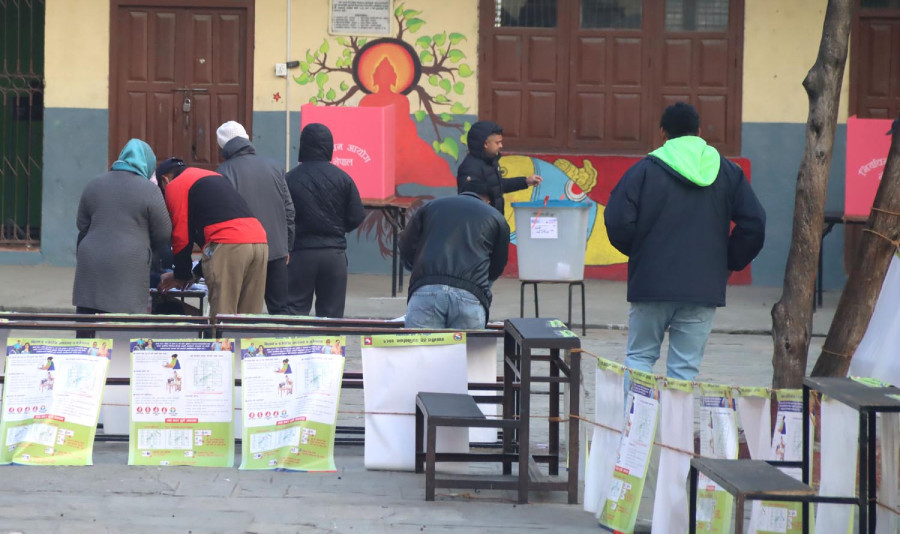
The RSP has opened applications through its Candidate Club, while the Congress plans primaries and the UML and NCP focus on strengthening their organisations. RSS File Photo
Major political parties have stepped up preparations for local elections, although the government has yet to announce a date. The ruling Rastriya Swatantra Party (RSP) will be contesting local elections for the first time. The Nepali Congress, CPN-UML and other parties, which secured relatively weak support in the March House of Representatives elections, are seeking to retain their traditional support base at the local units.
The RSP has begun its candidate selection process through its Candidate Club. The Nepali Congress plans to select candidates through direct voting by party members, while the UML is preparing its election strategy by strengthening its organisation and assessing its support base. The Nepali Communist Party (NCP) has begun expanding its organisation down to the ward level and preparing to select candidates through a nationwide political awareness campaign. Other parties have also stepped up activities ahead of the polls.
In the 2022 local elections, the Nepali Congress won 327 of the country's 753 local governments, followed by the UML with 207 and the NCP with 142. The Janata Samajbadi Party-Nepal (JSP-N) won 30, the Loktantrik Samajbadi Party (LSP) 16, while other parties and independent candidates secured the remaining 31.
The RSP, which leads the government on its own, is expanding its organisation nationwide and has already invited applications for local election candidates through its Candidate Club.
The party has formed a committee, led by General Secretary Bipin Kumar Acharya, to oversee and coordinate implementation of its candidate selection framework. RSP chair Rabi Lamichhane announced the Candidate Club on August 17.
The party has also formed several subcommittees to manage the selection process. Kabindra Burlakoti heads the Candidate Club subcommittee, Sushant Vaidik the technology subcommittee, Janak Singh Dhami the complaints coordination subcommittee, and Toshima Karki the inclusion and women's participation subcommittee. Tashi Lhazom is coordinating capacity development, Rahbar Ansari is overseeing management, and Milan Limbu is leading publicity.
The RSP opened applications on November 1 for mayoral and deputy mayoral positions across local governments, as well as ward chair and ward member positions in metropolitan and sub-metropolitan cities.
RSP spokesperson Jagdish Kharel said the party had received an encouraging number of applications for mayoral and deputy mayoral positions. “We will begin selecting candidates as soon as the election date is announced,” he said.
The party has also started work on its election manifesto. “We have begun preparations with a focus on local issues,” Kharel said. “Our priority now is local and provincial elections.”
Although the RSP holds close to a two-thirds majority in the House of Representatives, it has no representation in the National Assembly. As local and provincial elected representatives vote to elect members of the upper house, the results of the forthcoming local and provincial elections will also be important for the RSP.
The new Nepali Congress central committee, led by Gagan Thapa and elected at the party's 15th general convention in early October, has also begun preparing for the local elections.
The political report endorsed by the convention sets out a clear policy of contesting the elections independently, without pre-election alliances. It says candidates will be selected through primaries, or direct voting by party members, based on merit and their contribution to the party. The process, it says, will end the influence of factional affiliations, personal connections and money in ticket distribution.
The report also proposes setting up a Youth Council for people aged 18 to 21 and a Wisdom Council for senior citizens. It pledges to ensure that women make up at least one-third of the office-bearers at every level of the party.
Congress General Secretary Pradip Paudel said the party's central working committee would draw up a concrete plan for the local elections. Lower-level committees have been activated and instructed to remain prepared, he said.
“We have already started preparing for the local elections. Work is also under way to add names to the voter rolls and identify local issues that should be prioritised during the campaign,” Paudel said.
He said the party would select candidates through direct voting. “We will send central representatives to every local government. They will then work on selecting candidates and identifying local issues,” he said. “We will contest the elections on our own. There will be no alliance.”
Although the UML and the NCP had been considering an electoral alliance for local and provincial elections, both parties are currently pursuing their preparations separately.
The UML held a national gathering in Kathmandu a week ago and adopted a special resolution on the local elections. It also instructed local-level chiefs and their deputies to begin preparations for the polls.
UML General Secretary Shankar Pokhrel said the gathering had endorsed a report on election preparations.
Under the party's plan, each ward committee will update its records of the number of voters, party members, supporters, well-wishers, affiliated organisations, influential local figures and key issues in its area.
The NCP, meanwhile, is continuing a two-month nationwide political awareness campaign focused on the elections. Senior leader Barshaman Pun said the party was expanding its organisation down to the ward level and preparing to select candidates.
“We have been discussing local issues with the public and have begun the groundwork for selecting suitable candidates,” Pun said. “We will hold ward and local-unit conventions by mid-February 2027.”
JSP-N chair Upendra Yadav said his party was also holding programmes focused on the local elections. The JSP, Janamat Party, LSP and Nagarik Unmukti Party are considering an electoral alliance through their Progressive Front.
Shram Sanskriti Party chair Harka Sampang has been holding public gatherings centred on voluntary labour as part of his party's local election campaign. The party has already held around half a dozen such gatherings in eastern Nepal.
Aren Rai, the party's general secretary and a member of parliament, said it was organising meetings and interactions with the local elections in mind. “Interest in the Shram Sanskriti Party is growing, particularly among young people,” he said.
The Rastriya Prajatantra Party, meanwhile, has said it will begin preparations for the elections after holding its national convention on December 12, 13 and 15.




 13.12°C Kathmandu