



 19.76°C Kathmandu
Tue, Oct 27, 2026
Opinion
Doubtful prognosis
The FRA project should have verified its findings with publicly available data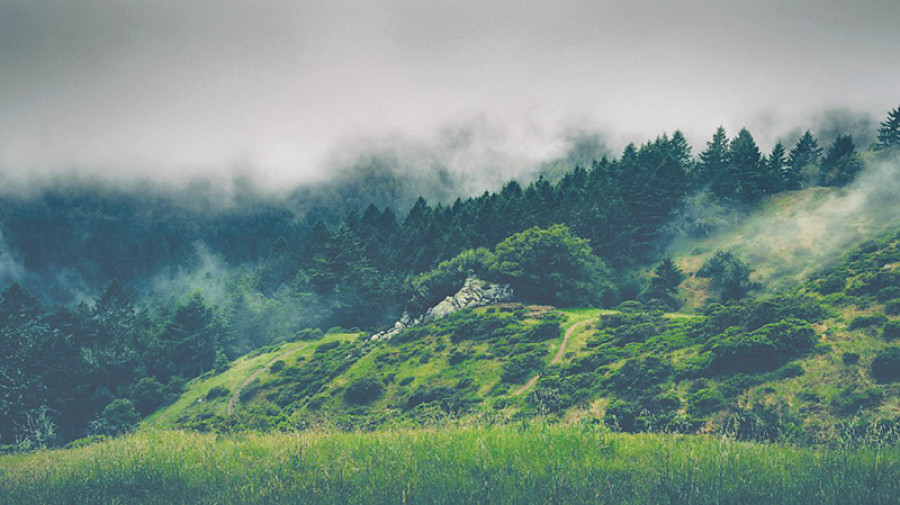
bookmark
Uttam B Shrestha & Hemant R Ojha
Published at : March 18, 2016
Updated at : March 22, 2016 00:00
Recently the news about the increase in Nepal’s forest cover circulated widely, as did the scepticism about the report that stated it. According to the Forest Resource Assessment (FRA) report, supported by Finland and led by Nepal’s Ministry of Forest and Soil Conservation, the forest area has increased by 5.15 percent within the last 21 years. While this appears optimistic, there are some contradictions concerning the report’s scientific merit and reliability for policy decisions.
The particularly contentious fact is that the FRA’s results contradict the findings of the highly regarded report of the Global Forest Watch (GFW). The GFW report states that Nepal has lost net 25,100 hectares of tree cover from 2001 to 2014, whereas the FRA report asserts a gain of 290,000 hectares.
GFW is an open source web application to monitor every forest in the world in near real time and in a high resolution. This global data-set has been used to evaluate forest cover change by governmental and other agencies globally, including those in Indonesia, China and Amazonia.
With a strong research methodology, the reliability of FRA findings would have improved further had those been reconciled with the results of other reports. We are living in an era with remote sensing and spatial analysis capabilities that are improving dramatically in recent years. Despite intensive research effort, the FRA project should have verified its findings with publicly available data such as GFW.
Methodological weakness
One of the reasons for such a significant variance in the results is the difference in defining the forest area. Unfortunately, there is no shared definition of forests globally. Three common criteria for defining forests are canopy cover, intact area and the height of the trees, but they are not uniformly used by different agencies. The thresholds for canopy cover used by FRA (10 percent or more) and by GFW (30 percent or more) might have led to the difference in results. Nevertheless, capturing higher tree density and larger forested units, the GFW can be considered more robust than the FRA in assessing forest area changes.
Another contradiction in the FRA report is related to its analytical approach. It is reported that the ‘hybrid approach’ using automated image classification and extensive visual interpretation was used to classify forests from satellite data. However, as recent research shows, visual interpretation is highly subjective and hence a less reliable approach to analyse large volumes of data.
It is surprising that the analysis was based on visual interpretation, despite the fact that there is no dearth of computing and analytical capacities these days due to technological advancement. A better analytical tool for visual interpretation is, for example, Google Earth. This cloud computing platform has been used by governments, NGOs and independent researchers to analyse a large volume of satellite imagery.
Replicability is one of the key pillars of any scientific research. However, the data used in the FRA report is hardly accessible to other researchers if they wish to analyse it. FRA has used the satellite image from the commercial company Rapid Eye. Indeed, it provides images of a 25 meter higher spatial resolution than the freely available Landsat data operated by NASA and United States Geological Survey. But the question is whether such a high-resolution data is worth the investment. The commercially purchased data to assess forest condition, as done in the case of FRA, is too expensive for Nepal and Nepali researchers.
Weak inferences
The FRA report also leaves some measurement gaps. The report measures forest cover change, but not the factors that may have caused this change. We cannot plan right interventions unless we know the proximate and underlying causes of deforestation. The report identifies two contributing factors of forest gain and 15 different drivers of forest disturbances. How these factors interacted and contributed to the net reported gain of the forest area is not mentioned.
Studies indicate community forestry as a contributor to forest cover gain, but large-scale studies to assess the causes of this relation are missing. The generic evidence presented in the report and anecdotal cases of specific community forests are insufficient for the kind of causal inference made on forest area improvement.
Reconciling results
Despite these contradictions, the FRA report is a major contribution to quantitative measurements of the condition of Nepal’s forests after two decades. This can stimulate crucial discussions about forest cover change and policy. Yet, several caveats of the report need to be considered before it can contribute as a robust scientific study. In doing such assessments, research agencies and researchers should look out for open data on the internet. Finally, future forest assessment must also include measurement of potential drivers of forest change so that the analysis becomes more relevant to policy making.
Shrestha is an environmental scientist; Ojha is public policy expert

Editor's Picks

What to know about the US trial over Mamta Kafle’s disappearance
NPL returns with bigger ambitions and global recognition
What’s new in the Nepal Premier League’s third season?
After Nepal’s recent disaster, it wants to test whether COP31 can deliver climate justice

Why does an hour long flight to Dhangadhi cost more than a flight to New Delhi?
E-PAPER | October 27, 2026

×