US deports record number of Nepalis under strict immigration crackdown
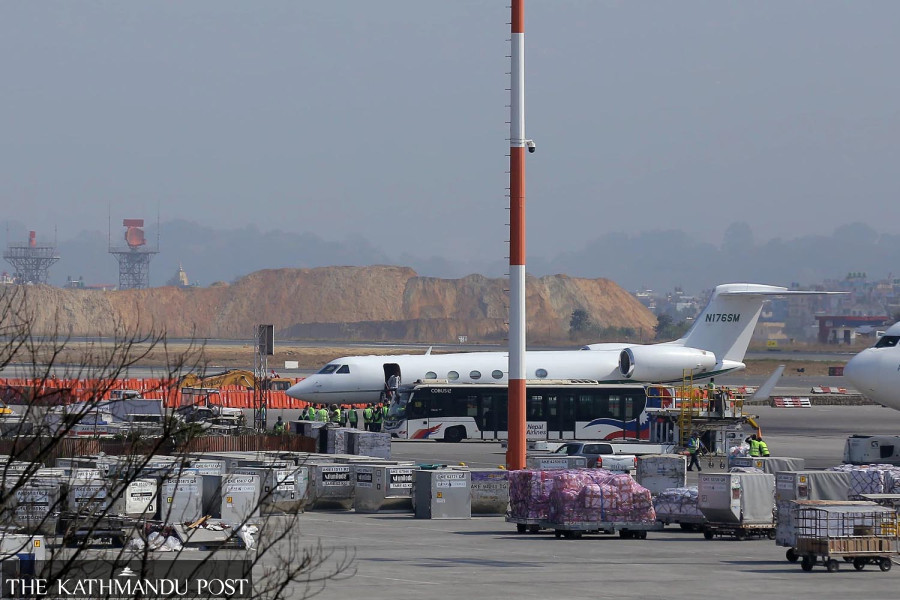
Since Trump’s second term began, US immigration crackdowns have led to the deportation of 585 Nepalis, with January 2026 recording the highest monthly total. Post File Photo
Since Donald Trump began his second term as the 47th president of the US on January 20, 2025, 585 Nepalis have been deported. The strict enforcement of policies targeting undocumented immigrants has affected Nepalis as well.
A total of 1,365 Nepalis living without proper documentation were placed on a deportation list to be processed within a year. The Trump administration has specifically targeted undocumented immigrants involved in criminal activities. Deportations are carried out under the coordination of the US Department of Homeland Security and executed by US Immigration and Customs Enforcement (ICE).
Monthly deportation figures for 2025 were: January 6, February 18, March 32, April 26, May 58, June 42, July 17, August 16, September 53, October 38, November 80, and December 98. In January 2026, 101 Nepalis were deported, marking the highest single-month figure to date.
During Trump’s first term (2017–2021), 425 Nepalis were deported: 99 in 2017, 44 in 2018, 162 in 2019, 97 in 2020, and 23 in 2021. Under Joe Biden (2021–2025), 170 Nepalis were deported for living in the US without legal documents.
Undocumented immigrants who opt for voluntary deportation are offered US$2,600 and a free flight. The Department of Homeland Security estimates that the average cost of deporting one undocumented immigrant through the normal process is US$18,245, while voluntary deportation costs only US$5,100. Secretary of Homeland Security Kristie Noem told media outlets that those who refuse voluntary deportation will be arrested and barred from returning to the US.
Among undocumented immigrants in the US, the largest groups come from Mexico, followed by El Salvador, India, Guatemala, Honduras, China, the Dominican Republic, Venezuela, Brazil, and Colombia.
The US Department of State has paused all immigrant visa issuances to nationals of countries, including Nepal, whose immigrants have a high rate of collecting public assistance at the expense of US taxpayers.
Likewise, Nepali nationals who are deemed otherwise eligible for a B1/B2 visa must post a bond of up to $15,000. At the time of interview, the consular officer will inform the applicant whether they are eligible for a visa and will provide instructions on how to pay this bond.
Immigrant visa applicants from the affected countries can apply and attend interviews, and the US Department of State will continue scheduling appointments, but no immigrant visas will be issued to these nationals during the pause.
“Applicants must not use any third-party website for posting the bond, nor pay a bond before instructed to do so by a consular officer,” said the US Embassy in a notice. “B1/B2 visas for nationals of Nepal cannot be issued until the bond has been paid. This requirement applies regardless of place of application.”
A US B1/B2 visa is a non-immigrant visitor visa for temporary travel to the United States.




 25.89°C Kathmandu