Baglung flood survivors face Dashain without homes as rebuilding stalls
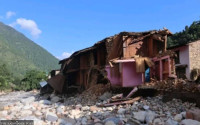
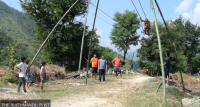
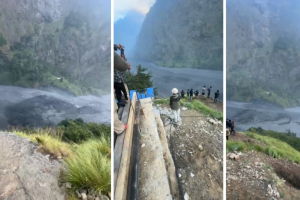
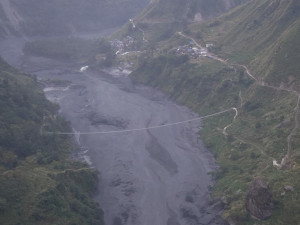
Families in Baglung are living in a cooperative building, relatives’ homes and a buffalo shed after floods swept away their houses and farmland. Many struggle to secure land and meet government requirements for reconstruction aid. The Jhiwa riverbed left barren after the flood. Prakash Baral/TKP
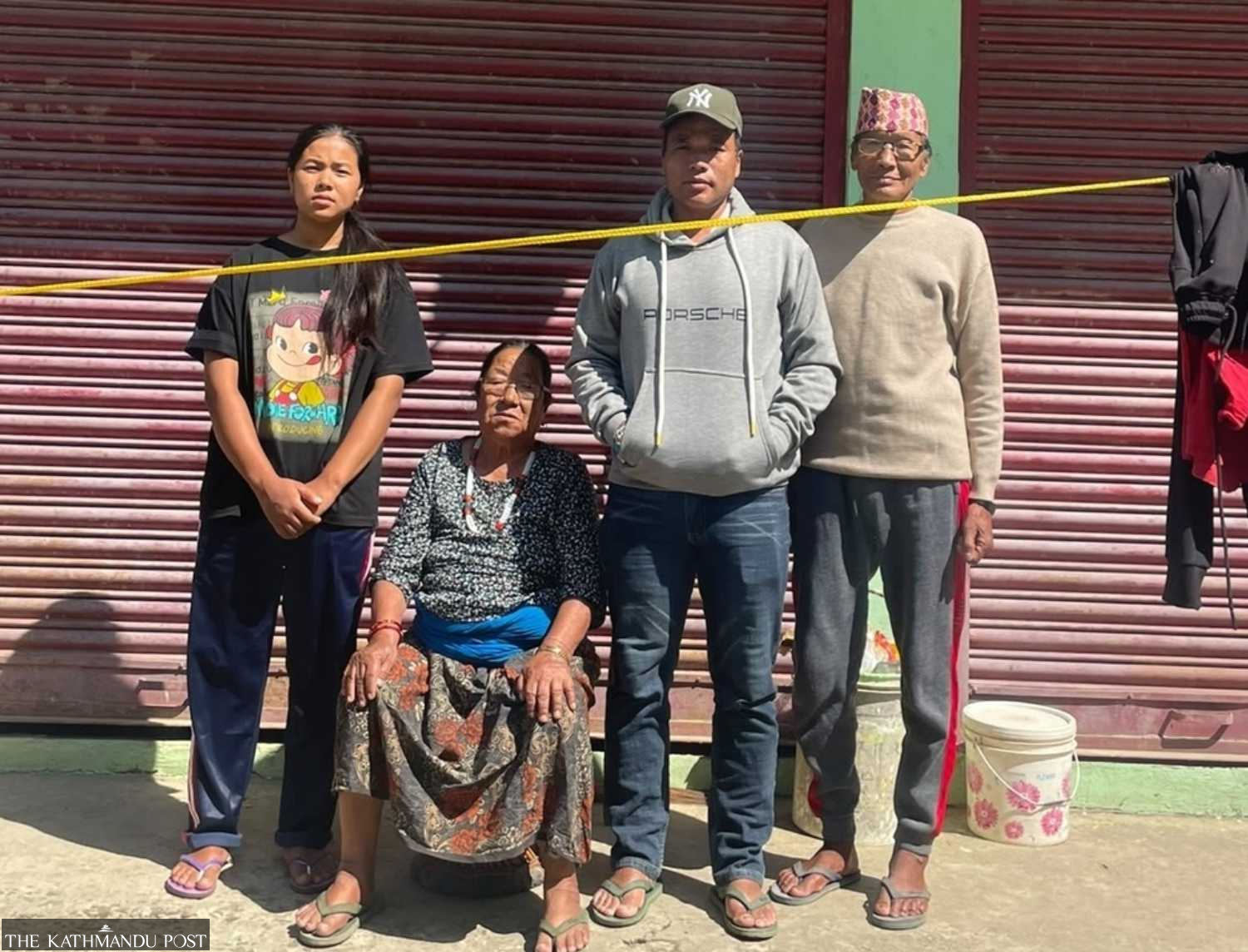
For Rajman Budha, Dashain is usually a time to celebrate at home with family. This year, however, he and his six family members, including his elderly father, are spending the festival in a single room at an agricultural cooperative’s building, with no home of their own to return to.
A flood that hit Nisikhola Rural Municipality-3 on September 27 swept away their house and farmland. The water came in the morning, giving the family just enough time to salvage some clothes and a few utensils. Everything else was lost.
Survivors initially took shelterin nearby schools. The rural municipality and ward office later helped move families into relatives’ homes or other temporary accommodation. With no close relatives nearby, Budha’s family found a room in the Bohoragaun Agriculture Cooperative’s building.
The family has been surviving on relief supplies from the rural municipality, the District Disaster Management Committee and other donors. For now, Budha has nowhere else to go. He said the cooperative had allowed them to stay temporarily, although they might have to leave if the room was needed.
Finding somewhere to settle permanently is proving just as difficult as rebuilding. Without land, Budha does not know where he can put up another house.
“We have decided to look for alternatives after Dashain. For now, we are staying here,” he said. “We have no land, so we do not know where we can build a house.”
The government provides reconstruction grants of up to Rs400,000 to disaster victims whose homes have been destroyed, provided they can secure land and meet the prescribed building requirements. Budha hopes to find a plot from a neighbour after Dashain and use the grant to build a new home.
For Dil Kumari Regmi, the loss has meant moving in with her husband’s younger brother, Sagar. She is staying there with their two sons, daughter and elderly mother-in-law.
Her husband, Hemlal, spent a decade working in Dubai before using his earnings to build a house in Jhiwakhola. The flood swept away their house and land, wiping out years of savings. The family is also still paying off the loan taken to build the house.
“There is nowhere left for us to take shelter. Where are we supposed to live now?” Regmi said. “Everything we earned over a lifetime has been washed away. How will we ever build another house?”
Hemlal remains in Dubai. Unable to get leave, he could not return for Dashain but hopes to come home by Tihar. In his absence, his family has struggled to secure enough food and clothing. They now depend on relief provided by the disaster management committee, ward office and other donors while living with Sagar.
Their neighbour Prem Paudel has also lost his house and farmland. With no alternative accommodation, he has partitioned off part of a buffalo shed that survived the flood and is living there.
“The land we owned has been wiped out. The only thing the flood did not carry away was the cattle shed, so we are living there,” Paudel said. “We cannot afford to build a house now, and we do not know when the government assistance will arrive. We are waiting.”
Flood victim Rajman Budha and his family take shelter in a cooperative building.
The government’s reconstruction grant comes with conditions. Homes must meet prescribed construction standards and be built under an engineer’s supervision, requirements that Paudel says are difficult for families who have lost everything.
“We have to build houses to the prescribed standards and under an engineer’s supervision,” he said. “It would be better if people could receive the government grant and add their own money to build homes that are actually suitable for their families.”
He fears that lengthy procedures and delays in aid will push more residents to leave the village. Families that have lived and worked together for years could be forced to move away, harming the wider community, he said.
The flood destroyed 26 houses in Nisikhola and damaged another 20. In Kanabagar of the rural municipality-4, a landslide swept away a house and killed five people, including four members of the same family.
The disaster has left many residents afraid to live near rivers and streams. Those without land, however, face a difficult choice: remain near the water despite the risks or leave their villages in search of somewhere safer to live.
Paudel wants to stay by finding another plot in the area, although he believes many other survivors are no longer confident about settling there.
“I plan to find land here and build another house in the village,” he said. “But many people are not confident about staying.”
He believes families will be more likely to remain if the government provides timely assistance and allows them to supplement the grant with their own money to build homes suited to their needs.
The experience of survivors of the 2020 Dhorpatan landslide offers little reassurance. Some families whose homes were swept away have yet to rebuild because they failed to meet government construction requirements and were therefore ineligible for reconstruction grants.
Nisikhola flood survivors, including Baburam Nepali and Khim Lal Paudel, have called for reconstruction grants to be disbursed in a lump sum. They want families to be able to purchase land of their choice and combine the grants with personal savings or loans to rebuild their homes.
Tara Nath Paudel, a former chair of Nisikhola Rural Municipality, said complicated procedures and rigid construction standards could leave survivors waiting indefinitely for permanent homes.
“The procedures and standards need to be revised to help survivors resettle quickly,” he said. “Everyone needs to work towards requirements that deliver tangible results without unnecessary delays.”
The survivors said they had raised their concerns with federal and provincial lawmakers and disaster management officials. They were told that efforts to address the demands would begin only after Dashain and Tihar.
For families like Budha’s and Regmi’s, that means spending the festivals in temporary shelters, uncertain when they will have a home of their own again.




 18.18°C Kathmandu