Debate over raising Malaysia’s minimum wage: Who will bear the additional cost?
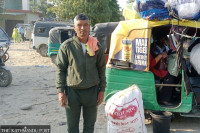
Businesses could face difficulties if wages are raised without considering their capacity, while the government could consider wage subsidies, a minister says. Malaysia has maintained the same minimum wage for local and migrant workers. This means migrant workers, including Nepalis, are closely watching the debate over a possible increase. Reuters
The debate over raising wages for low-income workers in Malaysia, a major employment destination for Nepalis, is no longer limited to how high the minimum wage should go. A key question now is whether employers alone should bear the additional cost of a wage hike or whether the government should share the burden with businesses.
Malaysia is currently debating whether to raise the minimum wage from the existing level of 1,700 ringgit to 2,000 ringgit or 3,100 ringgit.
Entrepreneur Development and Cooperatives Minister Steven Sim said on Wednesday that businesses should not be made to bear the full burden of a wage increase. He said the government should help small and medium-sized enterprises improve productivity and provide training, and could provide wage subsidies if necessary.
“If we push the market beyond its capacity, businesses may go out of business,” the minister said. “The Government should step in to encourage and reward businesses that are prepared to improve productivity, strengthen training, and invest in technology and digitalisation, including through wage subsidies.”
Malaysia has maintained the same minimum wage for local and migrant workers. This means migrant workers, including Nepalis, are closely watching the debate over a possible increase. Around 400,000 Nepalis work in Malaysia.
Sim said higher wages were necessary for Malaysia to attract and retain skilled workers, but warned that raising wages through legislation without considering businesses’ capacity could create problems.
Malaysia’s minimum wage was introduced at 900 ringgit in 2013. It rose to 1,000 ringgit in 2016, 1,100 ringgit in 2019, 1,200 ringgit in 2020, 1,500 ringgit in 2022 and 1,700 ringgit from 2025. The minimum wage has increased by about 89 percent over 12 years.
The Malaysian Trades Union Congress has been demanding that the minimum wage be raised to 3,100 ringgit.
Prime Minister Anwar Ibrahim has also said it was not reasonable for workers at the lower end of the pay scale to remain on 1,700 ringgit while productivity and company profits continue to rise. He has indicated that the issue of raising wages for lower-paid workers will be addressed in the upcoming budget.
Economy Minister Akmal Nasrullah Mohd Nasir said a decision on raising the minimum wage to 2,000 ringgit would be announced by the prime minister through the budget. He said the impact on small and medium-sized businesses would also have to be taken into account.
The government has previously shared the cost of wage increases with employers under its progressive wage policy. Sim said the scheme provides a government subsidy for part of the increase when employers raise workers’ wages.
Hom Karki is a reporter with two decades experience covering migrant workers issues and the Nepali diaspora. He was previously based in the Gulf for Kantipur Daily.




 18.13°C Kathmandu