Foreign Minister Shisir Khanal seeks greater international support for Nepal’s recovery and climate resilience
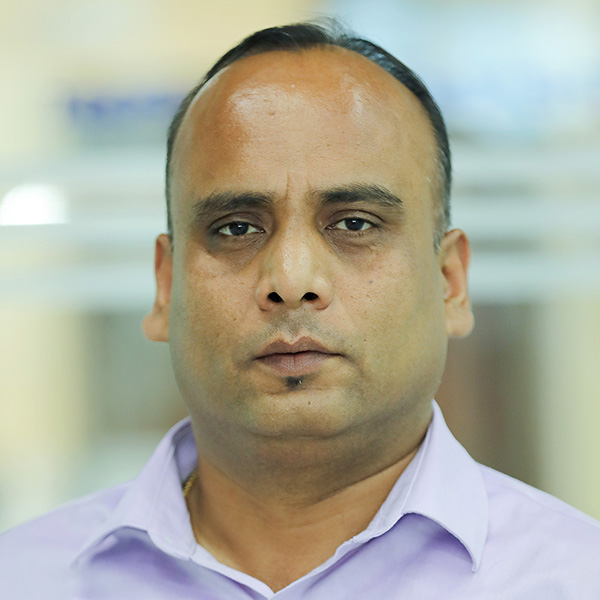
Khanal calls for more support for Nepal’s post-disaster recovery, climate-resilient infrastructure, disaster preparedness and financing for climate-vulnerable countries. Foreign Minister Shisir Khanal. RSS
Foreign Minister Shisir Khanal has sought increased international support for Nepal’s recovery, rehabilitation and reconstruction following the devastating Bhotekoshi disaster, while calling for stronger global cooperation to address the growing impacts of climate change.
Khanal made the remarks during a series of bilateral meetings and multilateral engagements on the sidelines of the 81st session of the United Nations General Assembly in New York.
During a meeting with Reem Alabali Radovan, Germany’s Federal Minister for Economic Cooperation and Development, at UN headquarters, Khanal thanked the German government and people for their sympathy and solidarity with Nepal.
He briefed Radovan on Nepal’s recovery, rehabilitation and reconstruction efforts and highlighted the urgent need for increased investment in climate resilience, disaster preparedness and capacity-building.
Khanal also appreciated Germany’s longstanding support for Nepal’s development process and underscored the importance of advancing climate action as a shared responsibility of the international community.
Radovan described Nepal’s devastating disaster as a common global challenge and expressed Germany’s commitment to providing financial and humanitarian assistance to Nepal.
The two ministers also discussed various aspects of bilateral relations and reaffirmed their commitment to deepening cooperation in areas of mutual interest.
Khanal separately met with Finland’s Foreign Minister Elina Valtonen at UN headquarters.
During the meeting, Khanal thanked the Finnish government and people for their support and solidarity and highlighted Nepal’s recovery efforts following the Bhotekoshi disaster. He also reaffirmed Nepal’s commitment to achieving net-zero emissions by 2045.
Valtonen expressed Finland’s readiness to support Nepal during the difficult period and stressed the importance of stronger cooperation in climate action, technology and the exchange of development experiences and best practices.
Khanal also met Jean-Pierre Lacroix, UN under-secretary-general for peace operations, on the margins of the General Assembly, according to Nepal’s Permanent Mission to the UN in New York.
Khanal reaffirmed Nepal’s strong commitment to the United Nations and highlighted the country’s decades-long contribution to global peace through UN peacekeeping operations.
He appreciated the trust placed in Nepali peacekeepers and said Nepal remained committed to deploying peacekeepers at the UN’s call without caveats. He also urged the UN to provide more leadership opportunities to Nepali personnel in recognition of Nepal’s contribution as one of the leading troop- and police-contributing countries.
Lacroix acknowledged the contribution of Nepali peacekeepers in different parts of the world and stressed the need to address challenges facing UN peacekeeping.
Climate-vulnerable countries need stronger cooperation
Separately, Khanal called for stronger cooperation between Himalayan countries and small island developing states to amplify the collective voice of countries most vulnerable to climate change.
Addressing a leaders’ meeting of the Climate Vulnerable Forum (CVF) on Wednesday on the sidelines of the General Assembly, Khanal stressed the need for collective action to ensure climate justice.
Praising Barbados Prime Minister Mia Amor Mottley’s leadership of the CVF, Khanal thanked Barbados for effectively raising the concerns of climate-vulnerable countries on the global stage.
“Geographically, Barbados and Nepal occupy two very different parts of the Earth—one an island nation surrounded by the Caribbean Sea, the other a landlocked Himalayan nation adorned with the world’s highest peaks,” he said. “Yet, ecologically and existentially, our futures are inextricably linked.”
Khanal said the rapid melting of glaciers in the Himalayas contributes to rising sea levels through river systems and that Himalayan and island nations are experiencing similar impacts from the climate crisis.
“From glacial lake outburst floods in Himalayan valleys to powerful hurricanes in the Caribbean, frontline communities are paying for emissions they did not create—with their lives, homes and decades of development gains,” he said.
Climate change, Khanal said, poses a serious challenge to the implementation of the 2030 Sustainable Development Agenda, with the Sustainable Development Goals not progressing globally at the expected pace.
Although Nepal has made notable progress in sustainable development, climate-induced disasters have repeatedly undermined its social and economic gains, he said.
Referring to the devastating floods of August 26, Khanal said a single disaster could severely damage critical highways, hydropower projects, schools, hospitals and the livelihoods of local communities.
“For frontline countries, climate change is turning sustainable development into a constant uphill struggle,” he said.
Khanal said Nepal remained committed to nature-positive economic development, its nationally determined contributions and the goal of achieving net-zero carbon emissions by 2045.
He called for restructuring the international development system around five key priorities.
First, he called for accelerating climate-resilient development, saying infrastructure investments—from transport infrastructure to community-based water supply systems—should be designed to withstand climate risks.
He welcomed the operation of the “Lifeline Fund”, which provides rapid financial resources when climate-induced disasters create severe balance-of-payments pressures.
Second, he called for reforming the development finance system so that climate-induced disasters do not turn into debt crises.
Supporting the Bridgetown Initiative and the Vulnerability to Viability Compact advanced under Mottley’s leadership, Khanal called for expanding concessional and grant-based financing and making provisions for debt-service suspension more effective.
Third, he called for greater investment in forecast-based science and early warning systems, including impact-based early warnings, real-time geospatial satellite data and cross-border data sharing from Himalayan glaciers to the oceans.
Fourth, he called for accelerating the green and digital transformation, saying a just transition from fossil fuels to clean energy was necessary.
Nepal, he said, was ready to contribute to the region’s green transformation through clean hydropower and expanded regional electricity transmission networks, which could also create new opportunities for young people in the digital economy.
Fifth, Khanal called for making financial assistance for loss and damage more effective.
He urged the international community to ensure new and additional grant-based resources for the Loss and Damage Fund.
“It is not appropriate to address the suffering caused by disasters through repackaged commercial loans in the Loss and Damage Fund,” he said.
Khanal said genuine restructuring of the development system required moving “from risk to structural resilience, from emergency humanitarian assistance to predictable development finance, and from fragmented efforts to deeper cooperation between Himalayan and island nations.”
“Nepal is committed to working with Barbados and all members of the Climate Vulnerable Forum to further strengthen our collective voice and ensure the shared safe future that future generations deserve,” he said.
Anil Giri is a Chief Sub Editor covering diplomacy, international relations and national politics for The Kathmandu Post. Giri has been working as a journalist for more than two decades, contributing to numerous national and international media outlets.




 19.11°C Kathmandu