Rautahat police inflates arrest tallies by counting fine payments as captures
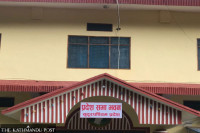
Police collected court fines at convenient locations before reporting them as arrests, allegedly to boost performance figures, while court officials and legal experts question the practice. Post Photo
When a team from the Gaur district police office called Om Giri of Chandrapur-5 in connection with a dishonoured-cheque case, he expected to be summoned to court. Instead, officers met him on the roadside on June 1, collected his Rs500 fine, and let him go. The next day, police issued a statement describing him as a fugitive who had been arrested.
"They collect the money from you on the roadside and then report that they arrested you as a fugitive," Giri said. "That damages a person's reputation."
Giri's case is one of several Kantipur identified in which Rautahat police collected court-ordered fines from people at their homes, shops, or on the road, then publicly reported the transactions as fugitive arrests, even though the individuals were never taken into custody or presented before a judge, as the law requires.
The pattern surfaced on August 11, when the Rautahat Police Office emailed local journalists a list of nine people it said had been arrested and handed over to the court as part of efforts to enforce its verdicts.
Verification by Kantipur found that the list didn't hold up. Ravikant Chaudhary of the Rautahat District Court's enforcement section said police had brought only three of the nine to court that day: Birendra Raut, sentenced to 11 months and 12 days in an arms case, and Khobhari Sah Sonar and Shivamangal Prasad Kushawaha, each sentenced to three years in a vehicular homicide case.
"The other six were not people sentenced to prison. They had only been fined in various cases," Chaudhary said. "The police say they arrested people who had been fined, but they collect the money from them and deposit it with the court. That is how things are being done now."
None of the six who had only been fined was actually arrested or brought before the court that day. Police had simply collected the fines and deposited the money with the court.
Under the law, people sentenced to prison or fined by a court who remain on the fugitive list must be taken into police custody and formally presented before the district court. The court's registrar then oversees the next step, payment of the fine or imprisonment, a process known as clearing the outstanding court record.
Instead, according to people who paid fines and officials familiar with the practice, police obtain lists of names and family details of people with outstanding court penalties, track them down at a market, shop, or roadside location, collect the fine, and later report the transaction as a fugitive arrest.
A police constable involved in enforcing court verdicts confirmed the practice. "We are instructed to do it that way by the district," he said. "We take the money to the court and later give the concerned person the receipt showing that the outstanding record has been cleared."
Money collected from multiple people is pooled and deposited with the court along with an official letter, allowing the outstanding records to be cleared, without the accused ever appearing before a court and without police completing the formal arrest process, according to court officials and legal experts.
The August 11 list said Puja Parajuli of Chandrapur-4 was arrested in a dishonoured-cheque case; a court had fined her Rs1,000. Parajuli said police simply came to her shop, collected the fine, and gave her a receipt. "They never arrested me. I later learned that the police had reported my arrest," she said. She had also paid a separate Rs1,500 fine in another cheque case on June 2.
Laxmi Ghimire of Chandrapur-4 paid a Rs500 fine on behalf of her brother, Bibek Ghimire, who had been placed on the fugitive list after failing to pay a court-ordered fine in a dishonoured-cheque case. Bibek had been living in India for several years and was not in Rautahat—a fact confirmed by Rabi Rana Magar, chairman of Chandrapur-4. Police nonetheless issued a statement on June 2 listing Bibek among 26 fugitives they had arrested. Laxmi said she had yet to receive a court receipt for the payment.
"My brother was not arrested. He has been in India for a long time," she said.
Rana Magar objected to the practice more broadly: "You cannot collect a fine from people and then publicly humiliate them by saying they were arrested as a fugitive. I am ready to go wherever necessary to raise my voice against this."
A businessman fined Rs2,000 in a separate dishonoured-cheque case said he paid the amount in cash to a police team at a cafe in Chandranigahpur Chowk on June 2, another case reported as an arrest.
Kantipur found that most people on the police lists of "fugitives arrested" were defendants in dishonoured-cheque cases. According to the Gaur District Police Office, 188 people were placed on the fugitive list last fiscal year after being fined in such cases, and police collected Rs205,920 from them. The district police office separately reported more than 400 fugitive arrests over the same period.
Court sources say that where the people on those lists had only been fined—not sentenced to prison—police sent the court consolidated lists of names and amounts collected, clearing the outstanding records without bringing anyone before the court. Those sentenced to prison, by contrast, were generally presented before the court.
Those fined say they became entangled in these cases after their businesses ran into financial difficulty, and that being publicly described as arrested fugitives, even after paying, has caused further humiliation.
After a court imposes a fine in an ordinary case, the person has 75 days to appeal to the High Court, court officials said. If no appeal is filed, the court orders the fine recovered; if the person still doesn't pay, the court places them on its fugitive list and refers them to police for arrest.
Keshar Nath Aryal, registrar of the Rautahat District Court in Gaur, said anyone arrested as a fugitive must be presented before the court. "Once someone has been declared a fugitive and is arrested, they must be brought before the court. Only then can they pay the fine and be released," he said. He noted police can lawfully collect outstanding fines from people at their homes during the process of locating them, provided the money is deposited with the court and a receipt is issued.
District court judge Rajesh Kumar Katuwal said fines should be paid at the court itself: "Police cannot go from house to house collecting money. The concerned person also needs to verify whether the amount due has been deposited." He added that anyone fined and placed on the fugitive list must still be brought before the court if arrested.
Arjun Prasad Koirala, joint registrar and spokesperson for the Supreme Court, was direct: "The rule is that the fine must be paid at the court."
Former Nepal Police chief Keshab Adhikari said officers are inflating arrest figures to improve performance scores and create a media impression of active enforcement.
"Police cannot simply go to someone's home and collect a court-imposed fine. Once a case has been decided and a fine has been imposed, the person should pay it at the court," he said. "Publicising the arrest of people facing ordinary allegations simply to make it look as though the police have done their job is not right."
Lawyer Bipin Gautam went further, calling the practice a legal violation rather than a procedural lapse. "Going to someone's home to collect a fine and then preparing false paperwork to show an arrest is not merely a procedural mistake. It is a serious violation of the law," he said. "It also violates citizens' fundamental rights.”
If police say someone has been arrested but do not present that person before a court, it needs to be investigated, Gautam argued. He said the practice—police acting as both collector and enforcer, settling payments at people's homes—puts the integrity of the judicial process itself at risk.
The provincial police office defended the approach as a convenience for people who had missed fine deadlines. Senior Superintendent Prabhu Dhakal, spokesperson for the Madhesh Provincial Police Office in Janakpur, said there was nothing wrong with officers collecting fines at people's homes once courts had declared them fugitives.
"They know they have to pay the fine. If they go to the court themselves and pay it, there is no problem," he said. "But if they do not fulfil their own obligation and the police provide them with a facility, why should that be viewed negatively? It is appropriate to understand police collection of fines at people's homes as a service."
Adhikari rejected that framing, saying that collecting a fine and arresting someone are two distinct legal processes, and that police should not count someone as a "fugitive arrest" when court records show they were never brought before the court and only the fine was deposited.
Superintendent of Police Sitaram Rijal, Rautahat police chief, acknowledged that some people on the fugitive list had fines of only Rs1,000 or Rs2,000 and that police had simply contacted them and facilitated payment. He nevertheless maintained that those on the fugitive list were arrested and handed over to the court.
Police officials say the number of fugitives arrested and fines collected are performance indicators Nepal Police headquarters and provincial offices use to evaluate district police chiefs. District chiefs, wary that weak figures could affect transfers or promotions, are accused of inflating the numbers by any means available—with officers and senior officials alike benefiting when a district reports more arrests.
Critics of the practice say collecting money from people who are easy to reach has become a substitute for the harder work of genuinely searching for and locating fugitives. District police offices routinely issue press statements citing monthly arrest and collection totals, which Gautam said are designed to create a public impression that police are actively enforcing court verdicts.




 22.07°C Kathmandu