



 22.73°C Kathmandu

Thu, Oct 22, 2026
National
None of Nepal’s three major China trade points fully operational
Tatopani is shut by landslides, Rasuwagadhi remains constrained after flood damage, and Korala handles only limited cargo, disrupting imports ahead of the festive season.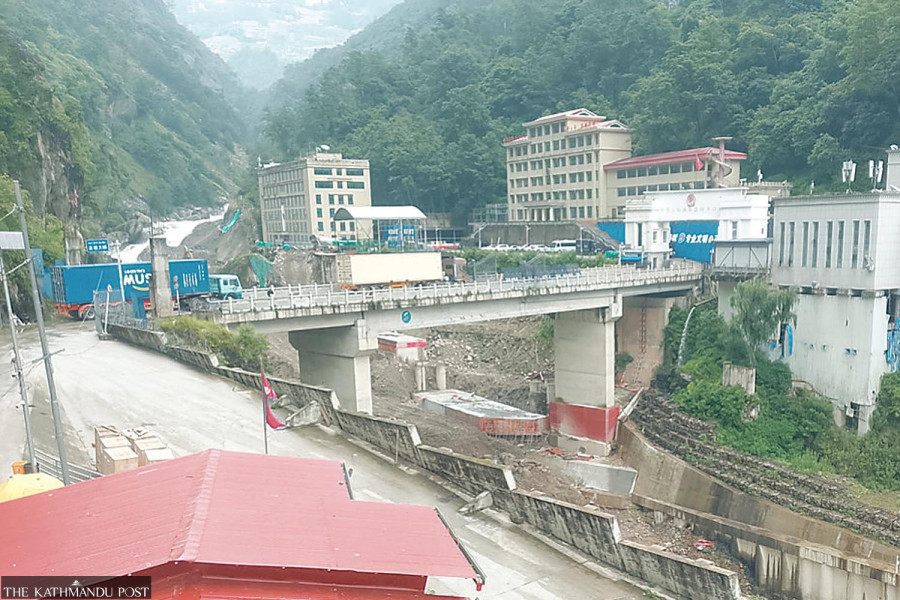
bookmark
Krishana Prasain
Published at : July 28, 2026
Updated at : July 28, 2026 16:54
Kathmandu
Nepal has three major trade border points with China, but for the past several weeks, neither of them are fully operational, disrupting cross-border trade with the northern neighbour and raising fears about supply of goods ahead of major festivals in the country.
While landslides have shut down the trade route to Tatopani, imports and exports through Rasuwagadhi have yet to return to normal after a flash flood swept away the bridge last year, and the monsoon continues to pose a threat. Meanwhile, only limited cargo is moving through the Korala border.
The disruption comes ahead of major religious holidays, including Teej, Dashain and Tihar. Tatopani and Rasuwagadhi, Nepal’s two principal trade gateways with China, together handled imports worth more than Rs93 billion in the last fiscal year, while Korala, which opened for international trade only last year, processed imports worth Rs14.4 billion.
Nepal Trans Himalayan Border Commerce Association said the Bahrabise-Tatopani section of the Araniko Highway has remained closed for nearly two weeks due to landslides at different locations, disrupting the transportation of goods, supply management and customs revenue collection. The closure has also affected the livelihoods of local residents, traders and Kailash Mansarovar pilgrims.
Issuing a press release on Sunday, the association said that more than 40 goods-carrying trucks have been stranded on the Nepal side since the customs point closed, while a large number of goods-loaded containers remain stuck in Khasa. The disruption has increased the risk of higher transport costs and damage to goods, it said, urging the government to immediately repair the highway, improve vulnerable sections and implement landslide control measures.
“If the government does not negotiate to open the road, the Tatopani border point could remain closed throughout the monsoon, affecting trade during the festival season. The government should make a special budgetary provision for road maintenance; otherwise, trade will remain halted throughout the monsoon,” said Ram Hari Karki, president of the association.
Tatopani and the Araniko Highway have repeatedly suffered major disasters, including the massive Jure landslide in August 2014 and the April 2015 Gorkha earthquake, which triggered secondary landslides and halted cross-border trade.
“Sunil Lamsal, Minister for Infrastructure Development, and Sobita Gautam, Minister for Law, inspected the customs point and held discussions with local residents on Sunday. A team of road experts is expected to inspect the site and decide on resuming traffic after consulting residents whose houses are at risk if the upper road section is reopened,” said Tul Bahadur Pandey, chief customs officer at Tatopani.
According to Pandey, debris from landslides has blocked the Araniko Highway at three locations. Local residents are opposing the reopening of the upper section, citing concerns over the safety of nearby settlements. Meanwhile, building an alternative route closer to the river will take time because the section is being constructed by Chinese contractors.
According to the Tatopani Customs Office, 27 to 28 loaded containers are currently stranded on the Nepal side due to the landslides. Under normal circumstances, 30 to 40 goods-carrying trucks enter Nepal through the border every day.
Tatopani Customs has set a revenue collection target of Rs25 billion for the current fiscal year, with a monthly target of more than Rs2 billion. The office usually collects up to Rs130 million in customs revenue a day, including duties on electric vehicle imports, but officials say the prolonged closure will significantly affect collections.
Pandey also said Nepal’s exports to China through Tatopani have not resumed since the April 2015 earthquake, as the Chinese side has yet to allow outbound cargo.
Though the Rasuwagadhi border point is currently operational after reopening partially earlier this year, traders say uncertainty persists as the monsoon deepens.
“Even though eight to 10 Nepali goods-carrying trucks are arriving via the Rasuwa border point, it is risky and uncertain when landslides will occur and obstruct the road,” Karki said.
Nepal imported goods worth Rs45.73 billion through the Rasuwagadhi customs point in the last fiscal year, while exports stood at Rs894.6 million. The crossing resumed partial operation in January after a flash flood from the Chinese side last July washed away the border bridge and damaged customs infrastructure. Last year’s disruption left festive consignments stranded in Kerung and affected electric vehicle sales in Nepal.
Traders also turned to Korala, Nepal’s third trade border point with China, after disruptions at Rasuwagadhi. Located at an altitude of 4,650 metres in Upper Mustang, the crossing currently clears only two to three goods-carrying vehicles a day, mainly garments and footwear, according to the Department of Customs. Korala handled imports worth Rs14.4 billion and exports worth Rs205.57 million in the last fiscal year.
Overall, Nepal imported goods worth Rs425.24 billion from China in the last fiscal year, up 24.66 percent from the previous year. Exports declined by 28.13 percent to Rs1.89 billion, leaving Nepal with a trade deficit of Rs423.35 billion.
Nepal mainly imported smartphones, diammonium phosphate, electric cars, jeeps and vans, apples, synthetic fibres, fertiliser grade, laptops and notebooks, iron and steel, textiles, and passenger motor vehicles in the last fiscal year.
Krishana Prasain
Krishana Prasain is a business reporter for The Kathmandu Post covering markets. Before joining The Kathmandu Post in 2018, she spent 3 years in New Business Age magazine covering business.



Most Read from National

Flood sweeps away houses, bridges in Gorkha

What to know about the US trial over Mamta Kafle’s disappearance

Torrent of black mud and rocks engulfs settlements along Budhigandaki

From blankets to handmade dolls, two foreign women bring comfort to flood survivors

Budhi Gandaki flood washes away three bridges in Gorkha
Editor's Picks




E-PAPER | October 22, 2026

×