Refunds uncertain after government rolls back equity tax on education and health services
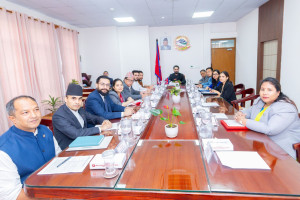
The government’s withdrawal of the three percent parity tax awaits Cabinet approval, leaving uncertainty over refunds for taxes collected since July 17. Prime Minister Balendra Shah announced the rollback on Tuesday, days after the tax came into effect, following public criticism over the additional financial burden it placed on students and patients File Photo: RSS
The government’s decision to scrap the three percent parity tax on education and healthcare services has left taxpayers wondering whether the money already collected under the levy will be returned.
Prime Minister Balendra Shah announced the rollback on Tuesday, days after the tax came into effect, following public criticism over the additional financial burden it placed on students and patients. But the announcement alone does not invalidate the tax, leaving its legal status and the fate of collected revenue unresolved.
Since the levy was introduced through the Finance Act endorsed by Parliament, its withdrawal requires Cabinet approval and publication of the decision in the Nepal Gazette before it takes legal effect.
Finance Minister Swarnim Wagle confirmed that the education and health tax has been suspended for the time being following consultations with the prime minister.
He said the ministry has already prepared a proposal for its withdrawal. The Cabinet is expected to decide on the matter, after which the government’s decision will gain legal validity.
Until then, the three percent tax remains legally enforceable. This has created uncertainty among taxpayers, government officials and tax authorities over the treatment of amounts collected since July 17.
“The proposal for the withdrawal of the tax has been prepared and it will be implemented after Cabinet approval,” a Finance Ministry official said. “The issue of refunds will also depend on the Cabinet’s decision. If the Cabinet decides to return the collected amount, taxpayers will receive refunds. Otherwise, it will remain with the government.”
Officials said no decision on refunds could be made before the Cabinet formally resolves the matter.
Officials at the Inland Revenue Department are also awaiting a government directive. “Legally, the three percent parity tax on education and healthcare services is still in force,” said an Inland Revenue official. “We have not received any instruction to stop collecting the tax. The question of refunds does not arise until the provision is formally withdrawn.”
The official said the tax authority would recognise the withdrawal only after the Cabinet decision is published in the Nepal Gazette. The fate of taxes already collected will depend on the government’s final decision.
Shah announced the rollback of the tax on Tuesday following widespread criticism from the public and stakeholders. He said the decision was taken after consultations with Finance Minister Wagle.
The prime minister said the tax was originally introduced to mobilise resources to improve education and healthcare services in remote and disadvantaged areas, support marginalised communities, expand health insurance coverage and widen the tax base.
He said the government had taken public concerns seriously and remained committed to correcting decisions that failed to meet citizens’ expectations.
Shah also reiterated that the government would continue with plans requiring private hospitals to reserve 10 percent of beds and private colleges and universities to allocate 10 percent of seats for underprivileged citizens through a transparent process.




 22.92°C Kathmandu