Devendra Raj Panday, champion of democracy and good governance
A former minister, economist and leading civil society figure, Panday helped shape Nepal’s democratic discourse long after the fall of the Panchayat regime.
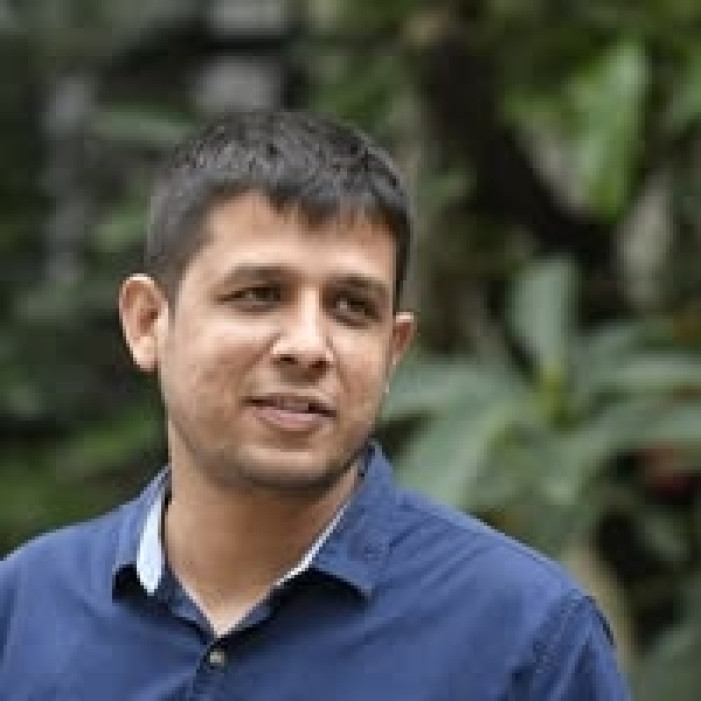
Devendra Raj Panday, one of Nepal’s most distinguished civil society leaders, a renowned development economist and former minister, died at his residence in Bishalnagar, Kathmandu, on Friday. He was 87.
A public intellectual and tireless advocate of a citizen-centred democratic order for nearly five decades, Panday had been battling pancreatic cancer for the past few years, according to Dr Anup Subedee, who maintains a close relationship with his family. His funeral rites were performed at Pashupati Aryaghat on Saturday.
In public life, Panday wore many hats. He served as a civil servant, institution builder, development economist, veteran civil society leader, political mediator and, briefly, a politician.
Panday was born on August 20, 1939 into an affluent family in Kathmandu. His grandfather and father held influential bureaucratic positions during the Rana regime. Among his siblings, Dr Mrigendra Raj Pandey became one of Nepal’s pioneering cardiologists, while Narendra Raj Pandey served as a senior bureaucrat at the Royal Palace.
After acquiring a master’s degree in commerce from Allahabad University, he joined the civil service as a section officer in 1960. As a dynamic civil servant with a PhD from the University of Pittsburgh, his promotion was smooth. He is among the handful of people to become a government secretary at the age of 39, in early 1979.
The achievement was short-lived. He resigned after then-prime minister Surya Bahadur Thapa intensified the misuse of state machinery to secure victory for the Panchayat camp in the national referendum announced by King Birendra. His resignation was in protest against Thapa’s pressure on him to misuse state resources to ensure the victory of the "reformed Panchayat" system over the "multiparty democracy" option in the referendum held in May 1980.
The resignation marked a turning point in his life, transforming him from a government employee into an active campaigner for citizens’ rights and a citizen-centred political system.
“As a man of conviction, conscience and integrity, it was inevitable that he would stand up to government pressure,” said Bhaskar Gautam, a political scientist who knew Panday closely. His memoir in Nepali, Ek Jyan Dui Juni, reflects the two distinct phases of his life—before and after resigning.
Although he helped keep the quest for democracy alive through his writings, Panday did not immediately immerse himself in the pro-democracy movement after resigning. Instead, he worked for the United Nations Development Programme in Samoa for several years. According to Finance Minister Swarnim Wagle, who worked with Panday at different points in his career, Panday became fully engaged in the struggle for democracy after attaining what Wagle described as a degree of "financial independence".
Yet Panday is best remembered as one of the leading faces of Nepal’s civil society during the 1990 People’s Movement. At a time when the pro-democracy campaign was gathering momentum, prominent political leaders frequently sought his views to help shape public opinion and galvanise support for democratic change. Through newspaper articles, public statements and interviews, he consistently exposed the shortcomings of the partyless Panchayat system and argued for a democratic order centred on civil rights and accountability.
Through articles and interviews, he went on to expose the shortcomings of the Panchayat regime.
His stature as a civic leader became firmly established during the 1990 People’s Movement. On March 20, 1990 while the movement was underway, he was arrested for helping organise an interaction at the Tribhuvan University titled "The Role of Nepali Intellectuals and Professionals in the Present Context".
Following the success of the People’s Movement, Panday was appointed finance minister in the interim government led by Krishna Prasad Bhattarai of the Nepali Congress.
Wagle says Pandey played an important role in managing the transition from the Panchayat era to the multiparty democratic system. "As an interim finance minister, he did not have the opportunity to introduce major reforms. But it was he who first advanced the idea of taxing the wealthy," Wagle said.
Even as he played a prominent role in the pro-democracy movement, Panday grew increasingly disillusioned with the governments that emerged after the restoration of democracy in 1990. Convinced that national politics had drifted away from the ideals and spirit of the People’s Movement, he briefly entered electoral politics. Backed by a group of young leaders from the former CPN (Marxist) and CPN (Marxist Leninist) who had been sidelined during the formation of the CPN-UML, he founded the Prajatantrik Lokdal and led it. But after the party fared poorly in the 1993 by-election and the 1994 midterm election, it gradually disappeared from the political scene.
Rather than retreat from public life, Panday returned to the civic space with renewed determination. His unsuccessful political foray only deepened his commitment to citizens’ rights, democratic accountability and good governance. Over the decades, he became a leading figure in Nepal’s civil society, working through various rights organisations and public campaigns to advocate for transparency, constitutionalism and a citizen-centred democratic order.
Panday also played an active role in efforts to end the Maoist insurgency, which began in 1996. Even when the armed conflict was at its peak, he helped facilitate dialogue with underground Maoist leaders Pushpa Kamal Dahal and Baburam Bhattarai. Meeting and advising leaders of the Nepali Congress, the CPN-UML and other political parties had become routine for him. He recounts several such episodes in his autobiography.
Before formal peace talks began between the government and the Maoists in 2006, Panday’s residence served as an informal meeting place where representatives of the Congress, the UML and the Maoists held discussions. His home effectively became an unofficial venue for the peace process. His role became even more prominent during the 2005-06 People’s Movement.
The civic movement emerged in response to King Gyanendra’s authoritarian rule, which followed the dissolution of the House of Representatives by Sher Bahadur Deuba on May 22, 2002, and the King’s subsequent dismissal of the prime minister on two occasions—October 4, 2002, and February 1, 2005. At a time when the Maoists were still fighting state forces and parliamentary parties had lost much of the public’s trust, King Gyanendra’s direct rule had peaked. The civic movement became the crucial bridge between political parties and the general public.
The civic movement went on to organise dramatic protests, including taking control of Ratna Park and holding public events in which political leaders were seated among the audience rather than on the stage. It compelled party leaders to apologise publicly and pledge to reform.
Ordinary citizens placed their trust in the movement’s leaders and joined the democratic struggle. The movement ultimately succeeded, paving the way for the restoration of democracy and, eventually, a new constitution founded on republicanism, federalism and secularism.
After the movement, however, the civic coalition gradually frayed. Pandey was among the few who remained steadfast in his original ideals. He chose to watch over state managers while continuing to hold governments accountable as one of the enduring moral custodians of the recent democratic order. Yet he remained deeply disappointed that political parties had failed to honour many of the commitments they made before the 2005-06 movement.
Pandey remained firmly committed to the constitution’s core principles—democracy, republicanism, federalism and secularism. These ideals served as his "litmus test" for judging any political movement. Because many of the more recent protest movements failed to demonstrate a clear commitment to those values, or raised doubts about them, he refrained from joining or openly endorsing them.
In his later years, Panday’s health deteriorated, but his interest in national affairs was unwavering. He continued commenting on current events, primarily through X (formerly Twitter), where he wrote about politics, cricket and his own life, often combining sharp wit with self-deprecating humour.
Writer Chandra Kishore, who visited Pandey at his residence for the last time on Wednesday, said Pandey was more concerned about the state of Nepal’s democracy than about his own health.
"He was deeply worried about the growing challenges facing democracy and the fact that ordinary citizens had begun to fear speaking openly. He believed that those leading the government must be transparent and maintain constant dialogue with the public," he said.
In one account, Panday writes that, while in New Delhi, he used a satellite phone from the rooftop of a house where a Maoist leader was staying to reprimand Pushpa Kamal Dahal, ensuring that Baburam Bhattarai could also hear the conversation.
"We are taking enormous risks to create an environment for political understanding and cooperation between you and the parliamentary parties (the Seven-Party Alliance). People like me, former Panchayat officials, are confronting the King and working tirelessly for this cause, while you are busy fighting among yourselves. That is unacceptable. If this dispute is about ideological differences, you have not even informed us. This cannot continue. End the quarrel immediately and reconcile."
“With Panday’s passing, Nepal has lost one of the towering voices of its public conscience,” said Gautam.




 14.7°C Kathmandu