Three United Nations human rights experts have urged the Nepal government to immediately halt ongoing eviction drives targeting informal settlements along river corridors in Kathmandu, raising concerns over alleged rights violations and inadequate resettlement measures.
UN Special Rapporteur on adequate housing Koldo Casla also posted on social media platform X that he had joined Special Rapporteur on internally displaced persons Paula Gaviria Betancur and Special Rapporteur on extreme poverty Elena Carolina Díaz Galán in urging Nepal to stop “mass forced evictions” in Kathmandu.
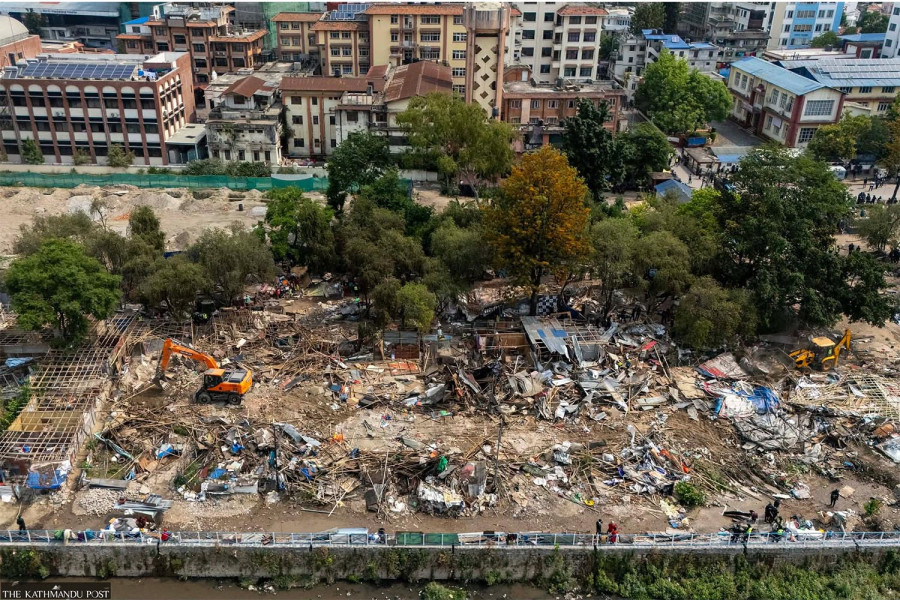
In a statement issued on Sunday, the experts said they were “deeply troubled” by reports that several thousand residents had been displaced since eviction operations began on April 25 in areas including Thapathali, Manohara, Sinamangal, Balkhu, Bansighat, Balaju, Sankhamul, Dhobikhola corridor and Kapan.
According to the experts, the authorities provided only 24 hours' notice before demolitions were carried out in some settlements.
“Such short notice fails to meet requirements of meaningful consultation and adequate preparation,” the experts said, calling on authorities to ensure affected communities are informed, consulted and provided access to legal remedies and assistance.
A 2022 report by the High-Powered Committee for Integrated Development of the Bagmati Civilisation estimated 3,466 households of informal settlers along riverbanks across the Kathmandu Valley. Of those, 2,245 households were in Kathmandu Metropolitan City, 90 in Kageshwari Manohara Municipality, 156 in Budhanilakantha Municipality, 17 in Lalitpur Metropolitan City, and 773 in Bhaktapur Municipality.
The experts also referred to the deaths of two residents during the eviction campaign. An 18-year-old resident of the Manohara settlement was found dead on April 24, while the body of a 61-year-old resident of the Balkhu settlement was recovered from the Bagmati River on May 1. The statement said both deaths were suspected suicides linked to distress caused by the evictions.
The UN experts said Nepal, as a party to the International Covenant on Economic, Social and Cultural Rights, is obligated to protect the right to adequate housing and ensure safeguards against forced evictions.
They also cited a July 2024 Supreme Court ruling that requires housing arrangements before evictions are carried out for landless families living in riverside settlements.
“Proceeding without verified resettlement would not only contravene international standards but may also violate binding judicial decisions,” the experts said.
The statement urged the government to engage in dialogue with affected communities and explore alternatives, including in-situ solutions and inclusive urban planning.
The experts also called for an independent and transparent investigation into the eviction operations and the two deaths, and urged authorities to provide psychosocial support, protection and compensation to affected families.
The Supreme Court, on May 8, issued an interim order directing the government not to evict or displace squatters and informal settlers from their current locations without following the due legal procedure.




 20.12°C Kathmandu