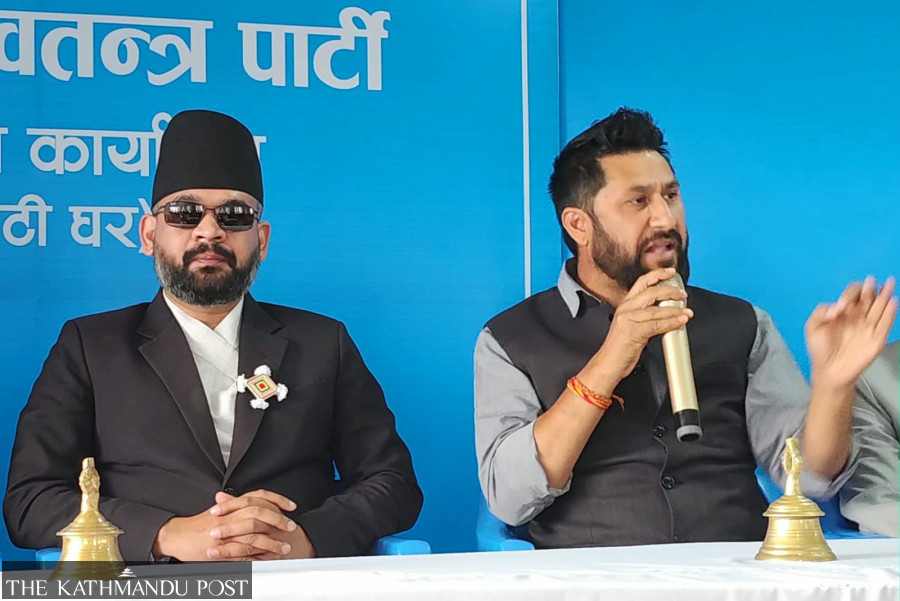
The Rastriya Swatantra Party government has widened its use of ordinances to amend laws, drawing sharp criticism from opposition parties who say it is bypassing Parliament and undermining the regular legislative process.
According to sources, the government has sent an ordinance entitled “Some Nepal Acts” to the Office of the President, proposing amendments to 20 different laws. The package sent to the President also includes ordinances covering 16 universities and seven health science academies. The documents were dispatched on Tuesday.
This comes a day after the Balendra Shah administration submitted separate ordinances to amend the Constitutional Council (Functions, Duties, Powers and Procedures) Act, 2010, and the Cooperatives Act, 2018. Both are currently being considered by President Ramchandra Paudel.
Deepa Dahal, press and research expert at the prime minister’s private secretariat, said that the government was moving to amend laws to make special provisions regarding the dismissal of public office-bearers who were appointed or nominated on political grounds in the past. She said an ordinance to create such special provisions has also been recommended.
“The government has forwarded the ordinances with the objective of making public appointments transparent and competitive, ending partisan political influence, accelerating public construction, returning the savings of cooperative victims, and making land, revenue and survey services more effective,” Dahal said.
An official at the President’s Office said more ordinances are in the pipeline. They were alerted on Wednesday night to the possible arrival of more ordinances.
The omnibus ordinance under “Some Nepal Acts” proposes changes to laws related to education, civil service, land revenue, registration, the Council for Technical Education and Vocational Training, the Citizen Investment Trust, the Nepal Academy of Science and Technology, the University Grants Commission, health services, foreign employment, the Federal Parliament Secretariat, land use, forests and insurance.
One of the most contentious provisions relates to universities and health science academies. The ordinance proposes amendments affecting 16 universities and seven academies, including provisions to terminate the tenure of current officials. Existing laws provide a four-year term for vice-chancellors, registrars and other senior officials.
However, the new ordinance removes their tenure without clearly specifying a replacement term.
“It is clear that the ordinance has been used to end the tenure of current officials and make way for new appointments,” a source said. “But it does not define how long the new appointments will last.”
The source suggested the move could be aimed at avoiding legal hurdles, noting that the Supreme Court has often issued interim orders protecting officials appointed for fixed terms from early removal.
The ordinance also proposes shifting authority over land registration from Land Revenue Offices to local governments. Amendments to forest laws introduce special provisions on land use in national forests. In the civil service sector, the draft includes a provision to end politically affiliated trade unions. It also calls for dissolving politically-affiliated student organisations from universities and health academies.
Meanwhile, the President’s Office has returned the cooperatives ordinance for revision, citing inconsistencies in language.
A source at Sheetal Niwas said errors in wording and terminology made it unsuitable for approval in its current form. “If we had corrected it ourselves, it could have raised questions. We have asked the government to revise and resubmit it,” the source said.
Officials said there is no objection in principle to issuing the ordinance once corrections are made. The President has already reviewed parts of the cooperatives proposal, while legal advisers are studying other ordinances.
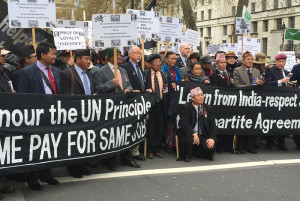
The developments have triggered strong reactions from opposition leaders, who argue that ordinances should be used only in urgent and exceptional situations, not as a routine legislative tool.
They have also criticised the government for cancelling a scheduled parliamentary session. On April 21, the Cabinet recommended summoning Parliament for April 30. A day later, it advised cancelling the session.
Opposition leaders say the move amounts to executive interference in the legislature.
Four parties—the Nepali Congress, the CPN-UML, the Nepali Communist Party and the Rastriya Prajatantra Party—held a joint meeting at Singha Durbar on Wednesday and urged President Paudel not to approve the ordinances.
“As the ordinances have been recommended with the intent of bypassing Parliament, we request the President not to approve them,” the parties said in a joint statement.
The ordinance related to the Constitutional Council reportedly puts the President in a difficult position.
Sources said Paudel wants to consult constitutional experts for legal advice. The issue centres on whether to approve provisions that differ from his earlier stance.
The Constitutional Council, chaired by the prime minister, includes the Speaker, chief justice, chair of the National Assembly, leader of the main opposition and the deputy Speaker. It is meant to ensure balanced representation in key appointments.
However, the proposed ordinance allows decisions to be taken by just three members, including the chair. Critics say this weakens institutional checks and concentrates power.
Previously, the President had returned a bill passed by Parliament on similar grounds, stating that decisions should reflect the majority of the council’s full membership.
“Should consensus not be reached, the majority of the total number must remain the basis for decision-making,” he had said at the time.
Given that position, officials say the President may take a cautious approach. “There is concern about consistency,” a source said. “The President is likely to examine the ordinance closely before making a decision.”
Other ordinances, officials added, will be considered on their merit and urgency after further review.




 25.02°C Kathmandu