



 14.8°C Kathmandu
Sat, Oct 17, 2026
National
Legality of Oli, Lekhak arrests comes into question
Legal experts decry the use of ‘urgent warrant of arrest’, saying it amounts to an executive overreach.
bookmark
Tufan Neupane & Matrika Dahal
Published at : March 29, 2026
Updated at : March 29, 2026 06:37
Kathmandu
The arrests of former prime minister KP Sharma Oli and former home minister Ramesh Lekhak on Saturday morning have sent shockwaves through the country.
The high-profile arrests from their respective residences in Gundu and Suryabinayak of Bhaktapur were notable for one significant absence—a court-issued warrant of arrest. The authorities instead relied on an ‘urgent warrant of arrest’ to take the leaders into custody, according to senior advocate Tikaram Bhattarai, who is Oli’s legal counsel.
Under the prevailing National Criminal Procedure Act 2017, law enforcement agencies are empowered to issue such urgent arrest warrants if they perceive an immediate risk of a suspect fleeing the country or destroying crucial evidence. The investigation cannot proceed until the court has formally approved the warrant.
The use of this legal provision against two prominent political figures has ignited a fierce debate within legal and political circles. Critics and constitutional experts spent much of Saturday questioning what ‘imminent risk’ two veteran leaders—one of whom is a four-time prime minister—could possibly pose that necessitated bypassing the judiciary on a weekend.
The focus now shifts to the Kathmandu District Court on Sunday morning. When the court opens, the police must provide a compelling justification for their decision to bypass standard judicial oversight and use of the urgent warrant of arrests. They are legally required to convince the court that the urgent warrants were a mechanical necessity rather than a politically motivated shortcut. Until the court validates these warrants, no formal investigative procedures, including interrogations or the recording statements, can legally proceed against the two detained leaders.
The roots of these arrests lie in the deadly Gen Z movement of September 8 and 9 last year. A high-level commission, chaired by former justice Gauri Bahadur Karki, was established to investigate the deaths of 76 individuals during the uprising.
The Karki commission’s report recommended that both Oli and Lekhak—then prime minister and home minister—be investigated under Sections 181 and 182 of the National Criminal Act, which deal with negligent and reckless homicide. The commission concluded that the loss of lives was a direct result of extreme negligence and a failure of command responsibility during the suppression of the protests.
The commission’s report did not stop at the political leadership. It also recommended the prosecution of Chandra Kuber Khapung, the then Inspector General of the Nepal Police, for similar charges of negligence.
Furthermore, it identified several other high-ranking officials for investigation into criminal negligence, including then Home Secretary Gokarna Mani Duwadee, Armed Police Force Inspector General Raju Aryal, then National Investigation Department Chief Hutraj Thapa, and the then Chief District Officer of Kathmandu Chhabilal Rijal.
The timeline leading to the arrests was short. On Friday, the newly appointed Prime Minister Balendra Shah and his Cabinet members were sworn in at the Office of the President. Following the ceremony, Shah held a meeting with the Chief of Army Staff Ashok Raj Sigdel at Singha Durbar.
Immediately afterward, the first Cabinet meeting passed a resolution to implement Karki commission’s recommendations, specifically targeting the political and administrative figures while temporarily excluding security personnel from the initial sweep.
Following the Cabinet's decision, Home Minister Sudan Gurung spent Friday night in intensive consultations with IGP Dan Bahadur Karki, APF Chief Raju Aryal, Home Secretary Raj Kumar Shrestha and Law Secretary Parashwar Dhungana regarding the arrest of Oli and Lekhak.
In these deliberations, senior police officials initially advised that it would be better to wait for a formal complaint before moving to arrest the leaders. However, the government ultimately decided to proceed based on the Cabinet resolution and a complaint filed by the Home Ministry itself as the complainant. This set the stage for the Saturday morning’s arrests.
Oli, aged 74, has been in leadership of the CPN-UML for the past 11 years. A two-time kidney recipient, he has served as prime minister four times since the promulgation of the constitution in 2015. His health remains a concern; following his arrest, he was taken to the Tribhuvan University Teaching Hospital for a medical check-up and was subsequently admitted for observation. Lekhak, a key leader of the Nepali Congress, was taken to Kantipur Hospital in Tinkune before being moved to the custody of the Police Battalion No 2 in Maharajgunj.
The legal procedure ahead is complex. Deputy Attorney General Sanjeev Raj Regmi clarified that the primary task for the police and government attorneys on Sunday is to secure judicial endorsement for the urgent warrant of arrests. “Only after the court approves the urgent arrest warrant will we move forward with the request for a remand for investigation,” said Regmi.
The police maintain that the gravity of the charges justified the immediate action. “The law allows for urgent warrants when there is an urgent need to bring suspects into the investigative process,” said AIG Ishwar Karki, head of the Kathmandu Valley Police Office. “We have simply followed the procedure used in other serious criminal cases.”
However, the legal fraternity is far from convinced. Advocate Bhattarai challenged the very premise of the ‘urgent’ designation. “An urgent warrant of arrest is meant for those who might disappear or who are in a position to flee the jurisdiction,” Bhattarai said. “Where exactly would these leaders go? They are not going to leave the country.”
The police could have simply restricted their movements while conducting the investigation, as has been done in the past, Bhattarai added. “To arrest them on a public holiday without a court order is an overreach.”
This sentiment was echoed by Khamma Bahadur Khati, a former Attorney General under the Deuba government, who was consulting with Lekhak just hours before his arrest. Khati indicated that the defence team is prepared to challenge the validity of the police action in the court.
“A commission report is a set of recommendations, not a final piece of evidence,” Khati said. “Until an investigation establishes a direct link between the leaders’ actions and the tragic events, an arrest is premature.”
Constitutional expert Purna Man Shakya added that while the government has the right to investigate, the report itself serves only as an advisory opinion.
Newly appointed Law Minister Sobita Gautam, however, defended the government’s stance, framing it as a commitment to accountability. “This administration is only implementing the findings of an independent commission formed by the previous government,” Gautam said. “The specifics of the arrest warrants fall under the jurisdiction of the Home Ministry, but we believe everything must be done in strict accordance with the law.”
Political analysts say the speed of the government’s move is unprecedented, having acted the very next day of its formation and before even appointing a new Attorney General to serve as its legal advisor. The leaked Karki commission report has yet to be formally released to the general public. This lack of transparency combined with the speed of the arrests has fueled claims of political vendetta, particularly given Home Minister Gurung’s history.
Before taking office, Home Minister Gurung was a prominent activist who led the #ArrestOliLekhak social media campaign. Ironically, Gurung himself was questioned by the Karki Commission over his own involvement in the Gen Z protests.
Following the arrests of Oli and Lekhak, Home Minister Gurung took to Facebook to state that the move was “not an act of retribution against anyone, but simply the start of justice delivery.”
“I am confident that the country will now take a new direction,” Gurung wrote.
The Kathmandu District Court now remains the focal point of the nation’s attention. Under existing legal provisions, no person can be held in custody for more than 24 hours without being produced before a judicial authority.
If the court refuses to endorse the urgent arrest warrants, Oli and Lekhak must be released immediately, though the investigation against them would continue. If the warrants are upheld, the government attorney will seek a remand, which can last up to 25 days for such offences.
“We will be seeking a full remand to ensure a thorough investigation while they are in custody,” said Ramhari Kafle, chief of Kathmandu District Government Attorney’s Office.
The defence is also preparing a parallel battle. Oli’s lawyers are expected to file a habeas corpus petition in the Supreme Court on Sunday. “Oli has instructed us to pursue all legal avenues,” Bhattarai said. “We will be moving the Supreme Court to challenge the legality of this detention.”
In Nepal, the history of investigation bodies like the Karki commission has often been marked by stalled justice. The Lal Commission, formed after the 2015 Madhesh movements where more than 40 people died, has never seen its report fully implemented nor has it been officially made public.
Similarly, the Rayamajhi Commission, which investigated the suppression of the 2006 People’s Movement-II, and the Mallik Commission of People’s Movement-I in 1990, both identified individuals responsible for state-sponsored violence, yet those individuals largely escaped prosecution.
The only significant recent precedent for implementing a commission’s findings was the Lalita Niwas land scam, where the government acted on a report to file cases through the Special Court.
Tufan Neupane
Neupane reports affairs related to law, judiciary, human rights, transitional justice and wildlife crime.
Matrika Dahal
Matrika Dahal is a reporter for Kantipur Publications Limited covering crime, national security and social affairs.

Most Read from National

Flood sweeps away houses, bridges in Gorkha

Torrent of black mud and rocks engulfs settlements along Budhigandaki

From blankets to handmade dolls, two foreign women bring comfort to flood survivors
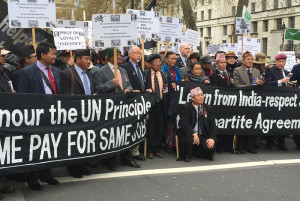
British Gurkha veterans issue ultimatum to Nepal government over long-standing grievances

Budhi Gandaki flood washes away three bridges in Gorkha
Editor's Picks

Constitutional Bench caught in seniority, ‘pick and choose’ dispute

A Dom boy’s long road to becoming a doctor
From blankets to handmade dolls, two foreign women bring comfort to flood survivors

News Analysis: When institutional defence exposes institutional fault lines

It’s a bird … it’s a plane … it’s the Indian ambassador’s farewell tweets
E-PAPER | October 17, 2026

×