Athpahariyas of Dhankuta complain of state neglect, lack of basic amenities
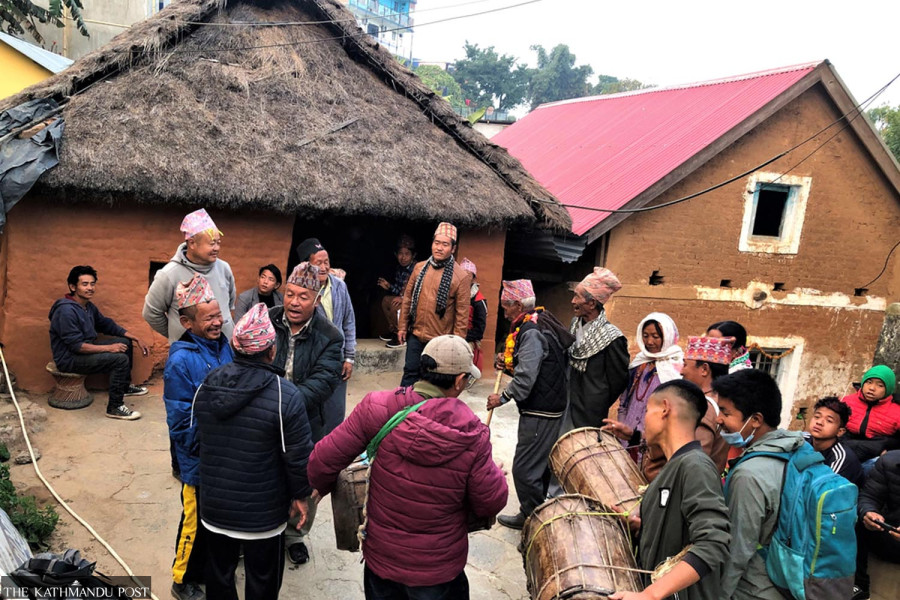
As elections approach, the indigenous community appears frustrated over unfulfilled development promises. Athpahariya men and women during a cultural event in their settlement in Dhankuta in this undated photo. As the country heads to the polls, community members lament broken promises. Post Photo
Just a few kilometres from the bustling Dhankuta Bazar lies a cluster of villages that seem untouched by modern infrastructures of development. The Athpahariya settlement, home to a small indigenous Kirat community found only in Dhankuta district, continues to struggle with poor road access, drinking water shortages and limited basic infrastructure.
At Santang, Yakte, Tekunala and Khambela settlements located in ward 8 of Dhankuta Municipality, traditional houses and distinctive attire reflect a strong cultural identity. Yet residents say their community remains neglected and state support for basic amenities and infrastructure has been inadequate.
Rasakumari Rai, aged 65, of Santang says she is unaware that elections are approaching, but vividly recalls past candidates promising roads and drinking water. “They have talked about roads and water for years. Nothing has changed. This time I will vote for whoever truly delivers,” she said. She acknowledged that the ward office had done what it could within its means, but stressed the need for larger, transformative development projects.
Shanti Bahadur Athpahariya of Khambela echoed similar frustrations. “We do not even know about the candidates in the polls. No candidate has come to our doorstep so far,” he said. His family still relies on a well for water, and children face difficulty reaching school due to the lack of a reliable road. A dirt track built a few years ago has deteriorated, leaving travel to the market arduous.
Most of the locals have pinned their hopes on a motorable bridge over the Tamor river at Yakyachana. Though a rough road links Dhankuta bazar to Yakyachana, its poor condition limits transport. “If there is a proper bridge, we will connect to the Tamor Corridor and our village will flourish,” said Dhan Bahadur Athpahariya, referring to the Mulghat-Taplejung road network that has gradually expanded in eastern Nepal.
Remote hill settlements remain cut off despite federal restructuring promising inclusive development. In Dhankuta too, a proposed ring road from Madanchok through Yakte and Santang to Trivenichok, envisioned nearly two decades ago, remains incomplete. Education, health, irrigation and drinking water projects have stalled, breeding disillusionment.
The municipality has distributed corrugated zinc sheets to replace thatched roofs, but many homes simply placed the sheets atop old straw. Attempts to promote homestay in the settlement have faltered because visitors cannot easily reach the villages due to poor condition of road.
For Renuka Athpahariya, piecemeal efforts are not enough to uplift the area. “Small projects cannot raise our living standards. We need representatives who will bring long-term, large-scale plans,” said Renuka.
The community also voices frustration that its longstanding demand for formal recognition under Nepal’s indigenous nationalities framework remains unfulfilled. According to the national census 2021, the Athpahariya population stands at 5,878 in the country.




 16.49°C Kathmandu