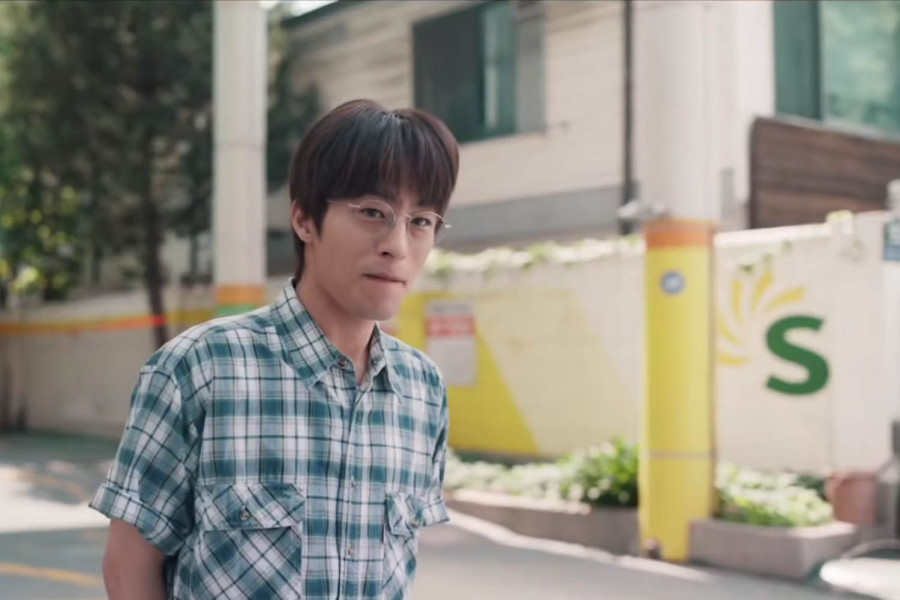
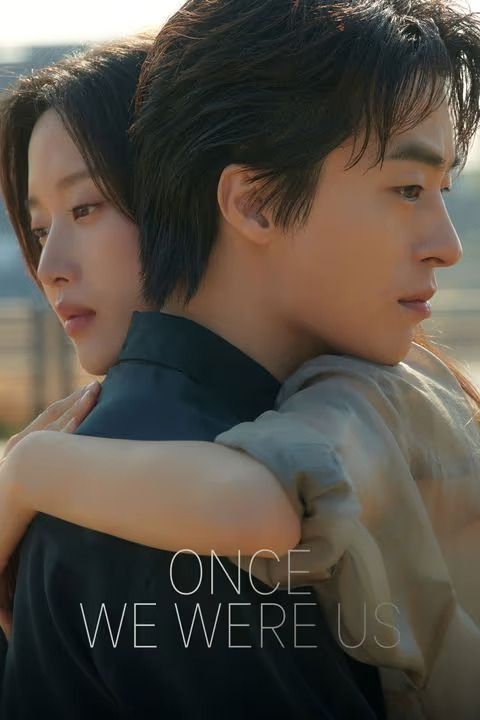
‘Once We Were Us’ traces the emotional arc of two former lovers who meet again after a decade, only to find that time has softened memories but sharpened regret. Photo: Screengrab via YouTube
Movies can leave you amused, and then there are those that quietly gut you from within. ‘Once We Were Us’, directed by Kim Doyoung and released in early 2026, falls firmly into the latter category. A Korean adaptation of the beloved 2018 Chinese film ‘Us and Them’, it reflects on love, loss, and the fragile, often bittersweet nature of memory—delivering an emotional punch that few romance films manage to achieve.
It starts in Seoul in 2008, when circumstances lead Eun-ho (Koo Kyohwan) and Jeong-won (Moon Ka-young) to meet on a bus bound for their hometowns. What begins as a strange friendship gradually grows into something more as they plunge into the wear and tear of the big city, relying on one another by holding on to their dreams, little pleasures, and silent, foot-aching desperation.
However, bitter life circumstances ultimately push them away. The two then suddenly find themselves reunited 10 years later on a delayed flight back to Korea, and must now contend with all they once possessed and have since lost.
What sets ‘Once We Were Us’ apart is its visually daring language. The film opens in black and white during the present-day reunion, while flashbacks of their past burst into colour. It’s a cinematographic choice that speaks volumes without uttering a single word.
The muted, tawny palette of their reunion mirrors its emotional flatness, while the vivid hues of the past remind us of what has been lost forever. The contrast between black-and-white and colour feels ingenious, even as its emotional undercurrent is quietly devastating.
The tension between them, evident in their present-day meeting, is mirrored by the gloomy, storm-lashed setting; they are stranded together when their flight to Seoul is delayed by bad weather. It is awkward at first, painfully so, but as the night stretches on, they begin to open up. Just as a fragile intimacy starts to take shape, an unexpected phone call shatters it.
It is in these quiet, suspended moments that the film finds its most devastating strength—the silences of the airport, the stolen glances, and the half-finished sentences that say far more than words ever could.
Koo Kyohwan and Moon Ka-young are remarkable in their roles. Their chemistry is undeniable, holding the audience in place as the emotional tension steadily builds. Koo brings a lived-in vulnerability to Eun-ho, a man unable to fully come to terms with his past, while Moon delivers what feels like a career-best performance as Jeong-won.
There is a quiet restraint to her portrayal; she avoids the more overt, dramatic expressions of grief often seen on screen. As a result, when her emotions finally surface, they land with devastating force. The performances are strong, with even the supporting cast given space to either shine or subtly elevate the leads.
A quieter subplot unfolds through Eun-ho’s father, who becomes a kind of surrogate family for Jeong-won. As an orphan, she finds in him and in Eun-ho a sense of safety, a place to return to in moments of distress. This dynamic makes her hesitation to commit deeply understandable. For her, the relationship carries far greater stakes than it does for Eun-ho. If things were to fall apart, she would lose not just a partner but her only sense of home.
It’s an insightful portrayal of the imbalance within love—how two people can share the same relationship yet carry entirely different emotional burdens.
Symbolism, too, is one of the film’s quiet strengths. Motifs like sunlight, a fan, and other small details recur with clear purpose. In one simple yet heartbreaking moment, he pulls the fan toward her to cool her down; later, he switches it off, leaving her in darkness.
It is these understated gestures that reward attentive viewers, revealing a film layered with details that linger long after the credits roll.
The film’s weakness lies in its pacing and narrative structure. At times, it leans too heavily on coincidence and a tightly controlled framework, while its cautious approach to reinterpretation prevents it from fully realising its potential. The emotional flow occasionally stalls in the second act, and some lines drift into theatricality, feeling slightly artificial in a film otherwise committed to naturalism. Viewers expecting a tight, propulsive drama may find themselves waiting as the film struggles to catch up with its own emotional rhythm.
Audience responses have been mixed, especially when compared to the original Chinese film. Some viewers find the Korean version less serious and less bleak, missing the emotional darkness that defined ‘Us and Them’. Even so, the adaptation works as an effective remake—one that still manages to reach the heart, despite not matching the relentless melancholy of its source.
Taken on its own terms, however, ‘Once We Were Us’ carves out a distinct and compelling identity.
The film offers a poignant meditation on the tragic irony of love. It is a tearjerker rooted not in loud, dramatic heartbreak, but in something far quieter, the slow, dawning realisation that love is not always enough. It understands that two people can be perfectly right for each other, and yet still miss their moment, undone by time, circumstance, and the inexorable drift of life.
‘Once We Were Us’ is not an easy watch. It lingers long after the credits roll, asking uncomfortable questions about one’s past and the people we once were. But that is precisely what marks it as a film that matters.
Once We Were Us Director: Kim Do-young Cast: Koo Kyo-hwan, Moon Ga-young, Shin Jung-geun, Lee Sang-yeob, Kim Seo-won, Im Jae-hyuk Duration: 115 minutes Year: 2025 Language: Korean Streaming on: Viki




 18.54°C Kathmandu