Nepal gets India’s approval to import 350MW and export 56MW
The approval allows the NEA to purchase electricity for up to 17 hours a day to meet winter demand while continuing exports from three hydropower projects.
Nepal has secured approval to import up to 350 megawatts of electricity from India this winter, as domestic generation is expected to fall short of demand during the four-month dry season.
The Central Electricity Authority under India’s Ministry of Power has authorised the Nepal Electricity Authority (NEA) to buy electricity at competitive rates on the Indian Energy Exchange (IEX) day-ahead and real-time markets for up to 17 hours a day.
Separately, the NEA has secured approval to export 56MW of electricity generated by three hydropower projects through the IEX market.
Both the import and export approvals are valid from November 17 to July 31, 2027. Under the import approval, however, Nepal cannot purchase electricity through the exchange between 5am and 8am or between 5pm and 9pm.
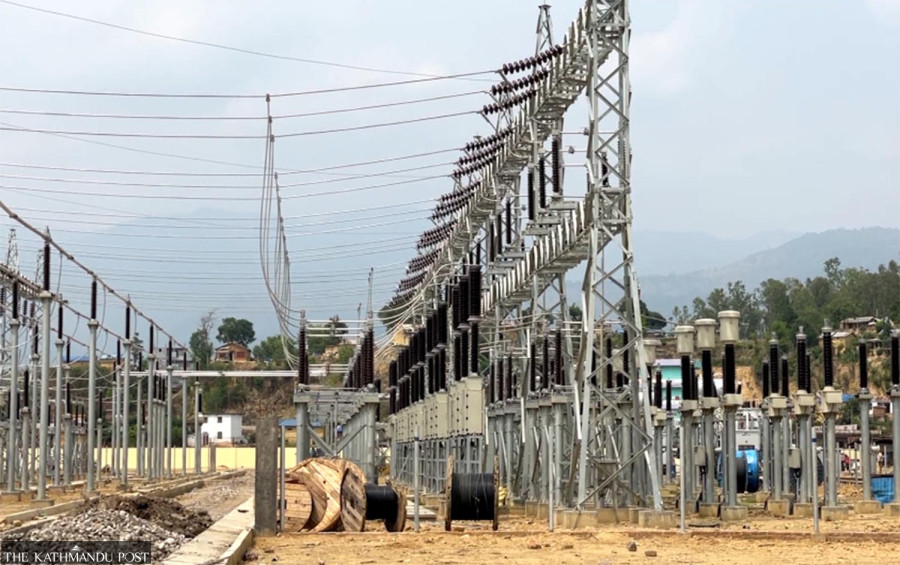
Of the approved 350MW, Nepal can import 300MW through the 132kV Kataiya-Kushaha, Ramnagar-Surajpura and Raxaul-Parwanipur transmission lines, and another 50MW through the 132kV New Nautanwa-Mainahiya line.
NEA Managing Director Dirghayu Kumar Shrestha said the approval would make it easier to balance electricity supply and demand during the coming winter.
The authority has been preparing for the seasonal shortfall after floods in the Bhotekoshi river damaged hydropower projects and transmission infrastructure, disconnecting projects with a combined installed capacity of 431MW from the national grid, Shrestha said.
Based on last year’s demand and generation patterns, the NEA estimates that domestic production will fall below consumption for four months, from mid-December to mid-April 2027. Nepal will need to import electricity from India during this period.
Imports are expected to peak from mid-January to mid-March, when Nepal may need to maintain imports of 450MW to 500MW around the clock. During peak-demand hours, the required imports could reach 800MW to 900MW a day, according to the NEA.
Import requirements are expected to be lower from mid-December to mid-January and from mid-March to mid-April. From mid-April, rising river levels should boost domestic hydropower generation, gradually displacing imports and allowing Nepal to resume electricity exports.




 18.12°C Kathmandu