Qatar’s economic slump puts Nepali workers’ jobs at risk
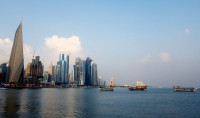
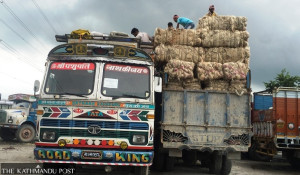
New labour approvals for Qatar have fallen by 35 percent since the war began, while rising complaints of layoffs and delayed wages point to growing pressure on Nepali workers already employed there. Reuters File Photo
The war in West Asia has dealt a severe blow to Qatar’s economy, putting the jobs of Nepalis and other foreign workers in the country at risk. Disruptions to natural gas production and exports, the mainstay of Qatar’s economy, have hit government revenue, trade, tourism and private-sector activity. The downturn is also beginning to affect the recruitment of new workers from Nepal.
According to the Department of Foreign Employment, the number of Nepalis receiving first-time labour approvals to work in Qatar fell 35.08 percent in the six months ending in mid-September, compared with the same period a year earlier. A total of 28,104 Nepalis received new labour approvals for Qatar between mid-February 2025 and mid-September 2025. The figure fell to around 18,000 in the corresponding period after the war began.
In a report published in October 2026, the World Bank projected that Qatar’s real gross domestic product would contract by 20.9 percent. The country, whose economy grew by 1.8 percent in 2025, is now expected to face a sharp contraction within a year as a result of the war.
The downturn is largely the result of damage to natural gas production and export facilities. Following attacks on the Ras Laffan gas complex, production was almost entirely halted. Qatar subsequently declared force majeure on supply contracts with several international buyers, notifying them that it could no longer meet its obligations.
Qatar’s natural gas export capacity has fallen by about 17 percent, according to the World Bank. Some of the damaged facilities could take years to repair fully. The report says natural gas exports plunged by 96 percent between March and August.
Natural gas is the backbone of Qatar’s economy and public finances. The hydrocarbon sector accounts for about 80 percent of the country’s government revenue and merchandise exports. Disruptions to gas production and exports have therefore affected everything from state income to commercial activity in the private sector.
Qatar’s total government revenue fell by 41.9 percent in the first six months of 2026 compared with the same period last year, according to the World Bank. Revenue from hydrocarbons dropped by 56.1 percent, while income from non-oil and gas activities also contracted by 8.9 percent.
The government has cut spending in response. Public expenditure fell by 14.1 percent in the first half of the year. Even so, the budget deficit reached 31.5 billion Qatari riyals, equivalent to about 10 percent of GDP, the report says. The government has also reduced operating expenses by as much as 30 percent as a precautionary measure.
The economic shock has spread beyond the energy industry. The number of foreign tourists visiting Qatar in the second quarter of 2026 fell by 44.7 percent from a year earlier. Hotel occupancy also declined by 26.4 percent.
The Purchasing Managers’ Index, which tracks business activity in the non-oil private sector, dropped to 38.7 in March. A reading below 50 indicates contraction. The slowdown in tourism, hotels, transport, construction and services could place further pressure on the employment of foreign workers, including the large number of Nepalis working in these sectors.
Nepalis in Qatar are employed in construction, cleaning, security, hospitality, transport, services and industry.
Narad Nath Bharadwaj, a former Nepali ambassador to Qatar, said the economic slowdown in the country was directly linked to the livelihoods of Nepali workers.
“Nepali workers have been finding employment in Qatar’s construction, services and tourism sectors. The tensions between Iran and the United States have affected all three,” he said. “If the war does not end soon, the economic impact is likely to deepen. Demand for new workers is already declining, and there is also a growing risk that existing jobs will be cut.”
Nepalis make up the third-largest group in Qatar’s foreign workforce. A 2024 United Nations report found that they accounted for 11.4 percent of the country’s migrant population. Department of Foreign Employment records show that 407,512 Nepalis received labour approval, either new or renewed, to work in Qatar over the past three years.
The World Bank says there is insufficient data to establish the full impact of the war on Qatar’s labour market. Before the conflict, the country’s overall employment rate stood at 88 percent in the fourth quarter of 2025. The rate was 91.5 percent among non-Qatari citizens and 54.2 percent among Qatari citizens.
No detailed figures have been made public on the extent of job losses, new recruitment or contract renewals since the war began.
A swift return to pre-war economic conditions also remains uncertain. The World Bank has projected that Qatar’s GDP will expand by 26.7 percent in 2027, anticipating a resumption of natural gas production and the gradual start of operations at the North Field East project. But it has warned that a prolonged conflict and delays in rebuilding damaged infrastructure could undermine the recovery.
Qatar is better placed than many countries to absorb the shock because of its large sovereign wealth fund, foreign investments and financial reserves. Its public debt remains relatively moderate, while the banking sector is well capitalised and has sufficient liquidity, the World Bank says.
“Unless the economic contraction persists for a prolonged period, its impact may be manageable. But a sustained downturn would affect job creation,” Bharadwaj said. “Any decline in demand for new workers or cuts to existing jobs would also affect Nepal’s economy.”
An official at Nepal Rastra Bank estimates that about 46 percent of Nepal’s total remittance inflows come from the Gulf region, although Qatar’s individual share is not known. According to the Nepal Living Standards Survey 2023, 10.5 percent of people sending remittances from abroad were based in Qatar.
The Nepali Embassy in Qatar says it has recently received more complaints about workers being laid off and salaries not being paid on time. “We have been receiving complaints from workers who have not been paid. We are coordinating with employers to address these problems,” an embassy official said.
Qatar has projects and investment opportunities worth 221 billion Riyals, Emir says
Qatar’s emir, Sheikh Tamim bin Hamad Al Thani, has acknowledged that the economic crisis has inevitably affected the country’s public finances.
“Total government revenue fell by 42 percent in the first six months of this year, while public expenditure declined by 14 percent,” he said while addressing the 55th annual session of the Shura Council on October 13. “But essential services and development priorities were not compromised. The state did not panic. Instead, it remained confident in the national economy and continued to look ahead.”
He said Qatar had decided to protect essential services and maintain its development priorities despite the economic shock.
“Before the crisis, the state adopted policies to strengthen reserves, reduce public debt, prepare budgets based on cautious assumptions about oil prices and develop non-oil sources of revenue. These measures have enabled us to withstand the effects of the crisis so far,” he said.
The emir added that Qatar had a pipeline of projects and investment opportunities worth about 221 billion Qatari riyals to be implemented over the next five years. These include infrastructure projects under public-private partnerships, as well as private-sector investments in real estate and hospitality.
Hom Karki is a reporter with two decades experience covering migrant workers issues and the Nepali diaspora. He was previously based in the Gulf for Kantipur Daily.




 13.12°C Kathmandu