The annual Kailash-Manasarovar pilgrimage for Indian devotees is set to begin next week, with travel operators reporting a surge in advance bookings and expectations of a stronger turnout this year. According to tourism entrepreneurs, nearly 5,000 pilgrims have already secured travel arrangements through multiple agencies, signalling a robust recovery in cross-border religious tourism after Covid disruptions.
Indian devotees traditionally travel overland via Nepal through the Kerung border in Rasuwa and the Hilsa crossing in Humla. With the Tatopani checkpoint in Sindhupalchok still closed, most travellers prefer the Humla route, while a smaller number opt to fly via Lhasa in China. Recently, India and China also agreed to reopen the Lipulekh route, though operators say the Hilsa corridor remains more attractive due to its shorter travel time, manageable terrain, and comparatively lower costs.
According to tourism entrepreneurs, Indian pilgrims are booking packages through around 35 tour operators this season. “Lucknow is the nearest Indian airport to Nepalgunj, and the journey of 190 kilometres can be completed within three hours,” said Bimal Naharki, president of the Association for Kailash Tour Operators Nepal. “From Nepalgunj, the devotees fly to Simkot and then reach Hilsa before proceeding to Manasarovar, covering the remaining distance in a few hours,” he added.
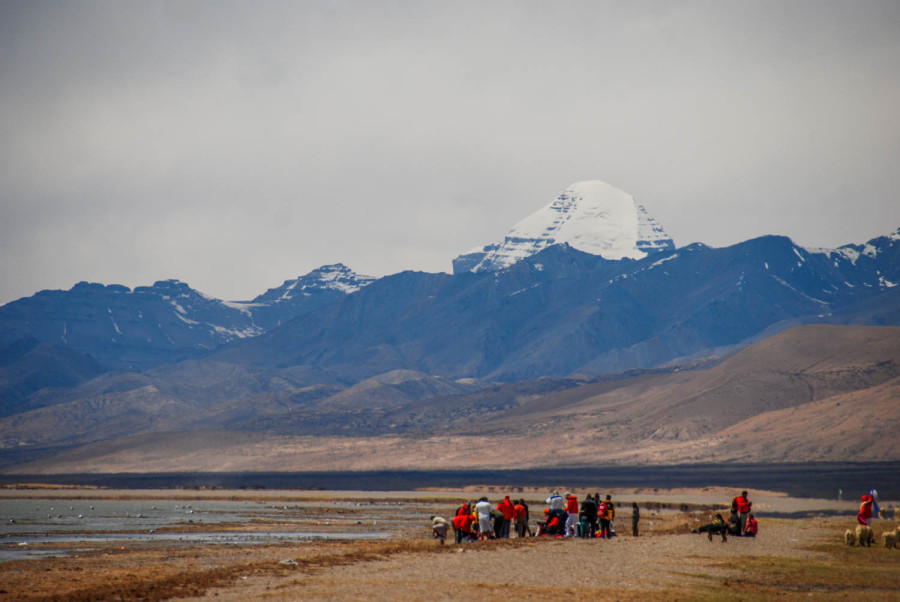
Generally, the pilgrims spend their first night in Nepalgunj, travel to Simkot on the second day, and reach Hilsa by helicopter before entering Tibet. By the third day, they arrive at Darchen, the base camp near Mount Kailash. On the fourth day, pilgrims visit the sacred mountain, while those physically able undertake the 52-kilometre circumambulation. Others perform rituals from the base camp.
“The entire journey through this route can be completed in about seven days. From other routes in Nepal, it takes at least ten days,” said tourism entrepreneur Bijay Singh. Officials say the relatively short duration and organised logistics have made the Humla corridor increasingly popular among Indian travellers.
As per the data available at the District Police Office in Humla, a total of 6,042 pilgrims visited Kailash-Manasarovar via Hilsa last year, including 5,717 Indians and 325 from other countries. The pilgrimage resumed only last year after being halted since 2020 due to the Covid pandemic. Of those travellers, 3,334 were men and 2,708 women.
Tour operators expect numbers to rise further this year. Amrit Adhikari, chief executive of Satyam Tours and Travels, said his company alone has recorded around 1,400 bookings so far, with about 1,000 pilgrims choosing the Humla route. Some pilgrims are also flying to Kathmandu via New Delhi, visiting Pashupatinath temple, and then travelling onwards to Nepalgunj.
The Kailash-Manasarovar pilgrimage through Nepal has historical roots. A bilateral agreement between Nepal and India in 1985 formalised the route, which operated annually until the pandemic halted travel in 2020. Although India has opened limited quotas for routes via Lipulekh and Nathu La this year, operators say those options involve longer domestic travel within India.
“Pilgrims using the Lipulekh route travel via Dehradun and along the Mahakali river. While the crossing itself is shorter, it takes several days within India before reaching the border,” said Naharki. He added that the route is better suited for trekkers seeking a more physically demanding journey.
Before the 2015 earthquake, Indian pilgrims primarily used the Tatopani border route. After its closure, traffic shifted to Humla. According to local entrepreneurs, the change has significantly boosted economic activity in the remote Karnali region.
“This route has benefited the entire tourism sector here,” said Bijay Lama, a hotelier in Simkot. “We are preparing to welcome guests again, with improved food and accommodation facilities.” He said his hotel alone hosted up to 80 guests in a single day last year.
Hotels in Hilsa and Simkot reported full occupancy during peak periods last season. There are currently about seven hotels in Hilsa and 15 in Simkot, alongside dozens of smaller lodges catering primarily to Indian pilgrims.
The business community says the influx has created employment opportunities. “People are working as porters, guides, and hotel staff. Local products such as apples, walnuts, beans, and buckwheat now have a market, and farmers are increasingly turning to commercial vegetable farming,” said Ram Bahadur Bhandari, chair of the Humla Chamber of Commerce and Industry.
The rise in pilgrim traffic has also increased air activity in Simkot Airport. The airport handled up to 82 flights in a single day last year, according to airport chief Mahendra Bahadur Singh. Several airlines operated regular flights from Nepalgunj, supported by seven helicopters transporting pilgrims to Hilsa.
According to tourism entrepreneur Tenzin Norbu, most visitors come from southern India, Gujarat, Maharashtra, and northern states. He added that state governments in India provide subsidies ranging from IRs 25,000 to 100,000 per pilgrim, which has boosted attraction for Kailash-Manasarovar pilgrimage.
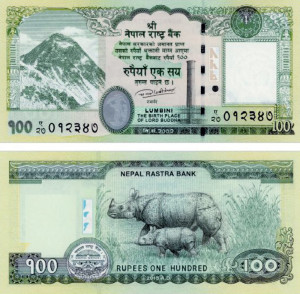
Travel packages for Indian pilgrims typically range between IRs250,000 and 300,000, while Nepali pilgrims can complete the journey for around Rs 150,000. According to tourism entrepreneurs, religious beliefs remain a strong motivator. “Mount Kailash is believed to be the abode of Lord Shiva. The pilgrimage symbolises spiritual purification and liberation,” said Norbu.
Religious scholars note that the site holds significance across multiple faiths. Hindus, Buddhists, Jains, and followers of the Bon tradition all revere the mountain, though rituals differ. Most pilgrims circumambulate clockwise, while Jain devotees walk in the opposite direction.
Improved air connectivity between Kathmandu, Pokhara and Lhasa has also opened alternative routes, though these remain less popular. “The Korala border in Mustang could become the shortest route if opened for international travel,” said Naharki.
The pilgrimage season runs from May to September, when weather conditions are relatively stable. Heavy snowfall and strong winds during other months make travel difficult in the high-altitude region.
Entrepreneurs elated to welcome tourists
Hotels in Nepalgunj are witnessing a rise in bookings as the pilgrimage season begins. According to tourism entrepreneurs, increased Indian arrivals have encouraged investment in hospitality infrastructure in Banke district. Several high-end hotels have opened in Nepalgunj and Kohalpur in recent years, alongside a dozen mid-range properties.
“Bookings are picking up steadily,” said Keshav Neupane, regional executive director of Siddhartha Business Group of Hospitality. “The reopening of the pilgrimage after the pandemic has brought relief to the sector.”
Entrepreneurs believe the reopening of alternative routes via India will not immediately affect Nepal’s share of pilgrims. “Travellers from states closer to Nepal will continue to use this route,” said Shreeram Sigdel, Banke chairman of Nepal Association of Tours and Travel Agents. However, he warned that long-term competition could increase.
Stakeholders also point to infrastructure gaps, particularly road conditions leading to Hilsa, as a persistent challenge. “Improving connectivity will be crucial to sustaining growth,” said Sigdel.
Hotel entrepreneur Bhim Kandel said nearly 2,000 Indian pilgrims have already booked accommodation in Nepalgunj. He added that growing tourist traffic to destinations such as Rara, Shey Phoksundo, and Khaptad has further boosted demand.




 12.97°C Kathmandu