Align trade policy with nutrition, experts urge as food imports surge
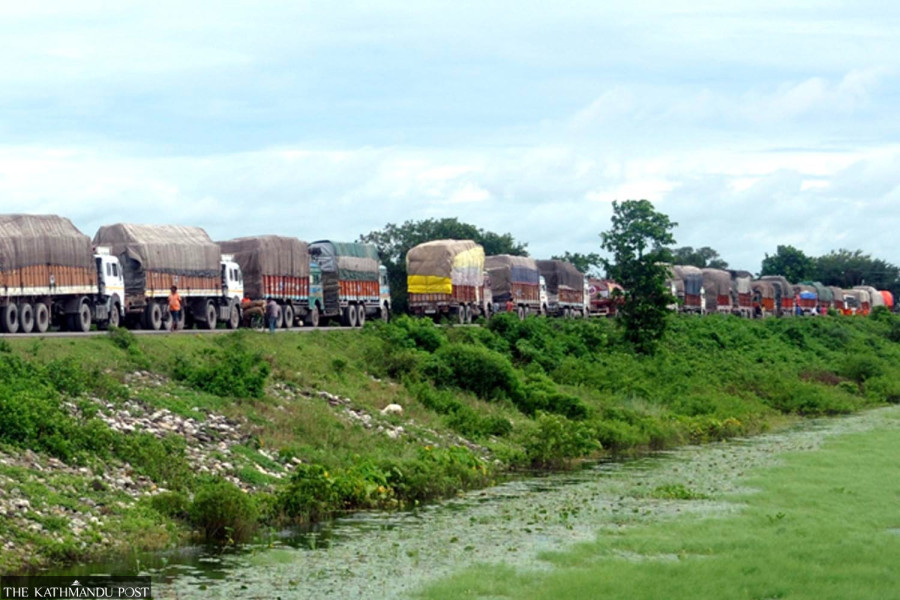
High child malnutrition, rising import dependency, and policy disconnects undermine food security. Food products account for 18 percent of Nepal’s total merchandise imports. Post File Photo
With Nepal’s increasing dependence on imported food, experts on Thursday called for placing nutrition at the centre of trade policy, warning that fragmented policymaking is worsening both health outcomes and food security.
Presenting findings from a study conducted by the South Asia Watch on Trade, Economics and Environment under the South Asian Coalition for Improved Nutrition, with support from the International Development Research Center, researchers said Nepal continues to face alarming nutrition indicators.
According to the report, 26 percent of children in Nepal are stunted, 7 percent are wasted, 19 percent are underweight, and 43 percent of babies aged 6–59 months are anaemic—figures that underline the long-term risks to human capital and productivity.
The study emphasises that nutrition must be integrated into economic and trade decisions to ensure a healthier and more productive future generation.
Nepal is currently 14 percent dependent on cereal imports, with the average annual food import bill reaching around Rs300 billion over the past five fiscal years. Informal imports of both cereals and packaged food from southern border points are believed to be even higher. Food products account for 18 percent of total merchandise imports.
The report highlights a paradox in the Tarai, traditionally known as the country’s food basket, where widespread deficiencies in essential micronutrients persist. In Madhesh Province, Nepal’s most productive agricultural region, anemia rates are the highest in the country, affecting 52 percent of women and 51 percent of children.
Poor households remain particularly vulnerable, spending between 60 and 67 percent of their income on food. High tariffs imposed by India on key food items—28.6 percent on eggs and dairy products, 17.5 percent on meat and fish, 19.2 percent on pulses, 19.5 percent on vegetables, and 22 percent on fruits and nuts—are further straining household budgets, the report notes.
A major concern raised is the lack of coordination among government policies. Trade, nutrition, agriculture, and commerce policies are designed and implemented by separate institutions, often resulting in unintended and ineffective outcomes.
The report points out that nutrition outcomes are not formally considered in tariff-setting decisions by the Finance Ministry and the Customs Department. Meanwhile, the health ministry focuses on treating symptoms such as anaemia and stunting without addressing the underlying dietary supply issues shaped by trade policies.
Similarly, the agriculture ministry prioritises production volumes, with limited focus on dietary diversity and nutrition outcomes, while the industry ministry handles trade agreements and import licensing without incorporating food security or nutritional quality objectives.
Sabnam Shivakoti, joint secretary at the agriculture ministry, said that while increasing production remains important, there has been a gradual shift towards promoting crop diversity.
“In the past, cereal-based production dominated, but now there have been significant interventions in vegetables and fruits,” she said, adding that the Agriculture Development Strategy includes food and nutrition security as a core objective.
She noted that the strategy is complemented by a Food and Nutrition Security Plan of Action, which promotes diversification in production, food systems, and utilisation.
Rajeshwar Gyawali, joint secretary at the industry ministry, said cheaper imports are undermining the competitiveness of domestic agriculture.
While the principle of comparative advantage encourages importing cheaper goods and exporting higher-value products, he said this approach may not fully apply to agriculture due to food security concerns.
He added that Nepal’s trade negotiation capacity is limited, with a small delegation size restricting effective representation. Financial and institutional constraints further weaken negotiation outcomes.
According to Gyawali, Nepal relies heavily on countries like India and China for essential food imports such as wheat and sugar, often relying on ad hoc arrangements rather than formal agreements.
“There is a need to formalise supply guarantees through bilateral treaties,” he said, pointing to high transportation costs, food losses, and weak infrastructure as additional drivers of rising food prices. Inadequate storage, cold chains, and buffer stocks further exacerbate inefficiencies.
Yamuna Ghale, a food and nutrition security expert, said hunger and malnutrition vary significantly across regions, genders, and socio-cultural groups, with even food-producing areas facing poor access to nutritious diets.
She highlighted structural issues such as land insecurity, informal leasing, and unclear ownership, which discourage agricultural activity, leaving around 32 percent of land barren.
“Nepal is graduating from Least Developed Country status in November 2026, but it has failed to fully utilise WTO provisions and international technical support,” she said, adding that weak exports and low global competitiveness have contributed to declining domestic production and growing import dependence.




 21.05°C Kathmandu