Floods drive 33 pregnant women to Kathmandu for childbirth
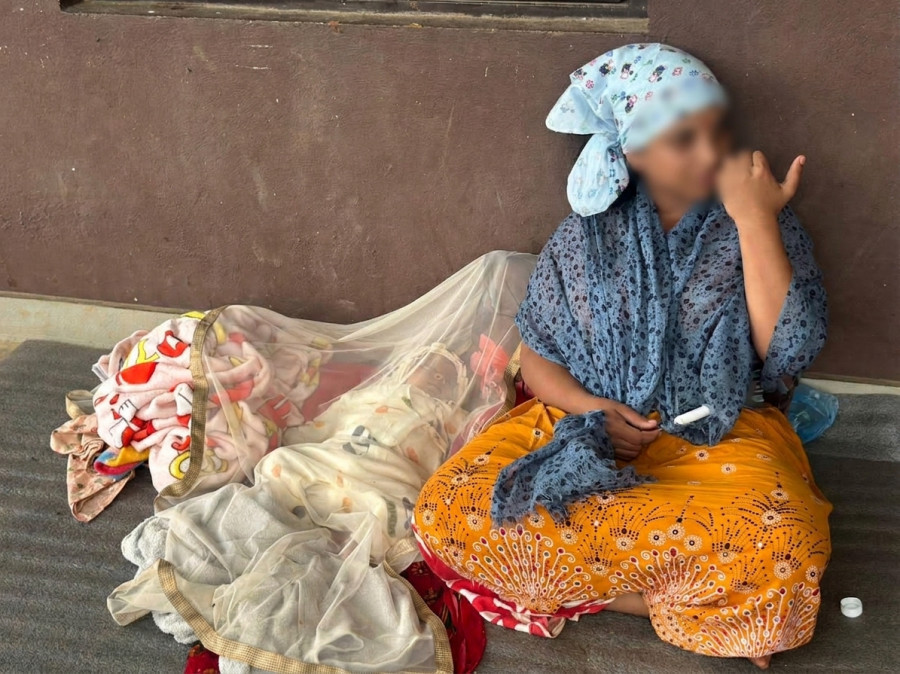
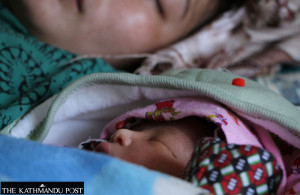
Local maternity clinics and services remain disrupted in Rasuwa and Nuwakot since the August 26 floods. But many women cannot travel to Kathmandu because of damaged roads. Doctors say pregnant women should undergo at least eight antenatal visits before childbirth. In cities, doctors may recommend additional visits depending on the risks associated with a pregnancy. File Photo
Pregnant women from flood-hit areas of Rasuwa and Nuwakot have been forced to travel to Kathmandu to give birth after the August 26 floods disrupted roads and health services in the districts.
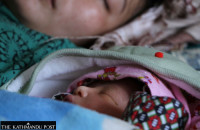
At least 33 women from the two districts have come to Kathmandu for delivery in the past month, according to official records. Four women in labour from remote villages were airlifted to Kathmandu, officials said.
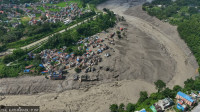
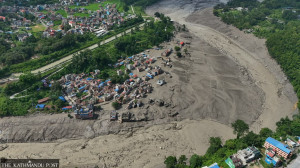
Flooded Bhotekoshi and Trishuli rivers washed away major highways, link roads and bridges, and cut off scores of villages and settlements from district headquarters and health facilities.
“With access to health services disrupted locally, we have encouraged pregnant women to come to Kathmandu for delivery to avoid possible emergencies,” said Nisha Joshi, an official at the Family Welfare Division under the Department of Health Services. The women are giving birth either at Paropakar Maternity and Women’s Hospital in Thapathali or at Kirtipur Hospital.
Over 1,400 died, and more than 5,500 have been unaccounted for following the August 26 floods.
The destruction of road links to district headquarters has left many pregnant women in remote villages, including those in Amachhodingmo Rural Municipality of Rasuwa, unable to undergo ultrasound examinations to check the condition of their unborn babies.
“Ultrasound services are not available in the rural municipality,” said Tul Bahadur BK, health in-charge of ward 2 of the rural municipality. “Pregnant women have to go to the district headquarters for the tests, but all connections to the district headquarters have been cut off by the flood.”
Even though authorities have installed tuins (improvised river crossings in which a basket is suspended from a steel cable and pulled from one side of the river to the other) in two places, reaching them is difficult for pregnant women. Also, they have to wait for hours for their turn to cross the river and then walk for several more hours to reach the district headquarters. The long and difficult journey makes it extremely difficult for them to access health services.
Doctors say pregnant women should undergo at least eight antenatal visits before childbirth. In cities, doctors may recommend additional visits depending on the risks associated with a pregnancy.
They also recommend at least three ultrasound examinations during pregnancy, usually at four, six, and eight months.
Experts say regular antenatal visits help health workers identify and manage complications early in pregnancy.
“If antenatal check-ups are not done regularly, doctors cannot monitor the fetus’s growth or detect an abnormal position of the baby in time,” said Dr Jageshwor Gautam, a consultant gynaecologist. “Without timely detection, necessary precautions cannot be taken, and this increases risks for both the mother and the baby.”
Experts say antenatal care must be ensured close to pregnant women’s homes and that even travelling to Kathmandu for delivery itself poses risks. They also add that pregnant women from flood affected areas who lost everything in the disaster may not be able to afford to visit Kathmandu.
“Displaced pregnant women are already under stress, which increases chances of pre-term delivery,” said Dr Shailendra Bir Karmacharya, a paediatrician and neonatologist at the Maternity Hospital. “I don’t know the exact number of stillbirths among displaced pregnant women, but pre-term delivery increases stillbirths. When women in labour travel long distances, some of them could give birth on the way and this increases risk to both mother and the newborn.”
Nepal has introduced various programmes to reduce maternal and neonatal mortality, including free institutional delivery services, free newborn treatment, and cash incentives for antenatal care visits.
These programmes have been credited with helping reduce Nepal’s maternal mortality ratio from 539 deaths per 100,000 live births in 1996 to 239 in 2016. The country also received a Millennium Development Goals award for its progress in reducing maternal mortality.
Nepal has reduced maternal deaths by more than 70 percent since 2000, according to a World Health Organization report.
The UN health body, in its report, stated that currently 142 Nepali women die from maternity-related complications per 100,0000 live births.
Nepal aims to reduce maternal mortality to 75 per 100,000 births by 2030, under the UN’s Sustainable Development Goals.
Arjun Poudel is a health reporter for The Kathmandu Post. Before joining the Post, he worked for Sagarmatha Television, Naya Patrika, Republica and The Himalayan Times.




 15.68°C Kathmandu