Flu and fever spread in Jajarkot camps sheltering Saturday’s landslide survivors
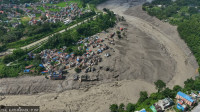
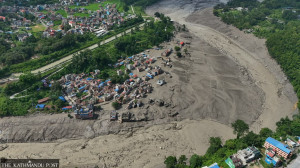
Contaminated water, inadequate toilets and rotting animal carcasses are raising the risk of water- and vector-borne diseases. Municipal officials say entire villages, devastated first by an earthquake some three years ago, and now by the landslide, need to be relocated to safer places. Post File Photo
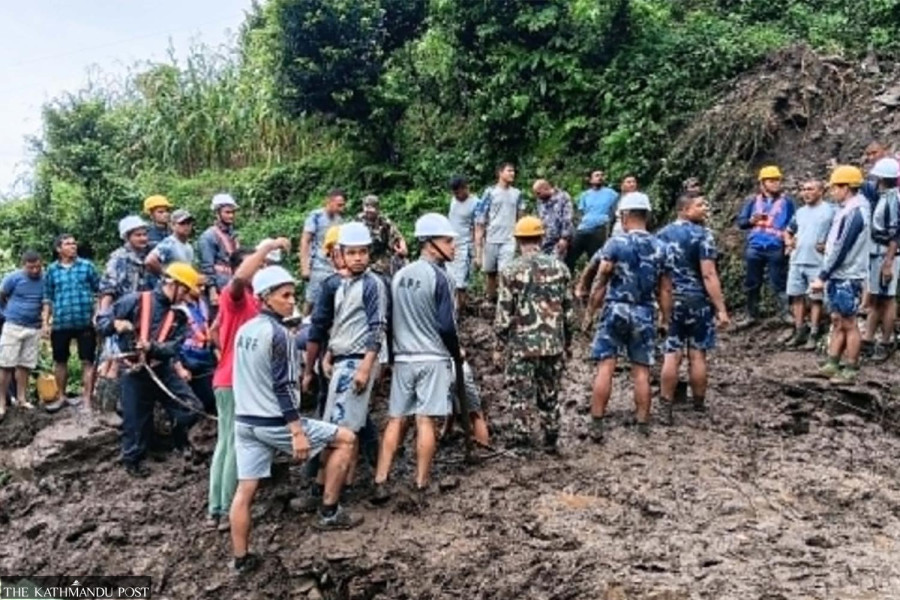
Dozens of landslide survivors in Jajarkot have fallen ill with flu and fever, officials say, as 691 people displaced by Saturday’s landslides were forced to take shelter at temporary camps in Bheri Municipality’s wards 2 and 3.
Doctors from the Provincial Hospital Surkhet reached the camps and treated 90 people on Monday.
“Ensuring safe drinking water has become a big challenge in the camps,” said Nisha Thapa, a public health inspector serving in the municipality. “Rainwater has contaminated almost all drinking water sources.”
At least four people died and half a dozen others were injured in the landslides that devastated entire villages in the municipality’s wards 1, 2, 3, and 4 on Saturday evening.
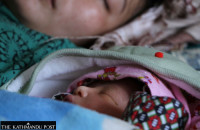
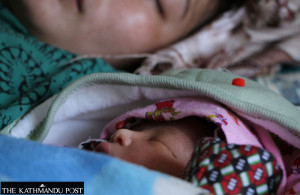
Elderly people, small children, pregnant women, and new mothers living in the camps are among those particularly vulnerable to water-borne and vector-borne diseases, Thapa said.
“The risk of illness spreading is high in the camps,” she said. Health workers serving in the municipality have set up a health desk at the encampment. “But that alone won’t be sufficient to address all the emerging problems.”
Municipal officials say the authorities are still unable to bury the cattle and other animals that perished in the landslides and warned of a heightened risk of a disease outbreak.
“The risk of disease spreading due to rotting carcasses has increased,” said Yagya Nath Gautam, chief of the disaster section of the municipality. Nepal Police, Armed Police Force and Nepali Army personnel have started burying the dead animals, he said.
Local authorities have set up a few makeshift toilets near the encampment but they are not sufficient for hundreds of the displaced. As a result many have been defecating in the open.
Open defecation risks further contaminating the water sources, officials said.
Experts also warn that the risk of vector-borne diseases, including malaria, dengue, kala-azar and scrub typhus, has increased.
“A major outbreak has not occurred yet, and we can handle the situation until next week,” Gautam said. “But after then, we would need support from the provincial and federal government.”
The disaster has displaced people from over 450 households who are taking refuge in temporary shelters or relatives’ houses.
Municipal officials say entire villages, devastated first by an earthquake some three years ago, and now by the landslide, need to be relocated to safer places.
At least 157 people died, hundreds were injured, and thousands were displaced by a magnitude 6.4 earthquake that hit Jajarkot and West Rukum in November 2023.
Preventing possible outbreaks of communicable diseases—water-borne and vector-borne—is the main challenge for now in areas affected by the landslides, said Dr Amrit Pokhrel, chief of the Emergency and Outbreak Management Section at the Epidemiology and Disease Control Division.
“We have been taking real-time updates on the developing situation,” Pokhrel said.
Jajarkot is among Nepal’s least developed districts. The district’s Human Development Index is below the national average. With poor nutrition, social, and educational standards in the district, experts warn of a high risk of major disease outbreaks soon.
Dr Baburam Marasini, a public health expert, said federal government agencies must act immediately, as local and provincial governments do not have the capacity to respond to a major disaster.
Jajarkot has a history of dealing with major communicable diseases. The district witnessed a cholera outbreak in 2009 that left several people dead and hundreds infected. A swine flu outbreak in 2015 similarly saw several dead and hundreds infected.
Experts have asked authorities to ensure hygienic food and safe drinking water for the displaced. They have also warned against relying on cheap junk foods like noodles and biscuits in the aftermath of disasters.
There are pregnant women, new mothers, small children and elderly people in the displaced camps, Marasini said, adding authorities should take prompt action. “Otherwise, those left behind by landslides will die from water-borne diseases,” he said.
Arjun Poudel is a health reporter for The Kathmandu Post. Before joining the Post, he worked for Sagarmatha Television, Naya Patrika, Republica and The Himalayan Times.




 18.6°C Kathmandu